

home » otherness
Articles about "otherness"
Temáticas
Vol 9 No. 17 (2026)
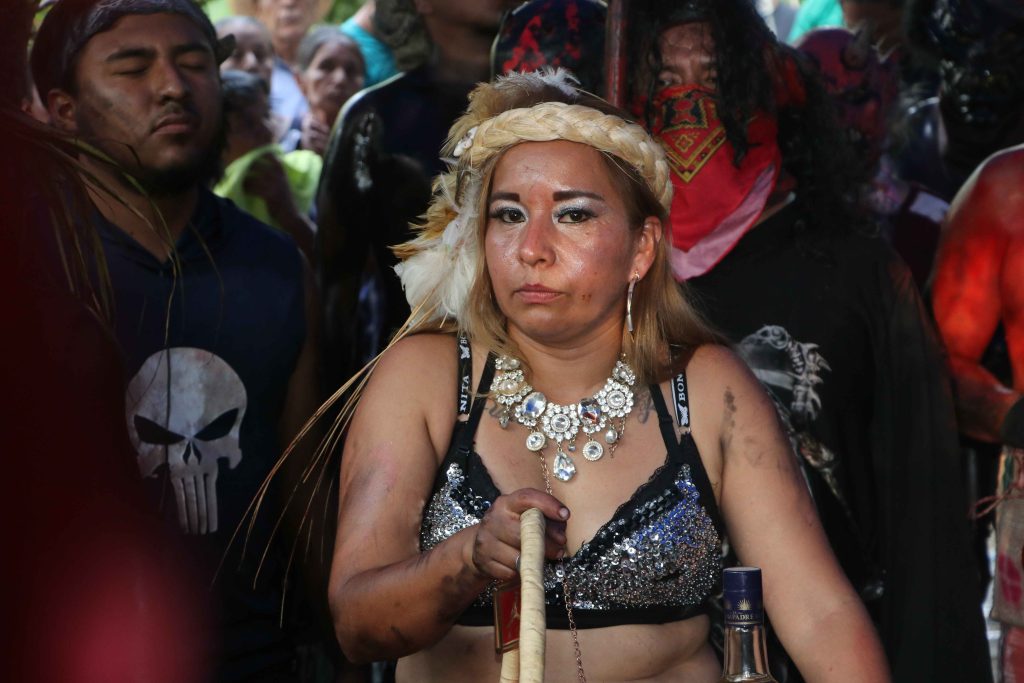
Las ngäd’i-dokwe: disrupciones rituales, cuerpos alterados y alteridades corporales en el mundo otomí
- Carlos Arturo Hernández Dávila
Entre los otomíes de la Huasteca es el zithū (diablo, "devorador de los nombres"), también llamado mpøhø, "el rico" o "mestizo", quien preside el complejo festivo del carnaval. En el mismo, encontramos personajes como las "damas" (en otomí, xumphø), hombres travestidos de mujeres que encarnan el deseo sexual desenfrenado del juego y la fiesta. Sin embargo, existe una variante llamada las "locas" (ngäd'i, quienes son hombres que abiertamente se definen como dokwe u homosexuales), colectivo que ha irrumpido en las celebraciones, promoviendo nuevas estéticas en los carnavales huastecos. Este texto pretende abordar las reflexiones en torno a estas ngäd'i-dokwe desde un enfoque que describe la transitoriedad inestable de estos cuerpos sexuados, en su constante devenir entre el mundo otomí y el mundo mestizo.
Discrepancias
Vol 6 No 12 (2023)
Perspectivism: a theory from the point of view of otherness?
- Gabriel Luis Bourdin
- Olivia Kindl
- moderator Arturo Humberto Gutiérrez del Ángel
Keywords: otherness, ontological turn, Perspectivism, Philippe Descola.
For some, perspectivism is a revolution in anthropological thought, while for others it is not a theory, but rather an ideology forged by bringing into the arena of discussion old, unearthed and outdated paradigms that were long ago superseded.
Realidades socioculturales
Vol 4 No 8 (2021)
Revueltos, Grijos and Puchuncos: Racialization, Identity and Miscegenation in a Town of the Costa Chica of Guerrero
- Giovanny Castillo Figueroa
Keywords: otherness, identity, miscegenation, racialization, race.
This article presents an ethnographic discussion of the processes of racialization, mestizaje and the construction of identity/alterity in Punta Maldonado (El Faro), Costa Chica, Guerrero. First, it examines the concepts of race and racialization in order to understand how physical attributes have been used in the marking and hierarchization of differences; it then explores the meanings of some locally used categories that show how physical appearance, particularly hair, is socially perceived and interpreted in El Faro. Finally, it analyzes how the idea of mixture is thought of and incorporated in the narratives of El Faro. and incorporated into the collective identity narratives of this place.