


Salvador Salazar Gutierrez He holds a Ph.D. in Social Sciences from the iteso, a member of the snii level ii, his area of research: youth cultures and sociocultural processes on the northern border.
Realidades socioculturales
Vol. 9, No. 18 (2026)
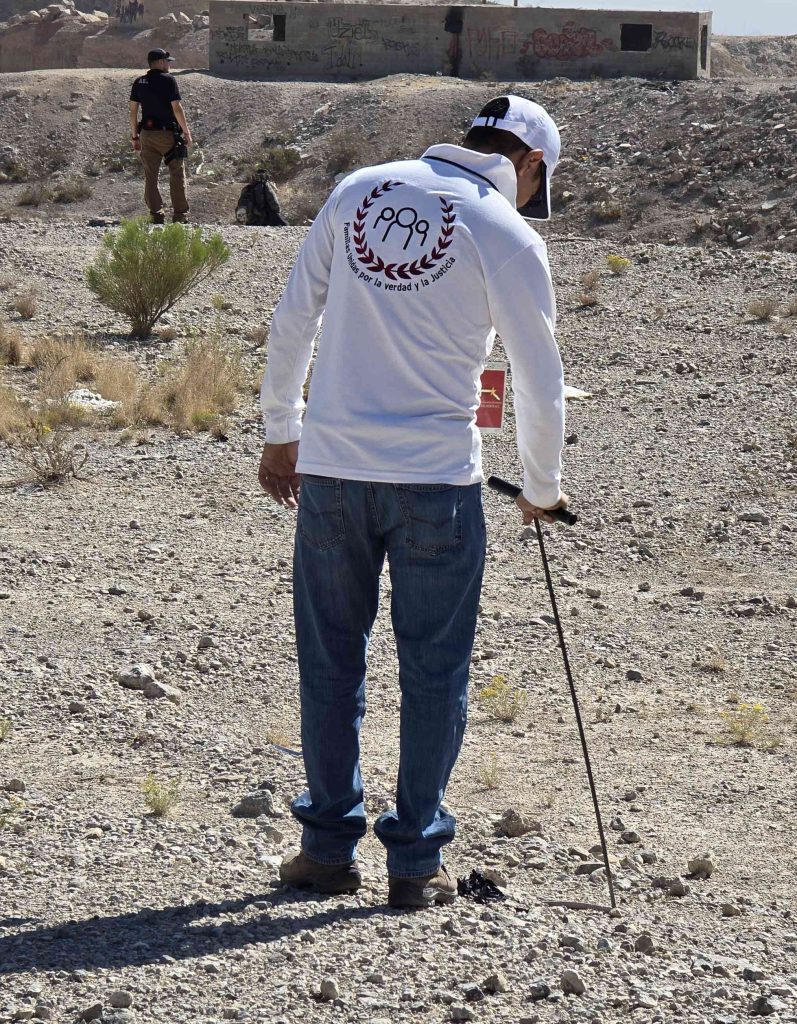
Testimony to Barbarism: Clandestine Mass Graves as Micro-Spaces of Exception in Northern Chihuahua, Mexico, 2008–2024
- Salvador Salazar Gutierrez
- Vladimir Hernández Hernández
The objective of this article is to analyze the phenomenon of clandestine graves in northern Chihuahua as an expression of atrocious violence and forced disappearance in Mexico, in order to understand how these spaces operate as necropolitical mechanisms that articulate practices of extermination, silencing, and territorial control. The study involved reviewing statistical data and local and national news reports, as well as conducting semistructured interviews with members of the Paso del Norte Human Rights Center (cdh Paso del Norte). It was found that the northern region of the state accounts for more than half of the mass graves recorded between 2008 and 2024, which points to a systematic pattern of violence, impunity, and institutional collapse. These clandestine graves contain not only bodies but also territorial markers that instill a culture of terror throughout the region.
Coloquios interdisciplinarios
Vol 6 No 11 (2023)
Comment on the colloquium "Essays on the abyss: politics of the gaze, violence, technopolitics" by - Rossana Reguillo
- Go to main text

The Event Barges In: The Horror of Modern Violence and the Erosion of the Social Pact at Mexico’s Northern Border
- Salvador Salazar Gutierrez
In the last two decades the border region in the north of the country, Ciudad Juárez in particular, has faced a landscape dominated by various types of violence tied not only to the presence of drug trafficking and organized crime but also to that generated by the punitive intervention on the part of the Mexican state. In this sense, rethinking the explanatory frameworks in relation to theoretical-methodological approaches has constituted one of the key tasks in contexts where, in the words of Rossana Reguillo, fear takes possession of a present in crisis and as an expression of a collapsed landscape.



 EN
 ES
 FR
 PT