
Café Capeltic. Building an intercultural bridge in the Jesuit University System of Mexico.
- Ximena de la Mora González
- Rebecca Danielle Strickland
- - see biodata
Café Capeltic. Building an intercultural bridge in the Jesuit University System of Mexico.
Receipt: February 10, 2025
Acceptance: June 23, 2025
Abstract
This text analyzes the social and solidarity economy project that makes up the Capeltic coffee shops and its potential to strengthen interculturality in the Jesuit University System. It is based on an exploration of the cooperatives involved in the production chain of coffee sold on campus and the imaginaries about the different stages of this process. Data were collected through participant observation and interviews with coffee growers, cooperative members and consumers. The role of young people as the main creators of intercultural bridges between the Tseltal communities where coffee is grown and the university communities where it is consumed is highlighted.
Keywords: organic coffee, social and solidarity economy (ess), interculturality, youths, Jesuit University System
café capeltic: constructing an intercultural bridge in mexico's jesuit university system
This article examines the social and solidarity economy initiative centered on the Capeltic cafés and its potential to strengthen interculturality within the Jesuit University System. The analysis focuses on the cooperatives that produce the coffee sold on university campuses and on the imaginaries associated with different stages of the coffee production chain. Empirical data were generated through participant observation and interviews with coffee growers, cooperative members, and consumers. The article underscores the central role of young people as key agents in forging intercultural bridges between the Tseltal communities where the coffee is cultivated and the university communities where it is consumed.
Keywords: social and solidarity economy (sse), youth, organic coffee, interculturality, Jesuit University System.
Introduction
Coffee is one of the world's most traded commodities (fao, 2025). Even so, few people know where it comes from and what is involved in the “from the bush to the cup” production chain. This text recounts the production of coffee in the Tseltal villages of Chilón, Chiapas, and its passage through the cooperatives that make up Yomol A'tel to reach the Capeltic coffee shops in the Jesuit University System (Sistema Universitario Jesuita).suj). Based on interviews with members of Yomol A'tel, as well as with student consumers of Capeltic, we explored the imaginaries of the different links in the chain.
We use the concept of imaginary to refer to the reproduction and consolidation of systems of social meaning (Castoriadis, 1996), and thus give meaning to the perceptions and practices of the members of the different societies involved in the coffee chain. As Charles Taylor (2004) explains, the imaginary refers to how people perceive their social existence, how they fit in with others and how things happen between them. This exploration allows us to consider the possibilities of this Social and Solidarity Economy (ess) as an intercultural bridge in the suj. While the creation of solidarity production-consumption chains does not solve the problems generated by the global market and the offer of intercultural experiences is minimal, we see the potential of this project, especially with the young people involved in the different stages of the chain, to foster critical interculturality in the Jesuit University System.
As a starting point, it is important to consider the differences between the university community of the suj and the Tseltal community in Chilón. Although the percentage of 18-22 year olds accessing higher education in Mexico increased from 21.5% in 2000 to 41.6% in 2019 (inegi, 2021), significant gaps in access to universities persist between different social and economic sectors. 42% of the student body that entered higher education in 2015 came from households located in the highest income deciles, while only 7% belonged to the lower deciles (inegi, 2017). Those who speak an indigenous language have four times fewer opportunities to enter a university than the rest of the Mexican population (Blanco, 2020).
The socio-cultural differences between the student body of private universities, such as those in the suj and indigenous communities like Chilón are even more marked. The 33% of students in private universities have at least one parent with higher education, while only 3.27% of the population over 15 years of age in Chilón has a university education (inegi, 2020). Likewise, 68% of the parents of students in private universities work in non-manual activities, such as management, directorships or specialized professions (López and Esquivel, 2021), while a large proportion of adults in Chilón are producers of their own small plots of land.
By recognizing the structural problem that generates so many inequalities and injustices in the world, critical interculturality is understood as a “political-social-epistemic-ethical project [...] [that gives] clues for a different praxis” (Walsh, 2010: 2). In this sense, the aim of this article is to explore the potential of Yomol A'tel to promote critical interculturality in the suj. The specific objectives are as follows: to analyze the structure of the cooperatives that make up Yomol A'tel and their relationship with the suj and the commercial coffee market; to discuss the perspectives of producers and consumers and, finally, to identify obstacles and opportunities from the perspectives of the people interviewed.
We start from the socio-historical context of the territory where the coffee sold in Capeltic is produced and a framing of critical interculturality and social and solidarity economy. We then present the organization of the cooperatives involved in the production chain, with an analysis of the intercultural relations between the different phases.
The empirical part is based on the experiences of the first author, Ximena, in Chilón, as part of the Professional Application Project (dad) of Social and Solidarity Economy and 14 interviews made throughout the second semester of 2024. Prior to each interview with farmers, roasters, sellers and consumers of coffee, the objective of the dialogue and the plan to publish this text was shared. Their oral consent to record the conversations and authorization for the use of their first name was obtained. Table 1 presents the interviews used for this text.
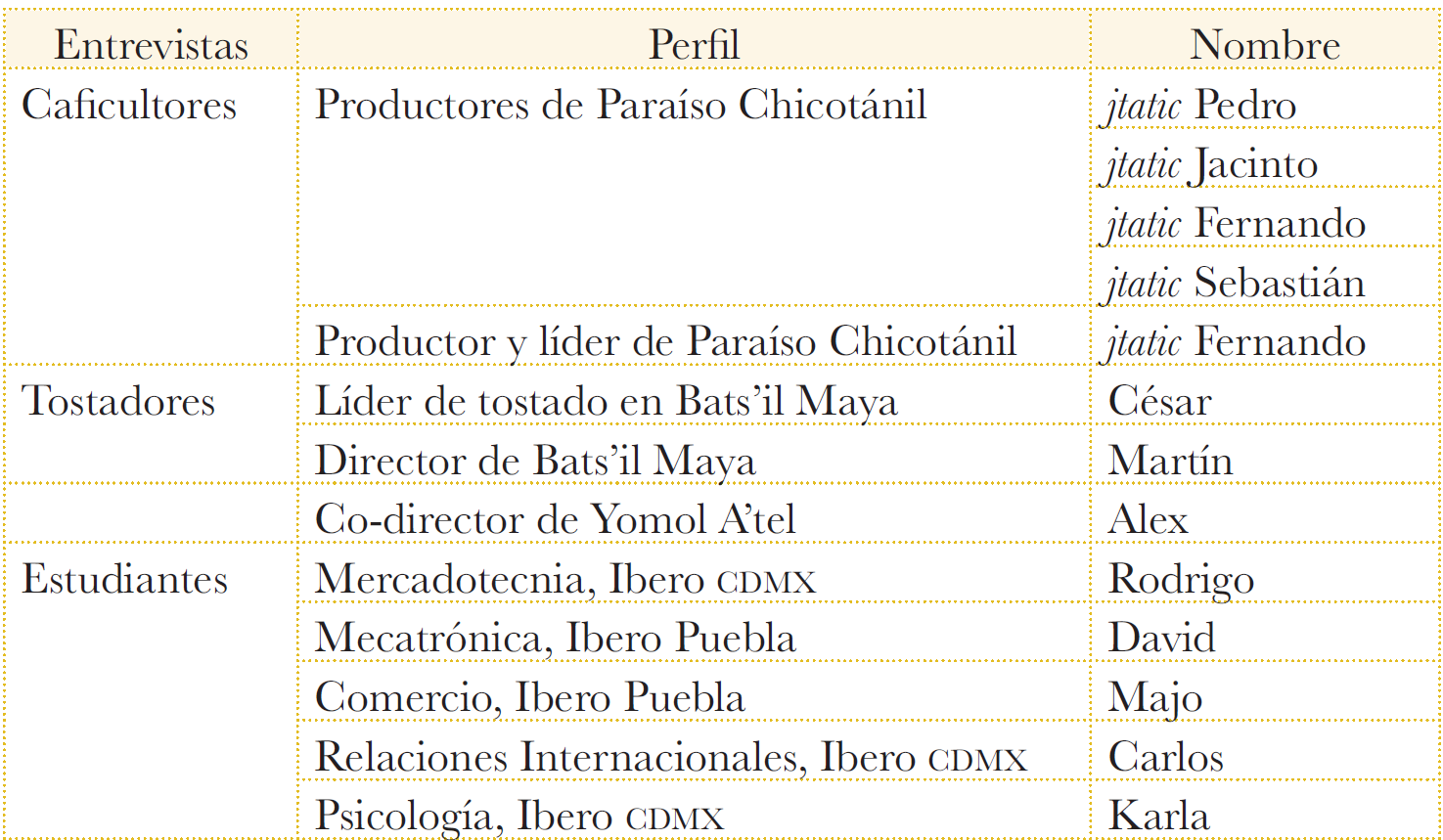
The interviews reveal the importance of the youth who participate in the cooperatives for the construction of intercultural relations, as they are the ones who move with greater agility both in the Tseltal culture and in the hegemonic culture. In addition, the need to take advantage of the spaces and efforts already existing in the universities to promote critical interculturality, as well as to generate and promote the social and solidarity economy, is evident.
Socio-historical context
Coffee production in the Sierra Norte de Chiapas dates back to the first decades of the 20th century. xx, when European foreigners acquired large tracts of land in the region. Due to the lack of other work options, the indigenous populations were forced to work on the haciendas at low wages. It was not until the agrarian reform of Lázaro Cárdenas that the Tseltal communities had their own land, and it was not until 1994 that the Zapatista movement succeeded in getting the demands for indigenous rights included in the national agenda and indigenous exploitation began to decrease (Rodriguez et al., 2019).
Initially, coffee was only produced for personal consumption and local exchange, but today it represents one of the main sources of economic income in the region (Gutiérrez and Llanos, 2024). From the 1940s to the 1970s, the so-called Green Revolution led to an increase in coffee production due to the intensive use of agrochemicals and the continuous exploitation of the soil.
At the end of the 1980s, Tseltal producers -concerned about the multiple damages caused by these practices and the low price of coffee sold to intermediaries- began to organize themselves into cooperatives (Gaona, Sánchez and Cruz, 2023). These collectives became the organizational base that sustains fair trade coffee, from the purchase of the raw material to production and distribution, mainly in Europe and the United States of America (usa uu.) (fao, 2025). Since then, the number of cooperatives in the region has multiplied and their objectives have expanded to include other resistance actions with interests beyond price, such as environmental care and the improvement of coffee quality through agroecology (Gutiérrez and Llanos, 2024).
In the history of these cooperatives, the involvement of religious groups stands out. As a means of helping people in coffee growing communities, churches began to link producers with international fair trade organizations and facilitated community organization.
The cooperatives that give life to the Capeltic cafeterias at the Instituto Tecnológico y de Estudios Superiores del Occidente (iteso) and the Ibero-American Universities (Ibero) in Mexico City, Puebla and León have their roots in the Jesuit Mission of Bachajón. Based on the principle of “making a path”, typical of the community life of the Tseltal peoples, in 2001 the Jesuits began to accompany a group of 22 families producing honey and coffee with the purpose of increasing their income (Pieck and Vicente, 2019; Yomol A'tel, n.d.). As of 2006, the consolidation of the project began with the involvement of Ibero Mexico, and by 2012, the group of cooperatives and companies of ess with the name Yomol A'tel, which means “together we work, together we walk, together we dream”.
Although the Yomol A'tel companies are now autonomous from the ecclesiastical congregation, the accompaniment of the Tseltal communities was fundamental for their consolidation (Ruiz, 2010), as well as the strengthening and cohesion of the regions of Chilón and neighboring communities (Gómez, Ruiz and López, 2008).
The Mayan cultures -Teltales and Tsotsiles- of the region are characterized by a human action attached to the “community ties of the heart”, based on joy, respect and solidarity integration of communities (Ortiz, 2010). 85% of the population of this region self-identifies as indigenous; 98% of them speak a language derived from Mayan (Government of Mexico, 2022). On the other hand, there is a strong influence of the hegemonic culture, in which Christianity has shaped the social and community organization. This is manifested in the religious positions that exercise authority in the communities (Pieck, 2010), as well as in the ecclesiastical festivities (Gómez, Ruiz and López, 2008).
In the municipality of Chilón, the Tseltal culture is reflected in the language, the textiles used as daily dress and daily customs. C’a C’un: “poquito a poco a poco”, is the rhythm that moves Chilón. From my experience, the people are warm and respectful, and generally greet with jnantic (“lady”) or jtatic (“sir”).
Chilón connects close to 600 indigenous localities (inegi, 2010) and serves as a cultural and economic hub for community life in the Sierra Norte de Chiapas. It grew 23% in population between 2010 and 2020 (inegi, Today, it has a wide variety of businesses organized in cooperatives. Despite economic growth, the last census revealed that 96.9% of Chilón's 146,639 inhabitants lived in poverty (inegi, 2020).
Critical interculturality
Historically, functional interculturality has been used to include people from all over the world in the modern capitalist system, incorporating historically excluded groups into the lower ranks of neoliberal models and ensuring that hegemonic powers maintain their position (Jameson and Zizek, 1998). The discourse of functional interculturality serves to invisibilize the growing asymmetries of the modern capitalist world (Tubino, 2016; Walsh, 2005). It is these intercultural relations that have dominated coffee production in Mexico, where folklorized images of indigenous communities are used for the marketing of large coffee chains.
In contrast, critical interculturality represents an epistemic, political, social, ethical and counter-hegemonic project. It starts from the problematization of inequalities, discrimination, racism and exploitation, with the intention of transforming social relations, institutions and other structures to promote equitable plurality. In the words of Catherine Walsh, the projects of critical interculturality “broaden and involve ‘in alliance’ sectors that [...] seek alternatives to neoliberal globalization and Western rationality, and that struggle both for social transformation and for the creation of very different conditions of power, knowledge and being” (2009: 10).
In this sense, instead of exploiting subaltern cultures in the global market, interculturality should make possible the construction of more just societies, through the visibilization of the asymmetries exercised by the domination of one culture over others. To confront the injustices of the global market, a critical, reflexive and emancipatory interculturality is required, with processes that start from below, with the intention of “expanding the space of struggle and relationship with other sectors in conditions of symmetry and to promote structural or systemic changes” (Walsh, 2002: 124). Fair trade and ess but, as we shall see with Yomol A'tel's exploration, their achievements are limited in the neoliberal system that dominates the world.
Social and Solidarity Economy (SSE)
The ess is a movement that seeks to combat poverty and extractivism in the globalized market.1 Since nine out of every ten Mexican coffee growers have less than two hectares for their crops and 65% of them are located in highly marginalized municipalities, they are suitable candidates for the ess (Gaona, Sanchez and Cruz, 2023). While fair trade uses the market to increase the incomes of small-scale producers, the ess proposes an alternative economic model, with emphasis on cooperation and democracy. As Gerardo Luvián-Reyes and Mara Rosas-Baños explain, “the organizations are guided by values that have solidarity as a guiding principle; but also the socialization of surpluses, self-management, reciprocity and actions in favor of environmental sustainability” (2021: 235). In addition to reducing poverty, with the ess The aim is to confront social exclusion and revitalize production based on the customs and real needs of the people. Therefore, this movement has been sustained by the growing understanding of the “systemic crisis expressed at multiple levels, such as poverty, pollution, ecocide, patriarchy, exploitation, infinite accumulation, racism, classism, narcissism, genocide and fratricide” generated by capitalism (García and Núñez, 2023: 11).
The cooperativism of the ess is based on democratic practices for the administration and management of the project, which generates a sense of community and belonging (Verschuur, 2018). Despite the boom of cooperatives in coffee-growing areas, the impact on the neoliberal market has been minimal; although it is the crop most associated with the ess In the world, cooperatives only produce 1% of the coffee sold around the globe (Zamora, 2021).
The Tseltal cosmovision recognizes that the survival and continuity of life, in all its forms, depends on the care of the Earth. This principle is manifested in the form of life known as the lekil kuxlejal (“good living”). It refers to the shared dream of the Mayan peoples that, beyond individual benefit, prioritizes harmony in all areas, including community work and care of the Earth. Therefore, the values of the ess and the Tseltal cosmovision; this situation has been fundamental for the development of the project described below.
Yomol A'tel: cooperatives in the Capeltic coffee production chain
Yomol A'tel is an articulating project, made up of families, communities and companies organized in different cooperatives that operate under the principles of the ess so that the coffee produced in Chilón reaches Capeltic's coffee shops. The Tseltal worldview is reflected in the way in which the traceability of coffee, “from the bush to the cup”, is carried out. Traceability is a concept used to make known where it comes from, how it is produced and how the coffee bean is transformed; in other words, it is the supply chain described with transparency. It begins in the field with the harvesting of the coffee from the bush, followed by the roasting and commercialization of the coffee, until it reaches the art of barismo in the coffee shops, where finally the fruit “from the bush” becomes the beverage “in the cup”. Each one of these steps in the traceability process is linked to one of the companies of ess Yomol A'tel, presented in Figure 1.
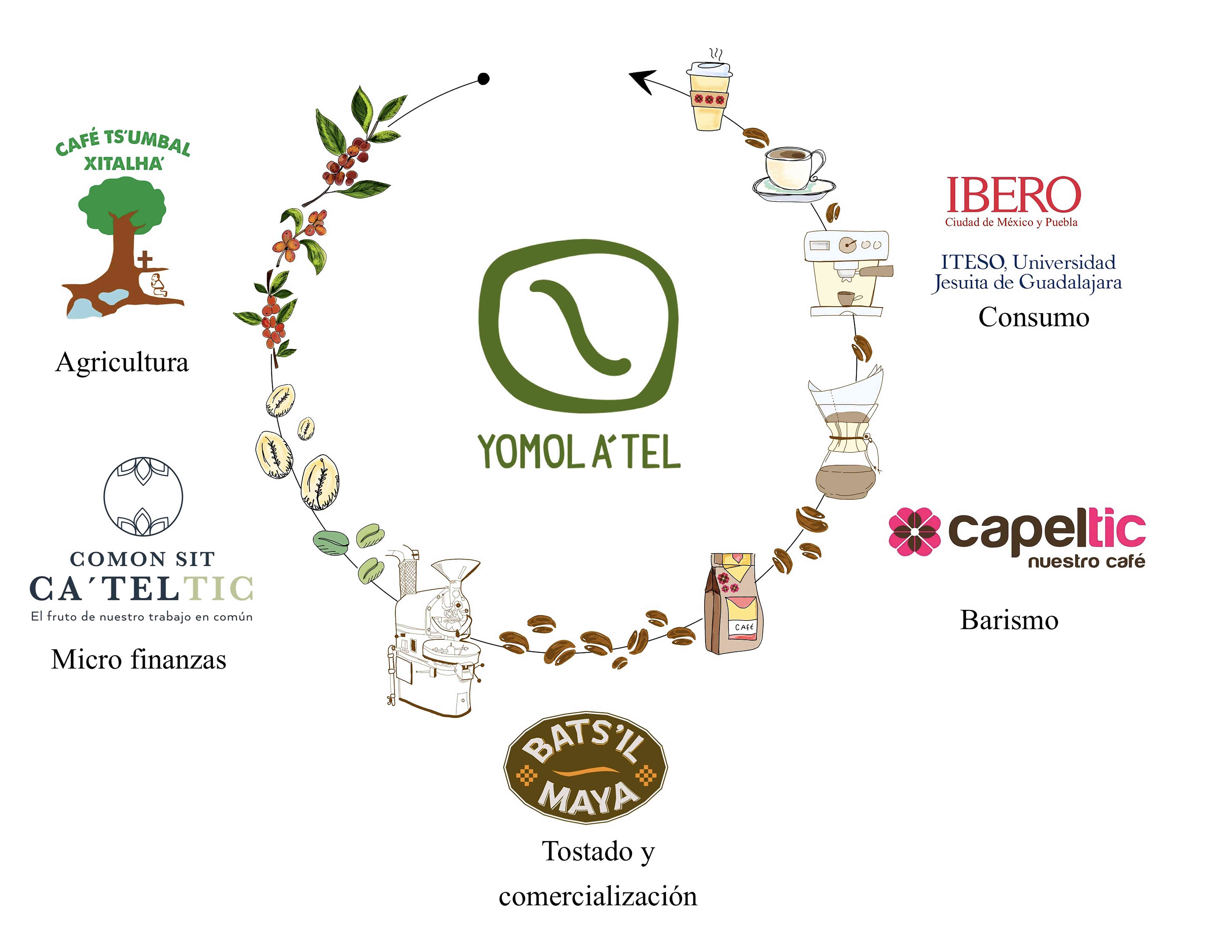
The Yomol A'tel organizations are described from Ximena's personal experience during her stay in Chilón in the summer of 2024. This experience of observant participation was complemented by the interviews summarized above in Table 1. While the sample is symbolic, the contrast of imaginaries highlights the intercultural dynamics that run through the coffee traceability journey and allows us to identify opportunities to foster critical interculturality.
Ts'umbal Xitalha’ Cooperative’
Established in 2001 to improve the income of coffee producing families, Ts'umbal Xitalha’ is the first cooperative in the production chain (Capeltic, 2016). In the summer of 2024 it was made up of 341 member families and coffee and honey producers.
They harvest and care for their coffee plantations organically and traditionally, in backyard gardens or in their own gardens, with practices learned in an intergenerational chain. As told by jtatic Pedro, “I started working, even before I was ten years old when I was already accompanying my father”. The coffee trees are accompanied by milpa and other tropical trees; this vegetation provides shade for the coffee trees and food for the families' own consumption.
The harvest cycle covers the entire year. The first period of the process, known as wet milling, takes place from September to March. This is when the cherry is cut from the coffee tree and then the fruit is pulped, fermented and dried until the seed is ready to be harvested. From April to August, the soil is fertilized, cleaned, pruned and transplanted to avoid the use of fertilizers.
In six of the seven interviews with students, the first process of the field was diffuse. For example, when asked about how they imagine the initial process, Rodrigo commented the following: “it is quite a long process, it is a small fruit that comes from a tree, it is browned a little and then it depends, it is ground”. Similarly, none of the four farmers interviewed had a clear idea of what the people who consume their coffee are like. As summarized by jtatic Jacinto, “the cooperative is going to go to the other side, there it takes it, I don't know, by the [sicThe United States, everything, well, Mexico, they told us students, everything, even San Cristobal.
The gap between the Tseltal culture and that of the “other side” is also exemplified in the way coffee is consumed. The jtatic Fernando related the custom: “here, then, it is roasted as soon as it has the husk, the women roast it with everything and parchment in the pot”. Its flavor is sweet and light and is more similar to that of a tea. For this reason, the beverages consumed in the cafeterias of urban environments -expresso drinks and methods in which their quality is measured by smell, taste and body- turn out to be very foreign to the Tseltal context.
Despite the differences in the way coffee is prepared, it is one of the most consumed beverages in both cultures. Questioning our consumption practices and, in this case, the origin of coffee opens the possibility for intercultural dialogue. Interculturality, from a critical stance, is configured as “a project that aims at re-existence and life itself, towards an ‘other’ imaginary and an ‘other’ agency of coexistence -of living ‘with’- and of society” (Walsh, 2009: 10). From this point of view, the café becomes a symbol of encounter and possibility of joint construction, despite the distance between both realities.
In the spirit of the ess, As shown in Figure 2, farmers organize themselves through community assemblies to make decisions that impact the entire cooperative. Dialogue is conducted in their native language, they seek collective consensus and elect representatives to the board of directors with leaders from the other Yomol A'tel cooperatives. An excerpt from Ximena's logbook narrates what she observed at an assembly in the community of Chichabanteljá:
It was an extraordinary assembly, the majority were men, there were some children and women. We introduced ourselves to the assembly in Tseltal and sat down with Clau [the cooperative's communications manager] who translated into Spanish. At the front were Alfredo [the leader of Ts'umbal Xitalha’], X-Mary [the microfinance leader] and Manuel [a producer on the board], giving proposals and presenting results. The producers had many doubts about the price of coffee, about where their interests and concerns lay; some looked very tired, others were very attentive and took up what others had said. jtatiquetic they said. At the end we said goodbye with a bow, which is a sign of respect (June 26, 2024).
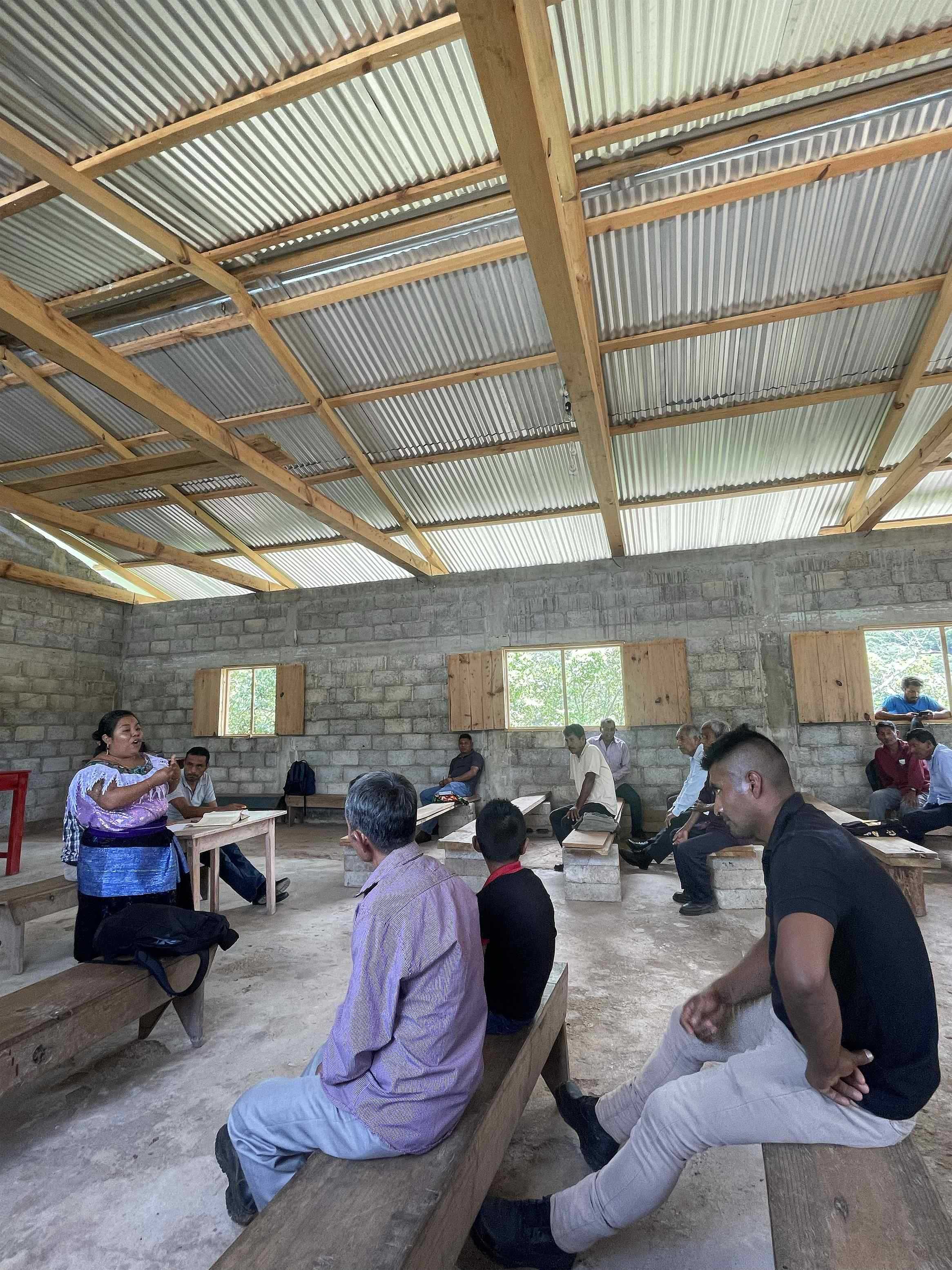
Assemblies present characteristics of shared leadership. According to Melina Romero (2018), when authority is decentralized and leadership is distributed, democratic participation is guaranteed, which implies that responsibilities are assumed equitably and collectively.
This collective management contrasts drastically with what Rodrigo imagines, based on other experiences, “I imagine that they live overworked. They work from the time they wake up until nightfall”. This comment reveals the opportunity to improve the dissemination of the project, in order to bring Capeltic's client students closer to the ess from a perspective close to its context.
Alfredo and X-Mary are the liaisons between the cooperative and the communities; they coordinate the collection of coffee crops and accompany the farmers to improve coffee quality through agroecological workshops. They forged their leadership by getting involved in the cooperative's assemblies at a young age. Both are graduates of the first generation of the Escuela del Café., a training space for young people from farming families. During an unpaid stay in Chilón, the young people learn about post-harvest processes in the Yomol A'tel cooperatives.. As Alex explained, “it is to open the door of the organization [...] so that they can get to know that other part of the work that is no longer seen in the field”.
The school is currently called Escuela de Jóvenes para la Sustentabilidad (Youth School for Sustainability) and has a vocational orientation and training character, which helps them to reflect on their professional future. In addition, their participation helps to communicate the processes to the communities. “A literal translation [...] into Tseltal is not the same as a young person who knows the process, in their own language, finding in their own words and examples to explain [to their communities] how to work,” Alex commented..
The first generations of the Coffee School are now in charge of the cooperatives. Alex noted that approximately 90% of those working in Yomol A'tel from Chilón are Tseltal. This reflects another achievement of the ess, The production and sale of coffee in the region has historically been controlled by foreigners and mestizos. Today it is estimated that 70% of the coffee produced in Mexico comes from indigenous populations. However, most of them continue to work under exploitative conditions, governed by unfair commercial practices and low prices imposed by large corporations (Coffee Watch, Empower and Prodesc, 2025).
Comon Sit Ca'teltic Microfinance Company
The Comon Sit Ca'teltic microfinance institution, whose name means “the fruit of our common work”, has as one of its purposes to distribute Yomol A'tel's resources to where they are needed. It was created in 2013, with the support of universities from the suj, as well as from El Colegio de la Frontera Sur and other universities abroad. In addition, they received support from social investors, foundations and networks such as Alboan, Entreculturas, Nacional Monte de Piedad, Fomento Social Banamex, Red Comparte, Fundación Loyola, Casa Cem and other allied cooperatives (Capeltic, 2016).
The redistribution of productive credit is an example of the other ways of doing economy, based on solidarity and reciprocity, part of the lekil kuxlejal and the ess. From a logic far removed from neoliberal policies, the communities organize themselves with productive credits in kind, loans for machinery and savings to reinvest in the communities. For example, the cooperative coordinates the redistribution of farm animals, as shown in Figure 3. The following account from Ximena's field diary narrates an experience with Comon Sit Ca'teltic:
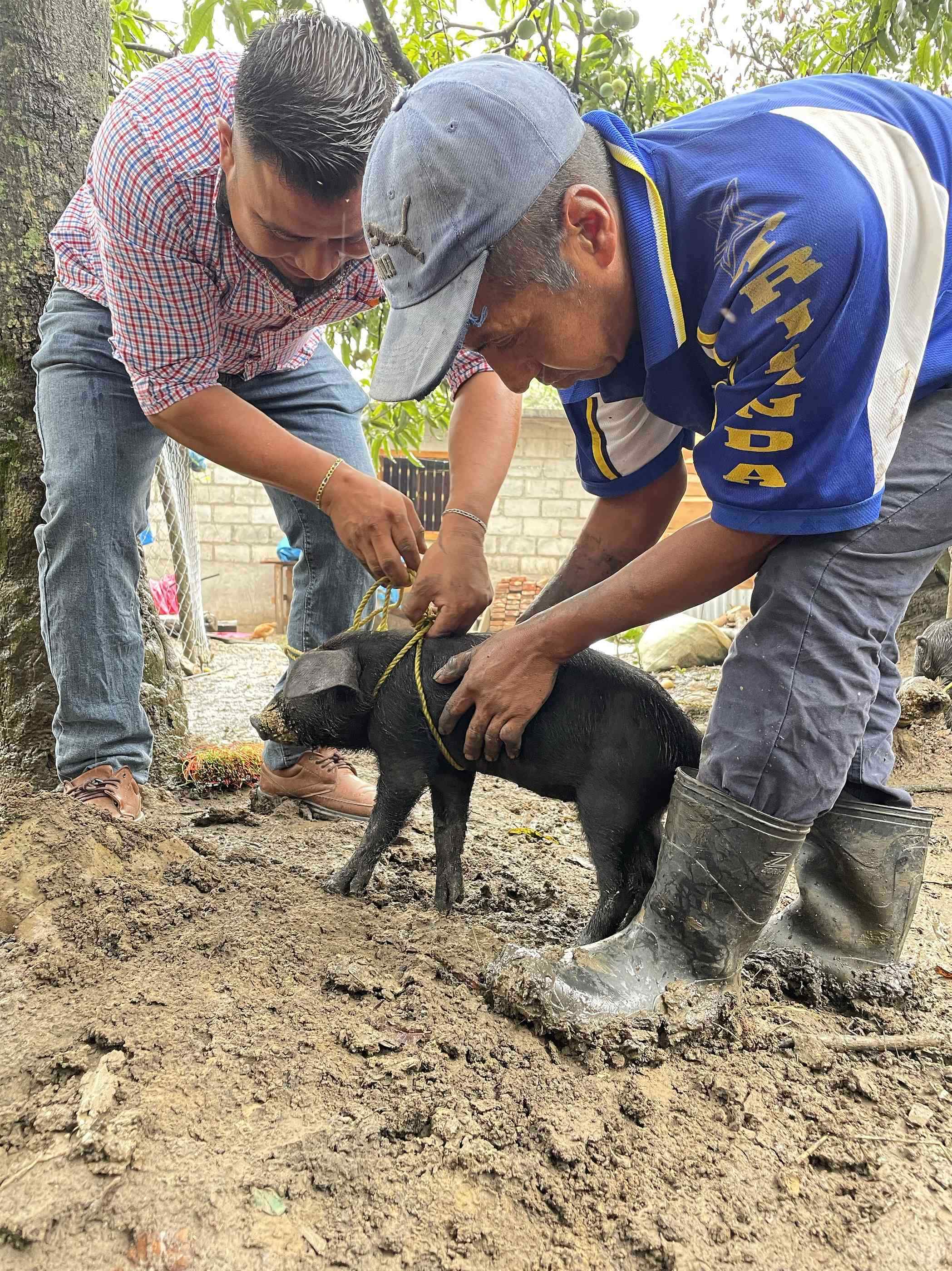
“Today we accompanied X-Mary to take a pair of piglets from a family in the community of Santa Cruz Yaxté to their new home in Chiviltic. The new family became responsible for feeding and caring for these piglets, with a commitment to give their offspring to a different family, and so on” (June 14, 2024).
These experiences reflect a different relationship between the community and the individual, oriented towards collective well-being. In the projects of the ess, In this way, the community becomes the central axis of social relations; organizations, such as the Comon Sit Ca'teltic microfinance institution, arise precisely to meet the needs of the community, and therefore seek to reappropriate and rationally manage the basic conditions of life (Coraggio, 2009).
It stands out how the imaginaries of the students interviewed are based on the capitalist norms of our society, in which well-being is individualistic and synonymous with economic stability. When asked about the lifestyle they imagine the farmers lead, David commented: “I believe that most of them live in precarious conditions or in poverty”. To this Majo responded: “Although it depends, the farmers, who are the working class, in this case, do live in a precarious area, but the production [...] the distributors or owners have better living conditions”.
The economy sustained from the logic mentioned by the students comes from a perspective of “development” based on the idea that “the progress of one sector must be maintained at the expense of the vast majority deprived” (García and Núñez, 2023: 13). From this economic model, sacrifice is glorified and those practices in which the relationship between human beings and nature constitutes the basis for maintaining environmental balance and the common good are considered insufficient.
In the traceability of coffee from Yomol A'tel, there are no “coyotes” (middlemen), which generates better income for coffee growers. The jtatic Sebastián narrated this benefit from his own experience: “When I was a child, we sold coffee to a coyote and they bought it very cheap, they bought it at 20 pesos, even 10 pesos a kilo, the coyote. Now it is going up a little, but in the cooperative it is going up more. They pay us 85 pesos, the coyote is half that, and it has hardly gone up.
The students interviewed acknowledged that they did not have a clear idea of how much is paid for coffee production. As Carlos mentioned: “I think the people who produce coffee are paid very little. It is quite complicated to put a price, I wouldn't know, or I would tell you a very random price”.
Without denying the marginalization, economic deprivation and lack of basic services in the Tseltal communities, it is important to note the new forms of organization of the Tseltal communities. ess that emerge there, alien to the capitalist schemes in which exploitation and scarcity abound. These solidarity practices did not appear in any of the interviews with students. Returning to Cornelius Castoriadis (1996), we recognize how a person's beliefs, meanings and values are recreated throughout life. In this sense, we again highlight the opportunity to broaden the students' imaginary of who produces the coffee they drink, with the valuation of the practices of the ess.
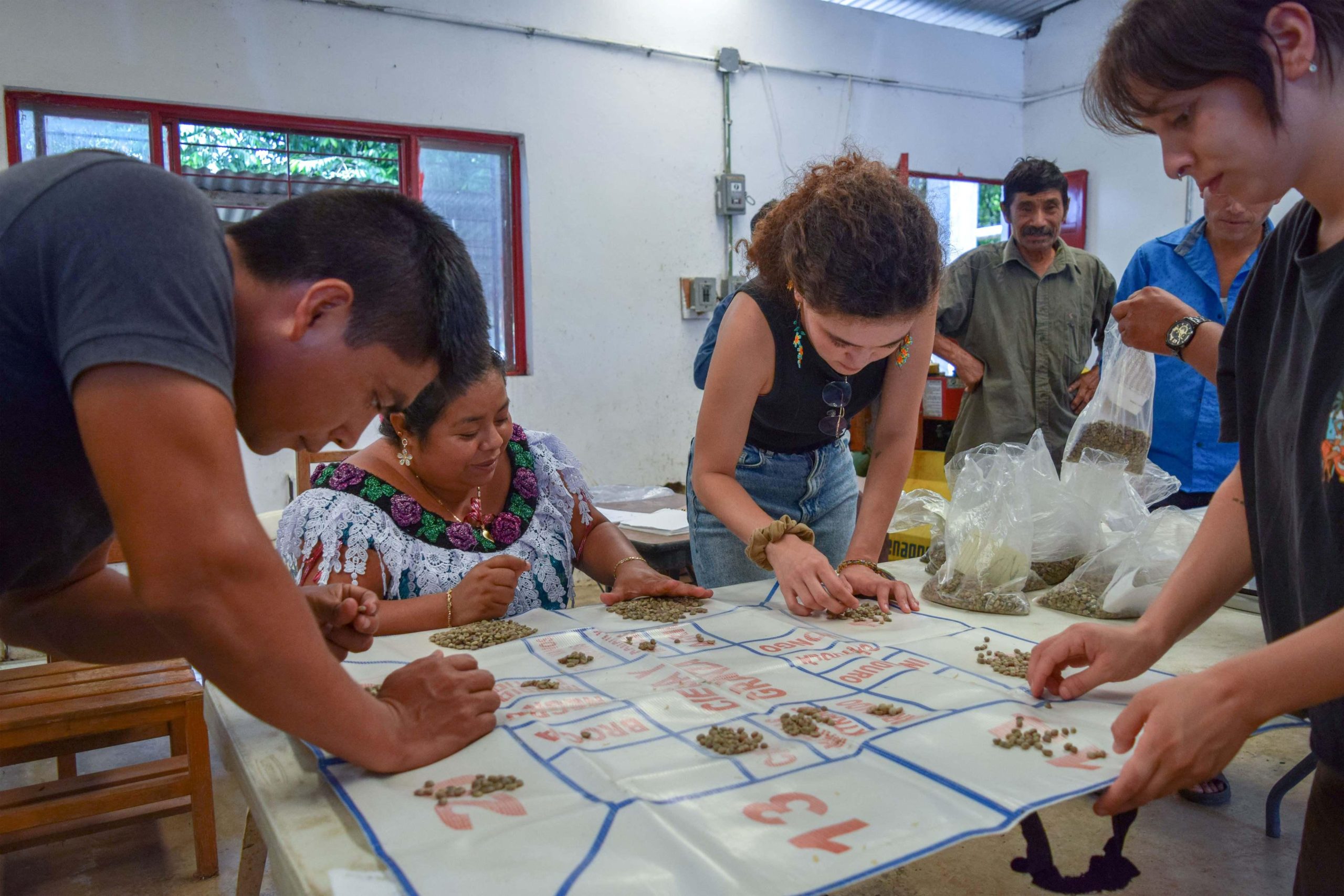
In almost all production chains, those who receive the smallest percentage of the profit are the people who work in the fields, largely because of the number of intermediaries who make profits along the chain. This highlights the value of the microfinance institution's accompaniment of Ts'umbal Xitalha’ farmers in a sampling process, in which the quality of each farmer's production is evaluated, taking into account the size and uniformity of the grain. Based on this classification, a price per kilo of coffee is assigned, differentiating between unmanche beans (pale and with imperfections) and quality beans, which can be commercialized in the market as specialty coffee. The following excerpt from Ximena's field diary narrates her experience accompanying the sampling process:
We went to the community of Paraíso Chicotánil, together with the farmers we took the samples that said each of their names. With some grids we separated them by size and then one by one we separated the coffee beans into the categories that Alfredo taught us. It struck me that when we separated the bag of a farmer who had had a bad harvest, they all said: ‘puro desmanche’, you could see the concern on their faces, the coffee looked pale (July 11, 2024).
The photograph presented as Figure 4 was taken during sampling in Paraíso Chicotánil.
Although the sampling is a first initiative to improve the price, the cooperative seeks to provide more tools for farmers to increase their income. To this end, they try to give them the opportunity to visit other cooperatives, both in Chiapas and in other states of the republic, such as the Sociedad Cooperativa Tosepan Titaniske, a cooperative of Nahua and Tutunaku communities in the Sierra Norte de Puebla. Alex mentioned the value of this practice: “One way to improve the price is through coffee shops and the sale of roasted coffee. But it is not enough to see our own practice, so together with them we went to visit other cooperatives”.
It is precisely these links that foster the cross-cultural practices that we seek to promote in the suj. Therefore, we believe that similar exchanges could be generated with other university projects, since interculturality invites to question the absences of different knowledge to think and act “through the symbolic extension of clues or signals” (Santos, 2005: 172) coming from experiences and social movements such as the social solidarity economy.
Bats'il Maya Toasting and Trading Company
The roasting and marketing company is called Bats'il Maya, which in Tseltal means “the true Mayan bush".”. Its history dates back to 1993, when it was founded as a coffee roasting micro-industry, which was gradually joined by farming families (Capeltic, 2016). Bats'il Maya is led by Martín, a Tseltal member who has been part of the cooperative since its inception, and is made up of young people, daughters and sons of farmers who know the processes of wet milling in the field, cultivation and seed treatment. At the plant located in Chilón, Bats'il Maya is in charge of carrying out the second part of the process, known as dry milling, which involves the roasting, grinding and processing of coffee. The Bats'il Maya cooperative is also in charge of the accounting and marketing of the product.
The dry mill is coordinated by César, who joined the cooperative in 2012 as part of the second generation of the Coffee School. Because of his own history as a farmer, he recognizes the importance of letting the farmers know how the coffee seed is processed, so that they understand the difference in payment, depending on the quality of the harvest. As he explained, “we always extend the invitation at each assembly for them to come to the coffee plant, from the communities to come and see it, to taste their coffee once it is ready”.
The packaging of the coffee bags highlights the way in which the process is attached to the Tseltal cosmovision of the Tseltal people. lekil kuxlejal, differentiating it from the process that takes place on the farms and in the coffee macroprocessors. To make traceability transparent, César explains, “we inform when we are asked for information [...] [there are] posters [in the cafeterias], the history books that are posted tell the story of Bats'il Maya and the Ts'umbal Xitalha’ cooperative. From there, among the whole, there is the Yomol A'tel, which encompasses everything”.
Despite communication efforts, interviews with students suggest little knowledge of the traceability that takes place in Yomol A'tel. For example, the students“ imaginaries did not include the Mayan origin of Capeltic. Only Carlos made the following comment: ”As far as I know they are from an indigenous community, but I don't remember the name right now.
The financial coordination of Bats'il Maya is called Canan Taquin, which in Tseltal means “the caretakers of metal or work”, and is led by Gerardo, another graduate of the Coffee School. As Martin explained, “We know what happens in the field. What we have learned here is to give value to this work”.
Efforts to experience the different stages of the production chain are aimed at emancipatory work. According to Luvián-Reyes and Rosas-Baños, this is what “constitutes the ultimate aim of the ess, contributes to the construction of a society that conquers creativity, power and knowledge to dedicate it to the development of the human being” (2021: 237). In contrast to the capitalist model oriented to the accumulation of entrepreneurs based on the alienation of workers, without consciousness of the lekil kuxlejal, In this sense, emancipated work implies an educational and cultural process, in which values of cooperation, solidarity, democracy and justice are shared (Luvián-Reyes and Rosas-Baños, 2021).
Transparency is at the heart of Bats'il Maya; for this reason, accounting is handled in an open book for the farmers. It is in this link of the chain where the most complexities were detected due to contextual barriers: "The idea is that someone who is Tseltal should be the one to learn how to do the accounting, and that these same people should try to explain [...] to transmit. The common thing in capitalist companies is to give technical reports in the language of accounting: credit, debit, assets, liabilities [...] and this is not understood in the countryside,” Martín explained. Even the Tseltal language has other nuances, so these technical words cannot be translated. Here we see the need to build another bridge so that young Tseltal people, perhaps with accounting studies from the universities of the suj, can explain the numbers in the communities.
Another challenge for Bats'il Maya is to manage a balance between the Tseltal worldview and the dynamics of the market. In Martín's words, “we have learned to distinguish that there are two rhythms, two demands [...] We have to find the middle ground because you can ask me for urgent coffee for tomorrow, but you cannot force the rhythm of the field to accelerate [...] You have to put up with what the land needs”.
David referred to this relationship between two cultures. When asked about the cultural gaps between the producer and the consumer, he commented the following: “I believe that it is a systematic inequality [...] not even understanding how the process works is going to solve it, because it comes from deep within the culture”. Regarding the collaboration between cultures, he said that “A producer is never going to be paid a hundred percent, because they are looking to make as much profit as possible and they need to sell coffee to survive, so they are paid a low price and sadly they have to accept it”.
The recognition of this injustice highlights the need to promote critical interculturalism in the suj and take advantage of links with projects such as Yomol A'tel. By getting to know another culture and having the opportunity to dialogue with its people, the social imaginary of the other is modified, in this case, between students and producers. Likewise, critical interculturality allows us to recognize our roles in the asymmetrical relations of the globalized world (Walsh, 2009). Not everyone will seek to do something to reduce the inequalities and injustices they know firsthand, but some will, contributing to the mission of the suj to “form conscious, competent, compassionate and committed people committed to the transformation of society, promoting justice, peace and reconciliation” (suj, n.d.).
Capeltic
The last link in the chain is the Capeltic coffee shops; in Tseltal Capeltic means “our coffee”. It is the space where the art of barismo gives shape to the coffee and is also a point of sale for Chabtic honey and Xapontic cosmetics, which are the brands of the other Yomol A'tel companies.
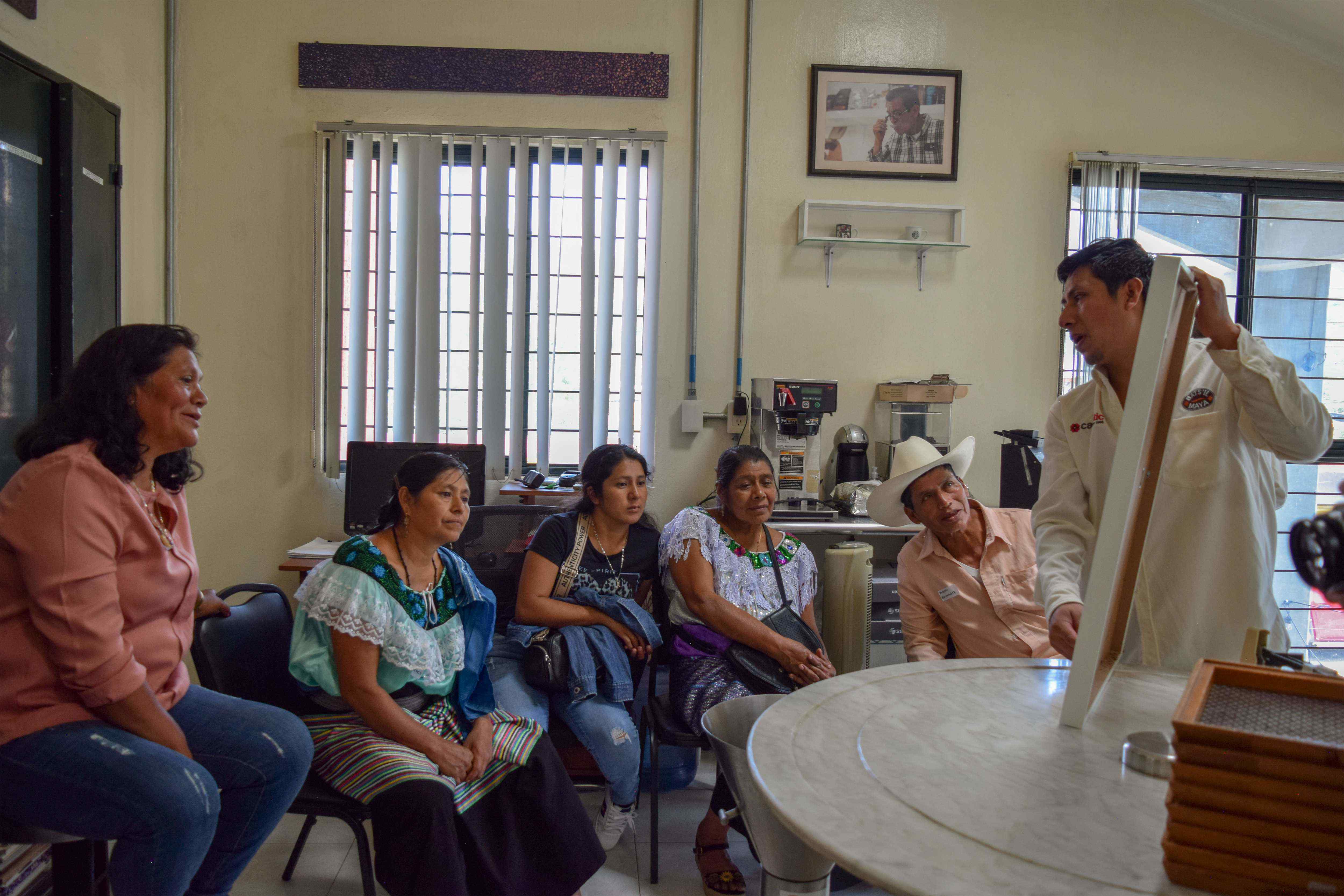
Capeltic's first branch opened in 2010 at Ibero Mexico City, followed by branches at Ibero Puebla in 2012, and the iteso in 2014. There is already another one in Mexico City, another one outside of the suj in Guadalajara and one in Chilón, which functions as an educational space where farmers learn about the beverages prepared from their crops. The following entry from Ximena's diary narrates her experience at the coffee tasting held in Capeltic for women farmers: “Women coffee farmers came from different communities, accompanied by their families, two of them spoke Spanish. They came to Chilón because there will be a premium line only from women producers, S'Capel Antsetic (women's coffee). The coffee, prepared in V60 and Chemex methods, was unfamiliar to them” (June 24, 2024).
The photograph presented in Figure 5 shows the producers listening to César during the cupping as he explained the different flavors of coffee.
On its website, Capeltic expresses its vocation to “be an intercultural window that invites to modify the ways of constructing workspaces and forms of consumption” (Capeltic, 2016). However, Capeltic shares the challenge of the suj to build bridges for interculturality. As Alex explained, “the rhythm of operation of the cafeteria is demanding and there is no time to engage in dialogue and the cafeteria has to speak for itself. We have tried with infographics, videos, photos, posters, everything [...] but they have their limits”.
In the imaginaries of the students interviewed, there was no notion of the ess. Karla commented, for example, “According to me, if you buy a coffee, they donate something. But Rodrigo noted how stories of philanthropic campaigns that abuse social responsibility have fostered a sense of distrust among consumers: ”It's not the same to be the owners of the means of production as it is to be the labor force. At Capeltic they supposedly say that they are the same, but I no longer believe the companies.
In spite of the mistakes in their imaginary, it is important to note the openness and interest of some to learn about other realities and generate changes. As David said, “it is very difficult to change the whole world from one day to the next, but I do believe that you could start by informing yourself, which is essential”. Likewise, Majo explained that, from her perspective, the problems of inequality come loaded with what she calls “a chosen ignorance”. Awareness is the first step to generate changes that favor equitable plurality. And, as Karla noted, awareness is accompanied by experiential experiences: “What most makes people enter into this kind of awareness is to interact more [...] to put themselves in their shoes and understand what their day-to-day life is like”.
The potential of the bridges between the Tseltal communities and the suj to promote critical interculturalism and the appreciation of the ess. The interviews reveal little cultural knowledge of the coffee chain. At the same time, the openness of the cooperatives to involve students of the suj in their activities. Moving from distrust and ignorance to intercultural experiences is the first step to “make visible, confront and transform the structures and institutions that differentially position groups, practices and thoughts within an order and logic that, at the same time and still, is racial, modern-western and colonial” (Walsh, 2010: 182).
Final thoughts
In order for the intercultural projects of the suj contribute to critical interculturality, they must bring about a transformation in social relations, institutions and other structures in favor of equitable plurality (Walsh, 2009). This approach requires interactions that foster mutual understanding and the joint construction of knowledge, as is done in the social and solidarity economy.
Ximena's experience reveals Yomol A'tel's openness to enter into these dialogues, which often lead us into uncomfortable terrain where we cannot deny the inequalities in the world. In addition to bringing the students' imaginations closer to the reality of Chilón, these experiences are key for coffee growers to get to know the people who consume the coffee they produce.
The exploration of farmers' imaginaries reveals the limits in the understanding of consumption and commercialization, which reflects the contextual barrier that exists, despite the dependence between cultures. Likewise, although Capeltic has been in the market for more than a decade, it is not yet suj, interviews with students reveal little knowledge about the ess behind the coffee they consume.
Critical interculturality invites us to question our own practices and beliefs, recognize injustices and commit ourselves to promote sustainable changes. Without this dialogue and reflection, it is unlikely that intercultural relations will have an impact on the structural-colonial-racial problem (Walsh, 2010). The pedagogy and praxis of critical interculturality are oriented to decolonial projects that question, transform and create radically different conditions to the inequality and discrimination that dominate today (Walsh, 2009). Therefore, in order to contribute to critical interculturality, alternative models such as the ess should be at the core of the curriculum in the suj. In this sense, the relationship with Yomol A'tel represents a great opportunity for business school students to understand the importance of fair pricing and sustainability in value chains.
The transformative learning that Ximena experienced in Chilón led her to value Tseltal knowledge, question the hegemonic culture and relate her profession to equitable plurality. This is a clear example of the potential of this project to contribute to critical interculturality. It is the young people, both from the suj as well as Yomol A'tel, who travel between cultures, with the openness to confront inequalities and promote equitable plurality. In order for Yomol A'tel to consolidate itself as a true intercultural bridge, it is necessary to open spaces for dialogue between coffee growers, cooperative members, students and academics. In addition to raising the awareness of the university population about the challenges for the ess, These spaces are useful for producing families to learn about the culture of their consumers, since critical interculturality is based on the exchange of knowledge that benefits all the people involved (Walsh, 2009).
In this sense, the potential of this project, which has only managed to connect a few students and coffee growers, is highlighted. In Martín's words, “You got to know a 10% of the producers. The footprint you leave with them, where you have walked, makes them think of you [...] and now they imagine you as many more people who are consumers”. With spaces for dialogue and other intentional efforts to foster critical interculturality, the projects with Yomol A'tel will change the imaginaries of the university community and foster praxis aligned with the mission of the Jesuit University System.
Bibliography
Blanco, Elizabeth (2020). “Discriminación étnico-racial y oportunidades educativas en México”, Sociológica (México), vol. 35, núm. 101, pp. 139-180. Recuperado de: https://www.scielo.org.mx/scielo.php? script=sci_arttext&pid=S0187-01732020000300139.
Capeltic (2016). Nuestra historia. Recuperado de: https://www.capeltic.org/nuestra-historia.
Castoriadis, Cornelius (1996, 1 de noviembre ). “Imaginary and Imagination at the Crossroads”. Discurso presentado en Abrantes, Portugal. Recuperado de: http://www.castoriadis.org/imgPDF/C_1_ Imaginary_and_Imagination.pdf.
Coffee Watch, Empower y Prodesc (2025). Explotación y opacidad: la realidad oculta del café mexicano en las cadenas de suministro de Nestlé y Starbucks. Recuperado de: https://prodesc.org.mx/wp-content/uploads/2025/02/Explotacion-opacidad-Nestle-starbuks.pdf.
Coraggio, José Luis (2009). “Los caminos de la economía social y solidaria”, Íconos. Revista de Ciencias Sociales, núm. 33, pp. 29-38. Recuperado de: https://revistas.flacsoandes.edu.ec/iconos/article/download/314/306/.
De Martinis, María (2025). “La economía social y solidaria en el territorio rural-indígena tseltal: un contexto socioeconómico”, Revista Iberoamericana de Economía Social y Solidaria ecoss, vol. 3, núm. 5, pp. 11-44. Recuperado de: https://ecoss.ibero.mx/index.php/ecoss/ article/view/32.
Gaona, Fernanda, Yolanda Sánchez y Mario Cruz (2023). “Comercio justo como una estrategia de política pública para la comercialización internacional de café mexicano”, Caleidoscopi, vol. 1, núm. 1, pp. 55-74. Recuperado de: https://repository.uaeh.edu.mx/revistas/index php /caleidoscopi/article/view/10946.
García, Susana y Carlos Núñez (2023). “Apuntes para una perspectiva decolonial de la economía social y solidaria. Acercamiento a la economía popular”, El Cotidiano, vol. 242, pp. 9-20. Recuperado de: https://elcotidianoenlinea.azc.uam.mx/index.php/numeros-por-articulos/no-242-pensar-la-economia-social-y-solidaria/apuntes-para-una-perspectiva-decolonial-de-la-economia-social-y-solidaria-acercamiento-a-la-economia-popular.
Gobierno de México (2024). Informe anual sobre la situación de pobreza y rezago social 2024. Recuperado de: https://www.gob.mx/cms/uploads/attachment/file/887285/07031Chilon2024.pdf.
Gómez, María Guadalupe, Dora Ruiz y Claudia López (2008). “Contexto regional: Misión de Bachajón”, Huellas de un caminar. Misión Jesuita de Bachajón. México: Universidad Iberoamericana, pp. 21-36.
Instituto Nacional de Estadística y Geografía (inegi) (2010). Compendio de información geográfica municipal 2010. Recuperado de: https://www.inegi.org.mx/contenidos/app/mexicocifras/datos_geograficos/07/07031.pdf.
— (2020). Censo de Población y Vivienda 2020. Recuperado de: https://www.inegi.org.mx/programas/ccpv/2020/#Microdatos.
— (2021). “Cobertura en educación superior modalidad escolarizada y no escolarizada”. Catálogo Nacional de Indicadores. Aguascalientes: snieg. Recuperado de https://www.snieg.mx/cni/escenario.aspx?idOrden=1.1&ind=6200027780&gen=842&d=n.
— (2017). Diseño estadístico. Módulo de movilidad social intergeneracional (mmsi) 2016. Aguascalientes: Instituto Nacional de Estadística y Geografía. Recuperado de: https://inegi.org.mx/contenidos/programas/mmsi/2016/doc/diseno_estadistico_mmsi_2016.pdf.
Jameson, Fredric y Slavoj Zizek (1998). Estudios culturales. Reflexiones sobre el multiculturalismo. Buenos Aires: Paidós.
López, Mónica y Paola Esquivel (2021). “Caracterización de estudiantes en distintos tipos de instituciones de educación superior en México”, Revista Latinoamericana de Estudios Educativos, vol. 51, núm. 3, pp. 71-96. Recuperado de: https://doi.org/10.48102/rlee.2021.51.3.408
Luvián, Gerardo y Mara Rosas (2021). “La estabilidad en pequeñas cooperativas de la Ciudad de México. Un análisis desde la modernidad sólida y la economía social y solidaria”, ciriec-España, Revista de Economía Pública, Social y Cooperativa, núm. 102, pp. 229-258. Recuperado de: https://ciriec-revistaeconomia.es/es/revista/?num=4458
Llanos, Luis y Norberto Gutiérrez (2024). “La apropiación cultural del cultivo del café a través de los saberes y prácticas ancestrales en Pocolum Sibanicjá, Tenejapa, Chiapas”, LiminaR. Estudios Sociales y Humanísticos, vol. 22, núm. 1, pp. 1-17. Recuperado de: https://doi.org/10.29043/liminar.v22i1.1043
Organización de las Naciones Unidas para la Alimentación y la Agricultura (fao) (2025). “Café”, fao–Mercados y comercio. Recuperado de: https://www.fao.org/markets-and-trade/commodities-overview/beverages/coffee/es.
Ortiz, Benjamín (2010). “‘Ts’umbal Xitalha’. La experiencia de una cooperativa de café: el camino de la sistematización”, Sociedades Rurales, Producción y Medio Ambiente, vol. 10, núm. 19, pp. 121-132.
Pieck, Enrique, Martha Roxana Vicente y Comunidad de Yomol A’tel (2019). Voces de Yomol A’tel. Una experiencia de economía social y solidaria. Ciudad de México: Universidad Iberoamericana.
Romero, Melina (2018). “Cooperativas de trabajo y liderazgo compartido”, Revista Idelcoop, núm. 224, pp. 64-79. Recuperado de: https://www.idelcoop.org.ar/revista/224
Santos, Boaventura de Sousa (2005). El milenio huérfano. Ensayos para una nueva cultura política. Madrid: Trotta.
Sistema Universitario Jesuita (suj) (s. f.). “suj” [página web]. Recuperado de https://sistemauniversitariojesuita.org.mx.
Taylor, Charles (2004). Modern Social Imaginaries. Durham: Duke University Press.
Tubino, Fidel (2016). La interculturalidad en cuestión. Lima: Pontificia Universidad Católica de Perú.
Verschuur, Christine (2018, 21 de diciembre). “Solidarity Practices and the Formation of Political Subjects and Actions for Change”. United Nations Research Institute for Social Development. Recuperado de: https://repository.graduateinstitute.ch/record/296663?v=pdf.
Walsh, Catherine (2002). “(De)construir la interculturalidad. Consideraciones críticas desde la política, la colonialidad y los movimentos indígenas y negros en el Ecuador”, en Norma Fuller (ed.). Interculturalidad y política. Desafíos y posibilidades. Lima: Red para el Desarrollo de las Ciencias Sociales en Perú, pp. 115-142.
— (2009). “Interculturalidad crítica y pedagogía de-colonial: apuestas (des)de el in-surgir, re-existir y re-vivir”, Educação On-Line, núm. 4, pp. 1-29. Recuperado de: https://educacaoonline.edu.puc-rio.br/index.php/eduonline/article/view/1802
— (2010). “Interculturalidad crítica y educación intercultural”, en Jorge Viaña, Luis Tapia y Catherine Walsh (eds.). Construyendo interculturalidad crítica. La Paz: Instituto Internacional de Integración del Convenio Andrés Bello, pp. 167-181.
Yomol A’tel (s. f.) “Nuestra historia” [página web]. Recuperado de: https://www.yomolatel.org.
Zamora, Carla (2021). “Café y justicia: la lucha de los productores en el comercio justo y sus potencialidades para la economía solidaria”, en Gladys Karina Sánchez (coord.). Comercio justo y economía solidaria en el sur de México. Oaxaca: Universidad Autónoma Benito Juárez/Itaca, pp. 77-102.
Ximena de la Mora González is a graduate of the Instituto Tecnológico y de Estudios Superiores de Occidente (ITESO) with a Bachelor's degree in Education Sciences (iteso), where she has collaborated in student collectives and participatory action research projects. Her interest in critical interculturalism and social and solidarity economy has led her to explore education from a community perspective and to value culture as a tool to collectivize learning. ximena.delamora@iteso.mx
Rebecca Danielle Strickland holds a PhD in Social Sciences from the Centro de Investigaciones y Estudios Superiores en Antropología Social (ciesas), full professor in the Department of Psychology, Education and Health at the University of California, Berkeley, USA, and a professor in the Department of Psychology, Education and Health at the University of California, Berkeley, USA. iteso and member of the snii i. She is a member of the academic board of the Masters in Management and Social Development at the University of Guadalajara and serves as national coordinator of the Inside-Out Prison Exchange Program. Her research interests include youth, violence and transformative learning. danielle@iteso.mx
Institutions



 EN
EN  ES
ES  FR
FR  PT
PT