
Introduction: presentation of the animite
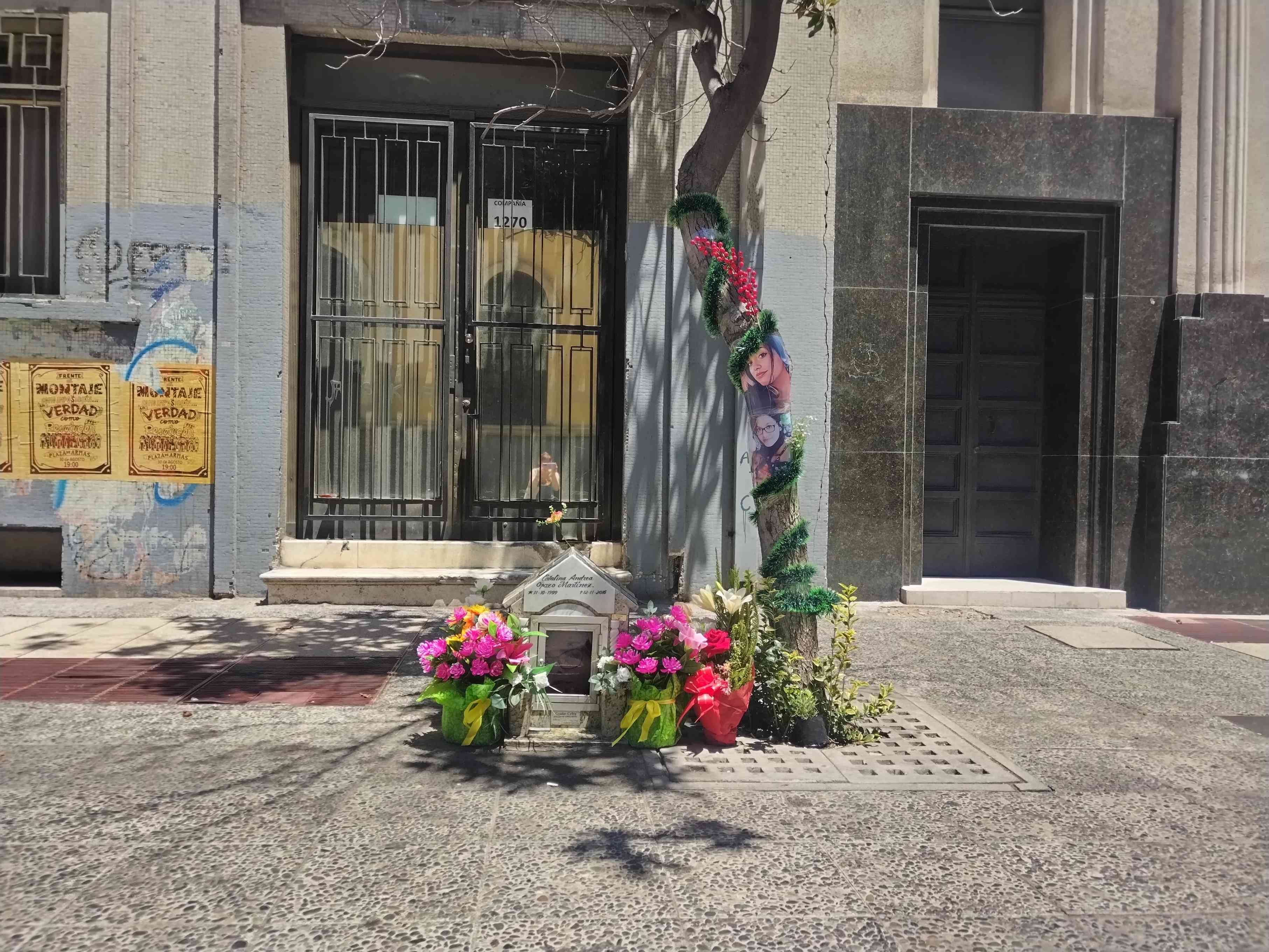
The body goes, the soul remains
Image 1. Catalina's Little Animation
Lili Almási-Szabó and David Arturo Espinoza
Compañía de Jesús Street, downtown Santiago, Santiago de Chile.
December, 2024.
“Look, when someone dies in an accident, all that's left is their body. His soul still has no place in heaven. He stays here on Earth. He clings to where he left the body. That's why we're building him a house so he can live there.”.
Ernesto, 56 years old, Chillán (2015)
Image 2. Animita del Virola
David Arturo Espinoza
Chacabuco Street, Estación Central, Santiago, Chile.
July, 2025.
“At the place where an accident occurred it is good to put something, a plaque, a little cross, a memorial. Better than in the cemetery. Because there is only the body there. But where the accident occurred, the soul is there [...] A little church has a reason for being. Someone died there. And in what conditions he died, if he was a good person, a bad person, if it was tragic or not tragic, and the price that death has for the family [...] We raise a little memorial to that injustice that he died”.
Javier, 51 years old, Santiago (2016)
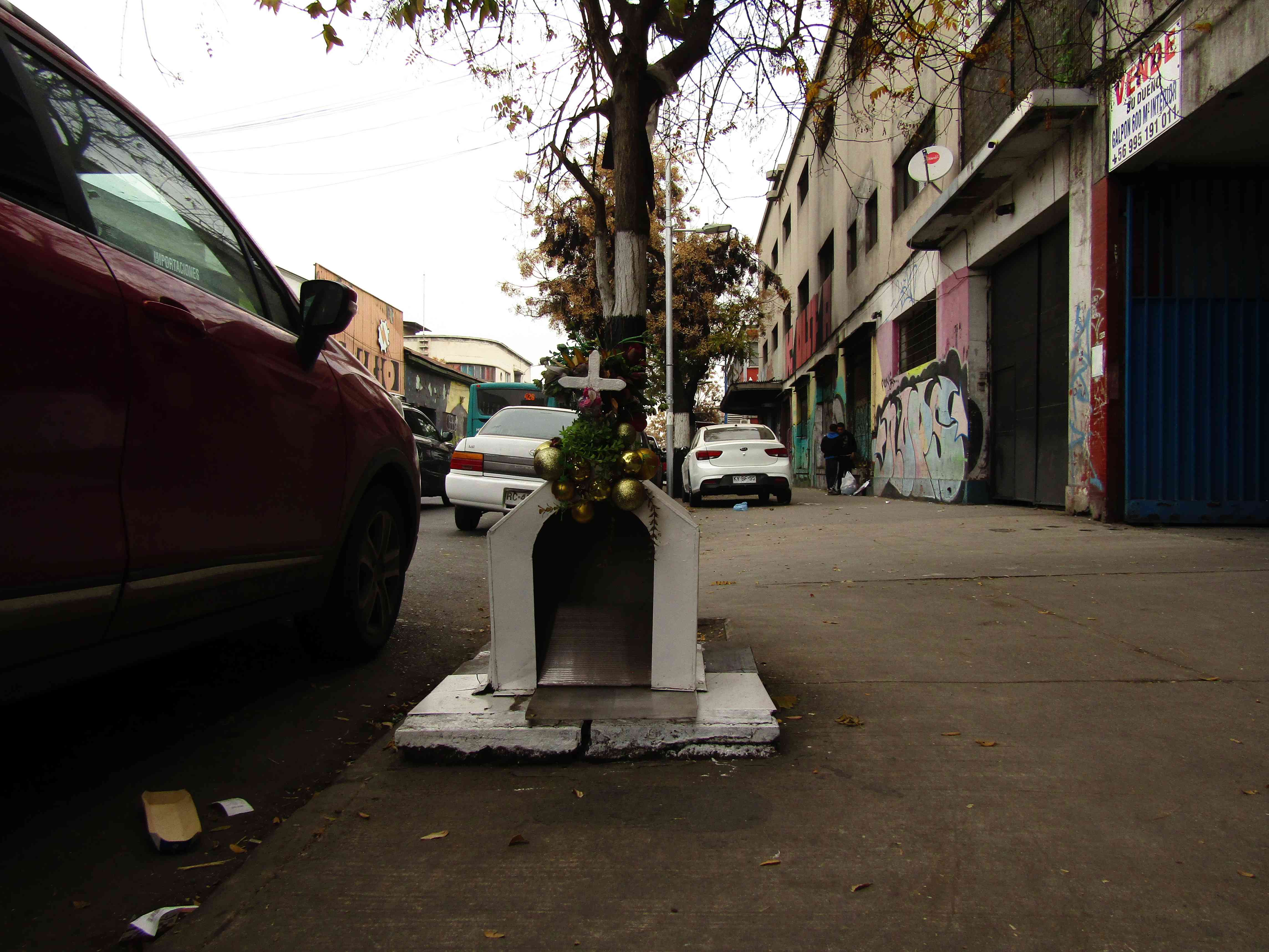
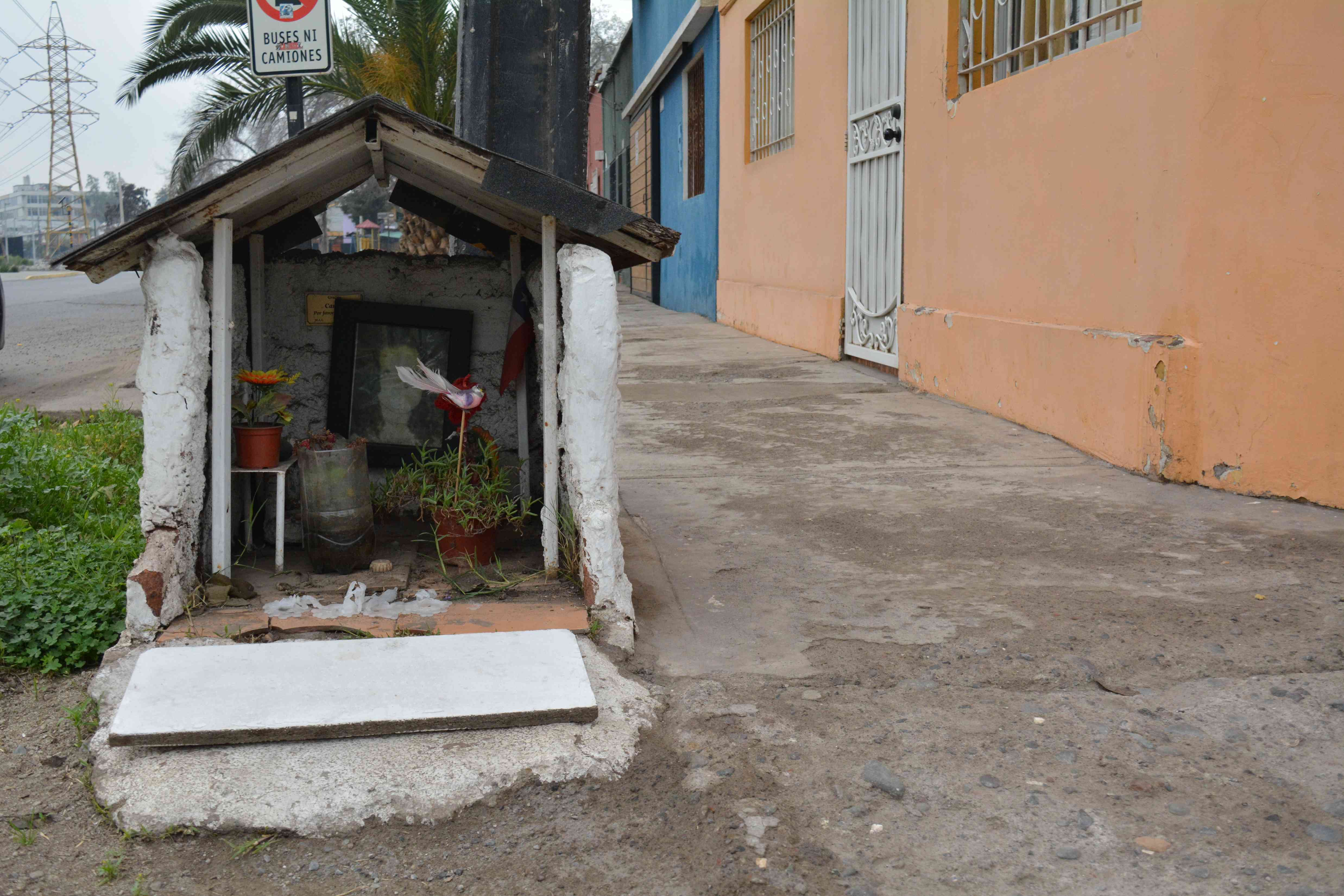
Animita in the neighborhood of Lo Franco.
Santiago Urzúa.
Quinta Normal, Santiago de Chile.
July, 2024.
“Chile is a tremendously legalistic country. If something is not written in the Roman code, carved in stone, it is not valid, it does not exist [...] But this is not the case here. Here there is a right acquired by the mere fact of being an affected family, a victim of a tragic death. It is not written in any law, but it is an acquired right [...] The animitas, like many other things in Chile, are sustained only thanks to voluntarism, as happens, for example, with the firemen [...] Due to a matter of respect, legality tends to be diluted in terms of its rigidity or its capacity to impose itself physically”.
Pablo, fiscal inspector of the Ministry of Public Works (2025)
Animite as a warning
Animita in a busy avenue.
Belén Miranda Osses
Pajaritos Avenue, Maipú, Metropolitan Region, Chile.
January, 2023.
“The animitas are not a phenomenon, they are a reality. They are there, in those places, because that is where things happen [...] The animita warns you that it is a dangerous curve or that the slope is risky. Look, it is full of animitas [...] Throughout Chile this is almost an obligatory comment: ‘Look out there, where there are so many animitas’. It was an accident, and an accident does not happen in just any passageway; it happens in dangerous places, in sectors far from the urban radius. The topography, the weather, the dangerousness of the road, the fog, the camanchaca, the heavy rain or other risks have an influence [...] An ”animita" is more important than a sign for those who drive there, more than a speed sign. Because a sign -a stop sign, for example- is only a warning. An animita, on the other hand, is the sign that [something happened here]".
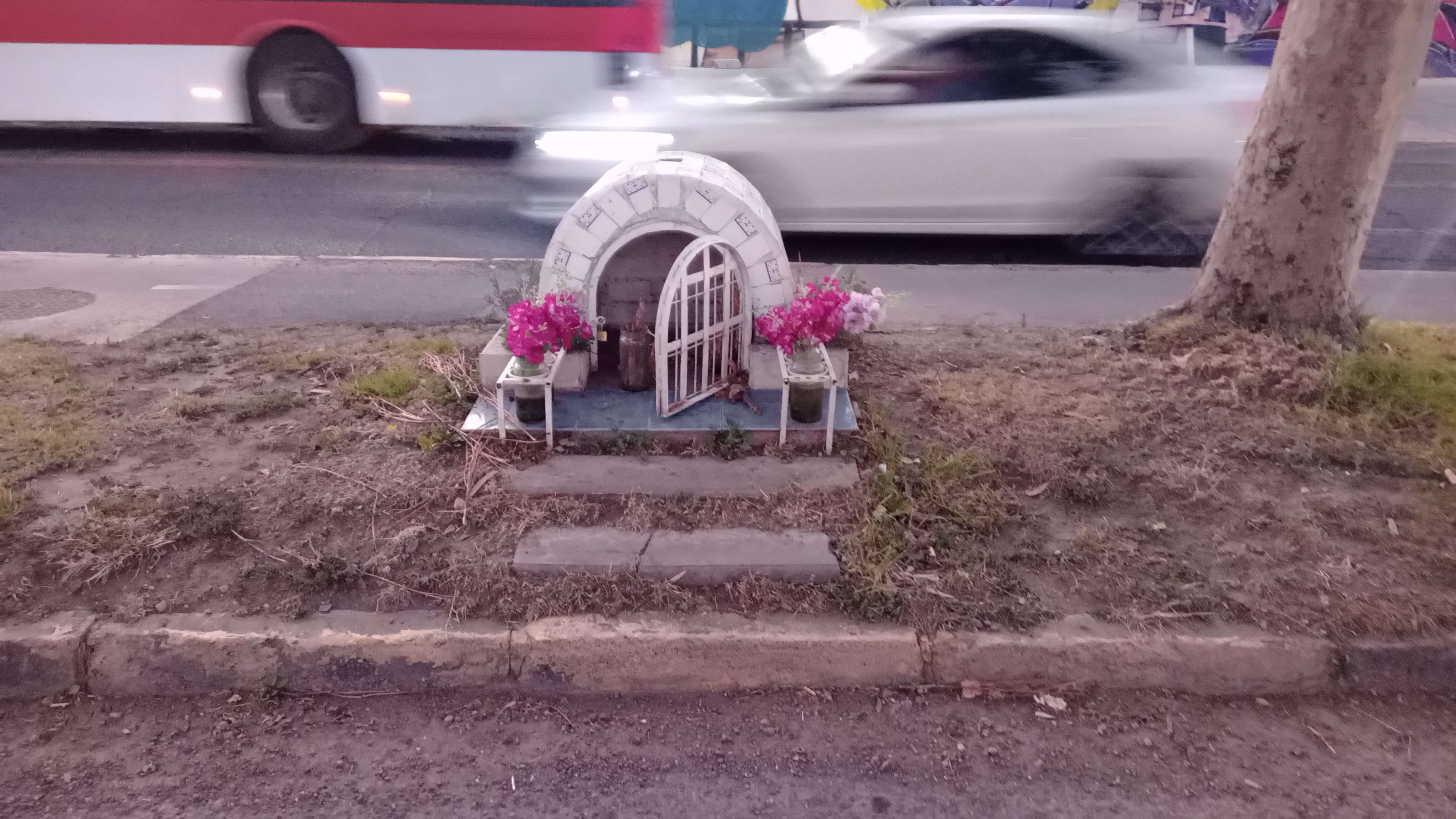
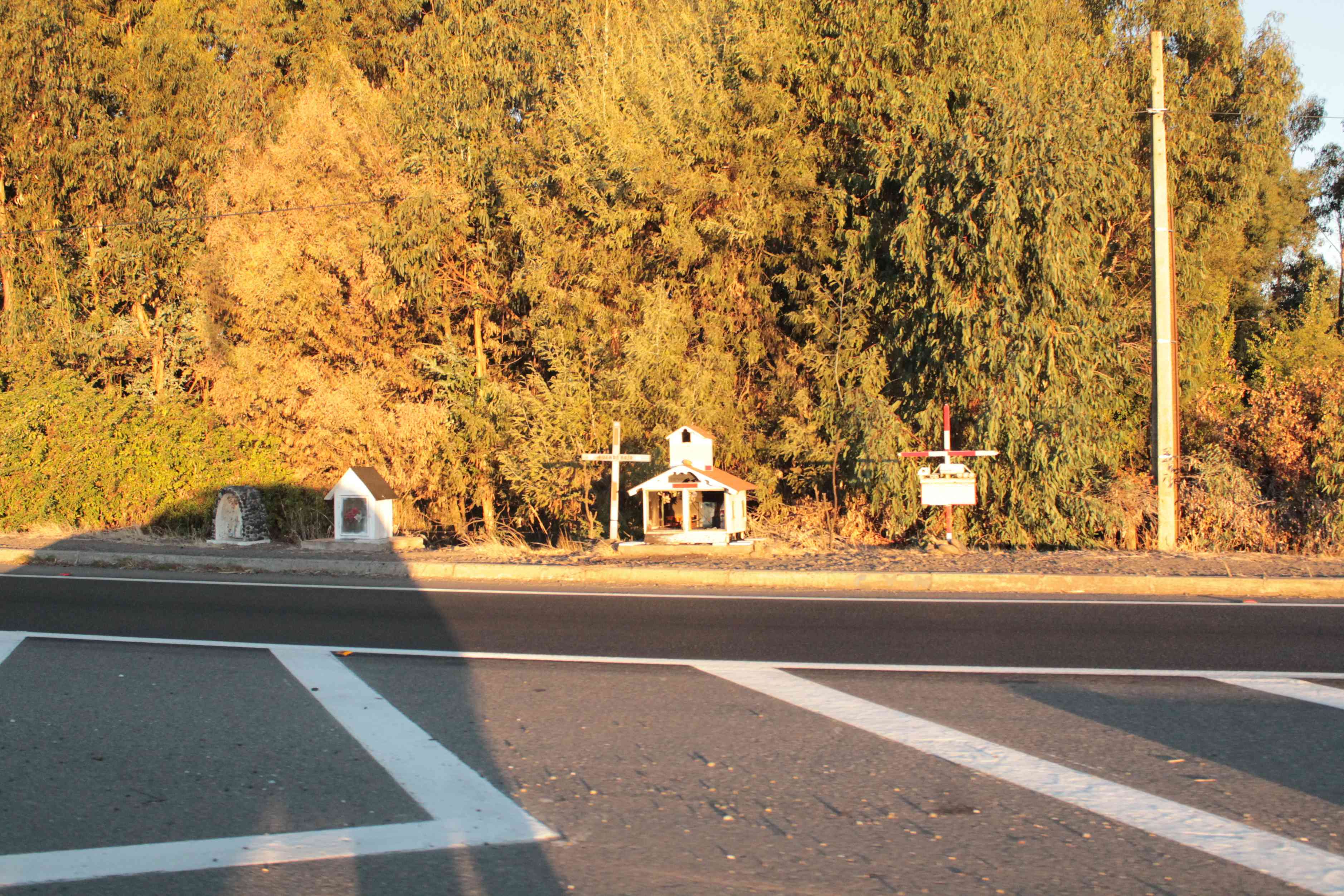
Image 5. Untitled
Lili Almási-Szabó
Chillán, Chile.
September, 2016.
“The roads are dangerous because people drive tired and stressed. That's also why the animitas are built. They leave in a hurry for work, because they have to be there on time. And on the way back, they leave work late, they're already tired, hungry, and they can't concentrate. Sometimes it's enough to be in a bad mood. A fight, for example. Since my younger brother died, I take special care not to drive when I'm too exhausted. But still, unfortunately, you have to get in the car. Work is work [work is work]. Sometimes it even happens to me that, while driving, I blink slower than normal. That's when I get scared.
Jaime, 55 years old, Quilicura (2017).
Image 6. Animitas on Route 5.
Lili Almási-Szabó
Between Chillán and Santiago, Chile.
March, 2016.
“Route 5 is a long and narrow coffin. Chile is the world champion of animitas. Although it is debated whether the origin of the tradition is European or pre-colonial, one thing is certain: no country has more animitas than Chile.”.
Pumarino, The Latest News, Transportation Fair (2012)
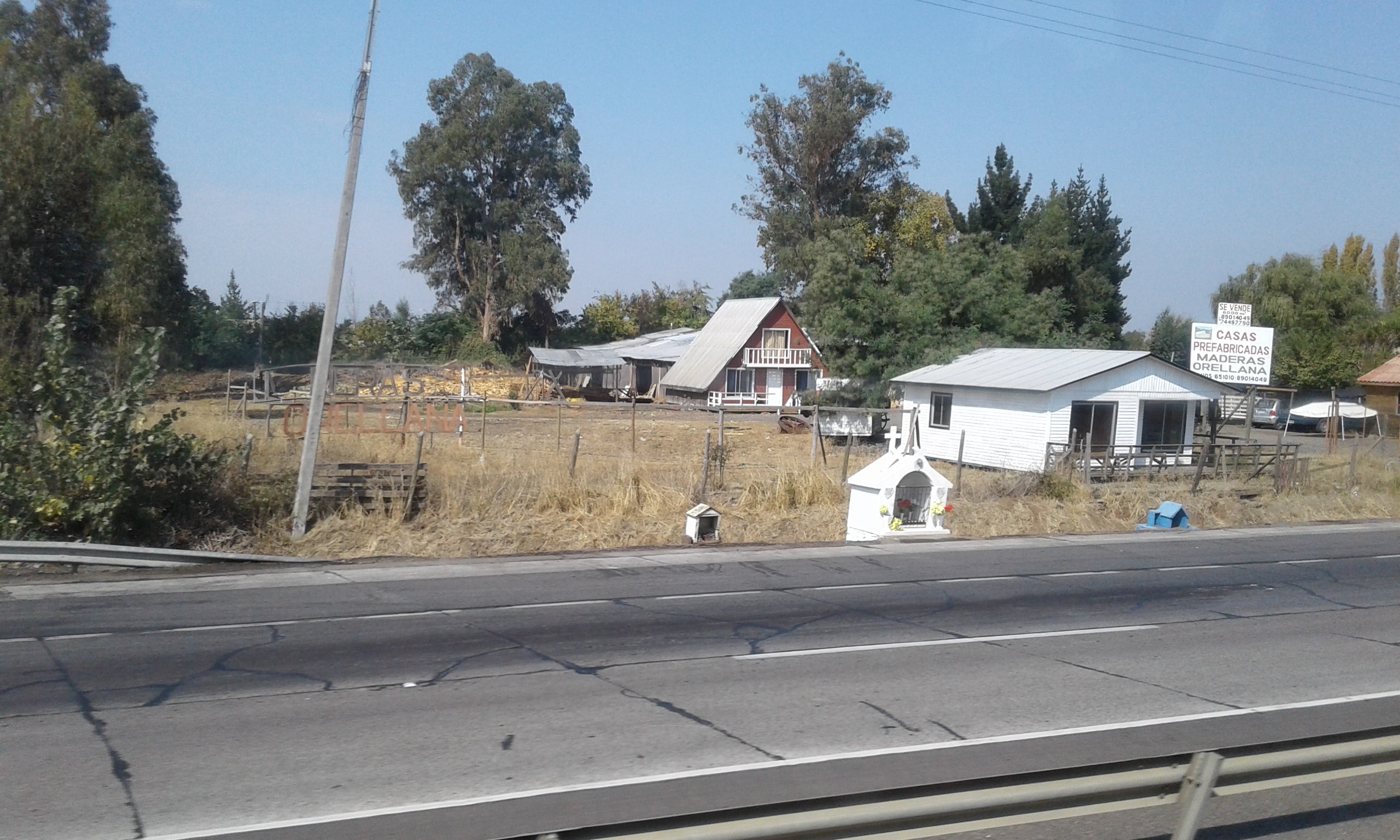
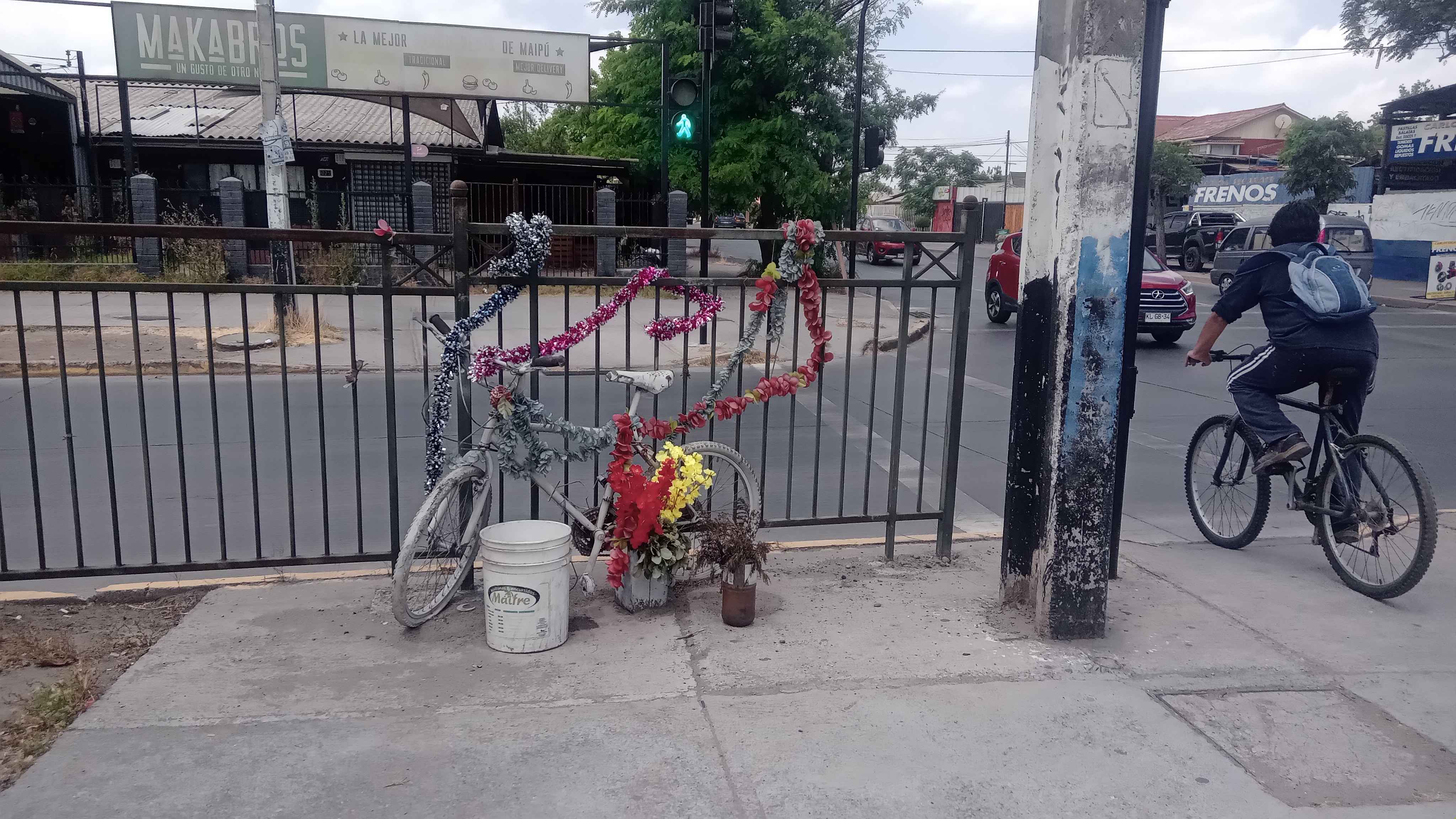
Image 7. Untitled.
Belén Miranda Osses.
Esquina Blanca Av. with Segunda Transversal Av., Maipú, Metropolitan Region, Chile.
November 2022.
“On urban routes there are two important phenomena to highlight. First, the animitas appear more in the popular and middle sectors, and not in the higher strata. I don't know if this is due to beliefs or other factors. Second, I would say that practically all of them -or at least an important percentage- are related to traffic accidents, mainly of cyclists. There is something quite striking there. The animita is usually associated with sudden deaths, with situations with which the relatives are not happy. On the other hand, when there has been a death as a result of a careless hit-and-run, an animita is not generated; for example, when someone crosses the highway in a reckless manner”.
Rodrigo, fiscal inspector of the Ministry of Public Works (2025)
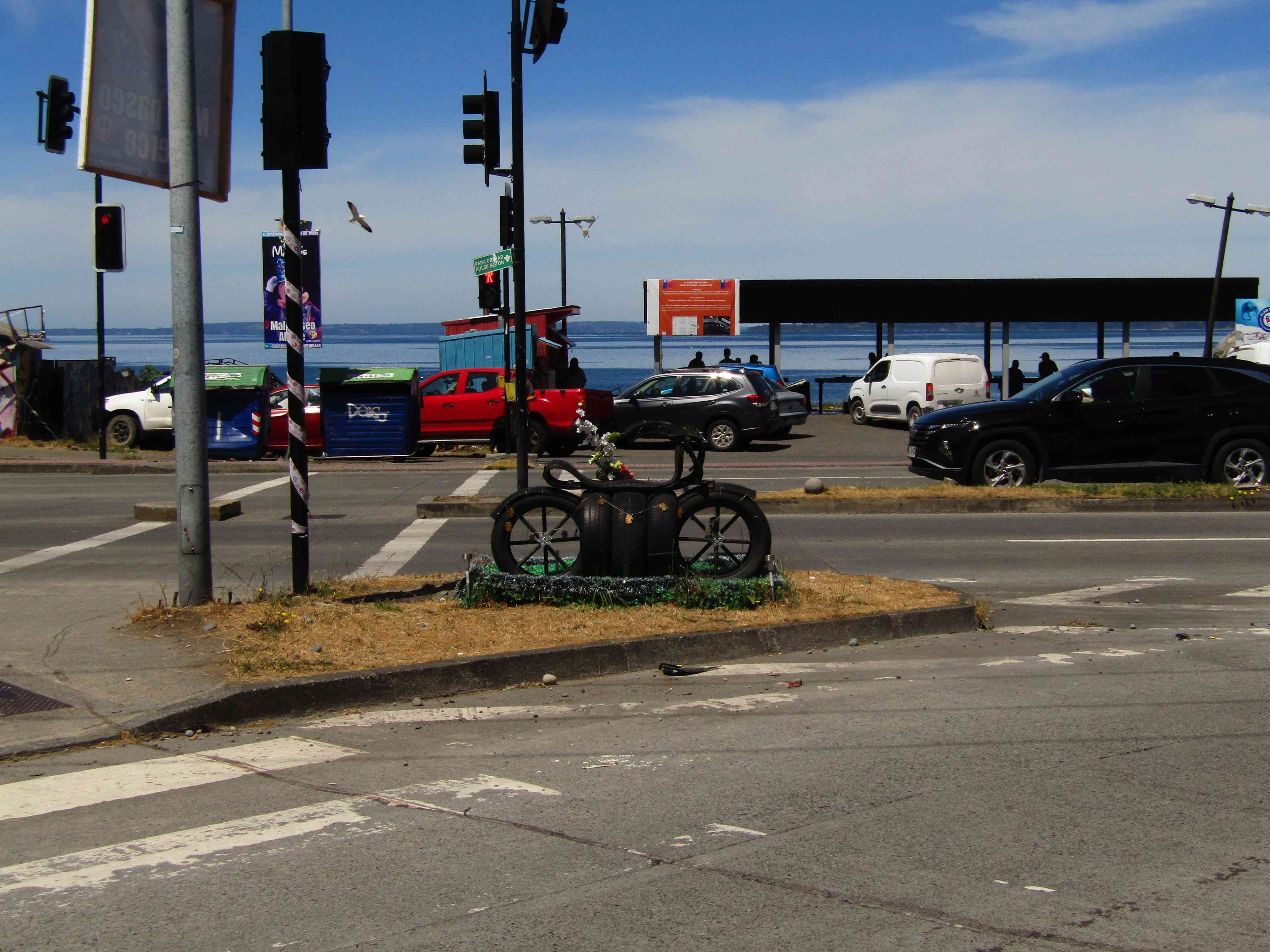
Image 8. Animita de Diego.
David Arturo Espinoza
Carretera Austral with Puelche River, Puerto Montt, Chile.
January, 2025.
At the intersection of the Puelche River and the Austral Highway is Diego's animita. I was exploring animitas in Puerto during the summer, and I also met several in Santiago and Valparaíso, but Diego's is the first one that emulates a motorcycle. There are bicycles, but motorcycles? Only his, as far as I know. I got to a street before the animita, and before crossing to it, several cars passed by, which gave me time to think. From where I was, it looked like a motorcycle stopped in the street. I mean: I could tell it was made of tires, but the silhouette fit perfectly with the road from my perspective. I thought it was like seeing a ghost, but not in the “Boo!” sense that wants to scare you, but more like the echo of something that happened and is now trying to tell people: ‘Be careful!.
Miraculous animitas
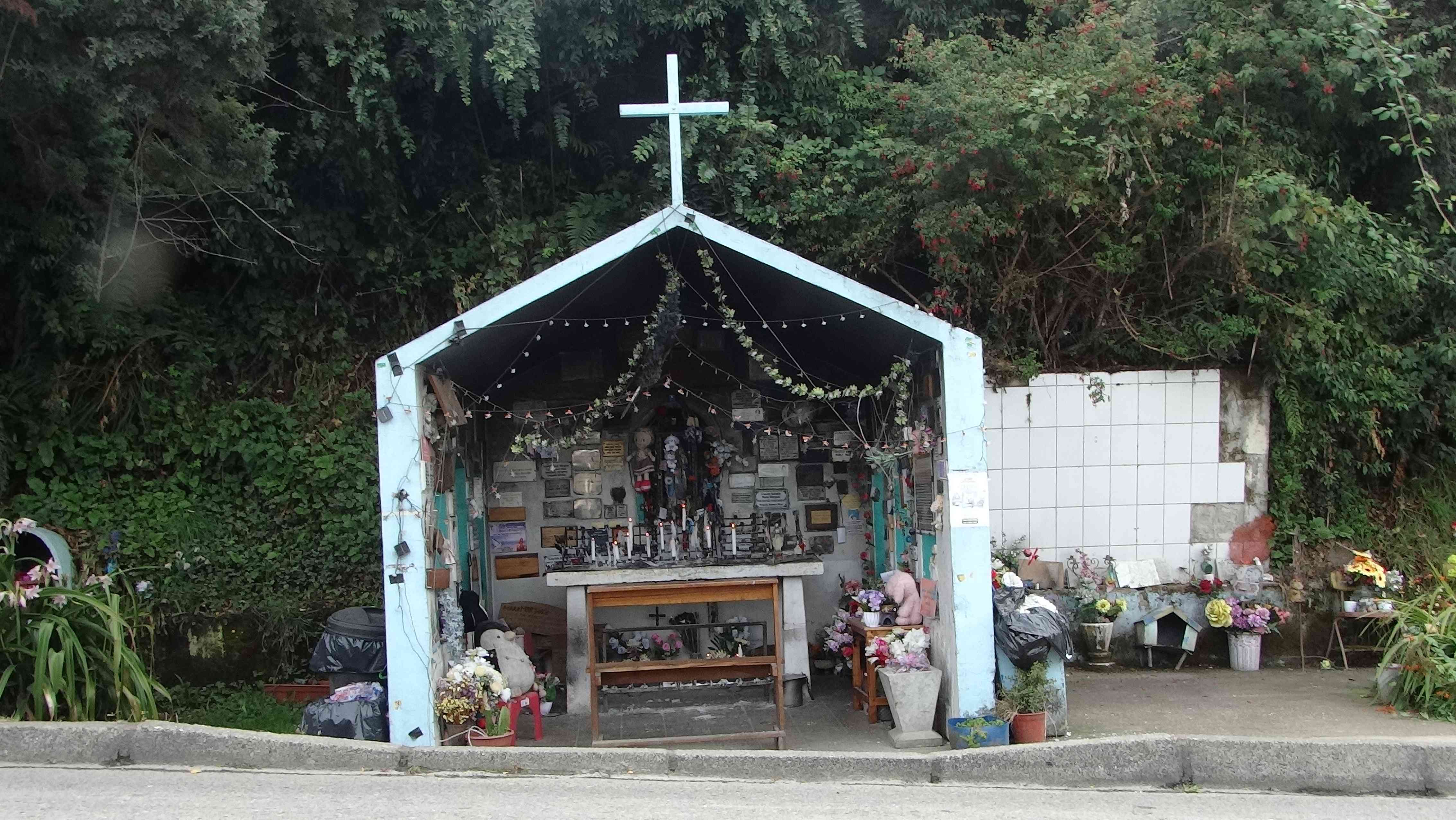
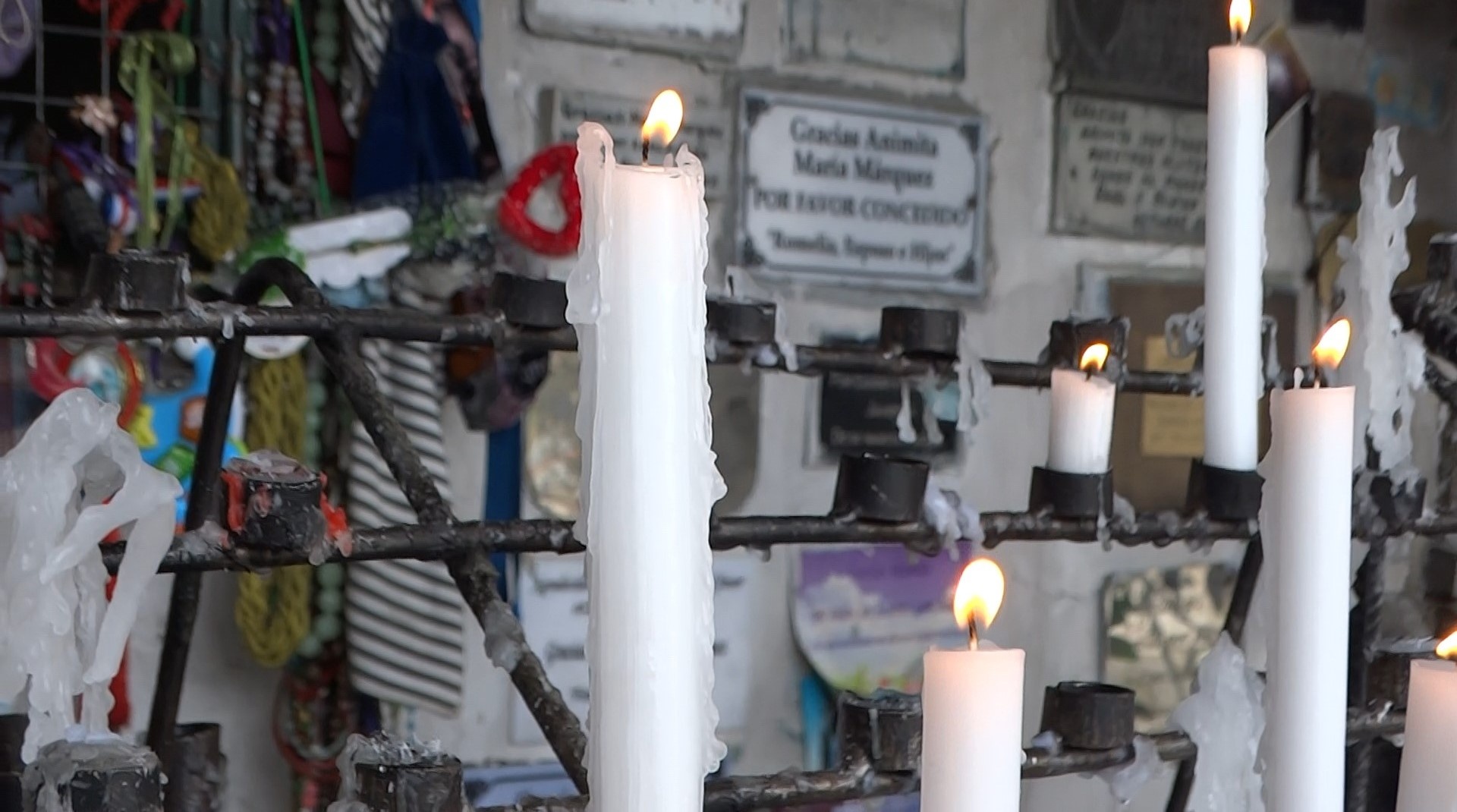
Maria Marquez, Nercon, Nercon
Image 9. Animita by María Márquez.
Pedro Pablo Medina
Route 5, Nercón, Chiloé, Chile.
January, 2025.
“All my life I have seen my traveling or walking companions cross themselves as they pass near it. The animita of Nercon, Maria Marquez, watches over the road and its walkers. Next to a bridge, in front of the sea, and the estuary where she met her death. She is there, grants favors, and allows sharing. Few are those who do not know of her, her presence is significant and a nearby street is named after her. She has been with us, or perhaps we have been with her, for nearly 100 years.
Pedro Pablo Medina, observation story (2025)
Image 10. Animita by María Márquez.
Pedro Pablo Medina
Route 5, Nercón, Chiloé, Chile.
January, 2025.
“They say that a hundred years ago
A little girl died
/:His soul went to heaven
Next to the creator:/
All the people venerate you
As a beautiful tradition
/:And I pay homage to you
Animita de Nercón:/
Miraculous animita
Sweet veneration
/:All people honor you
With prayers and prayer:/”.
Excerpt “Homage to animita Márquez”, Marco Bastidas Cárcamo (2019)
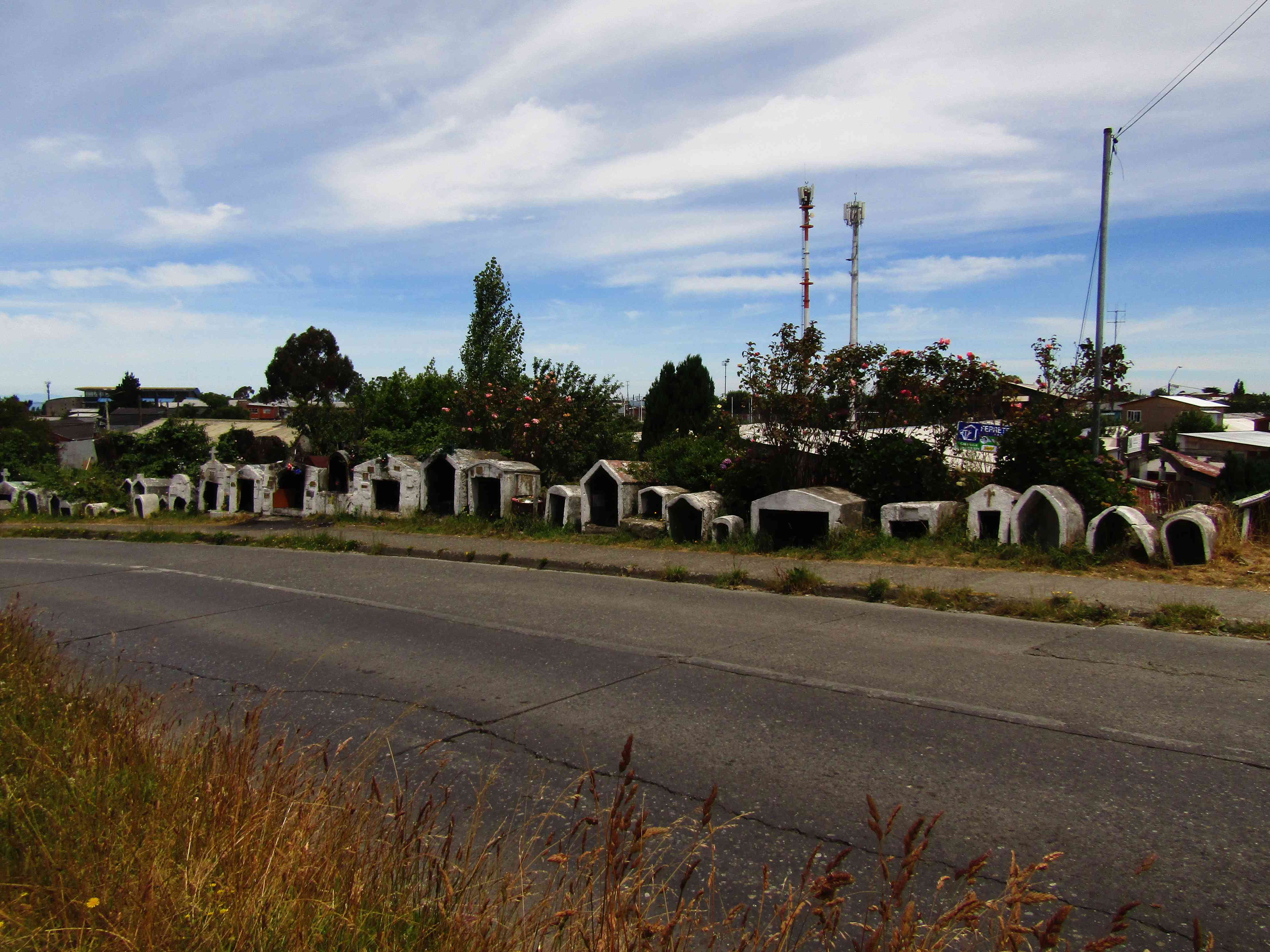
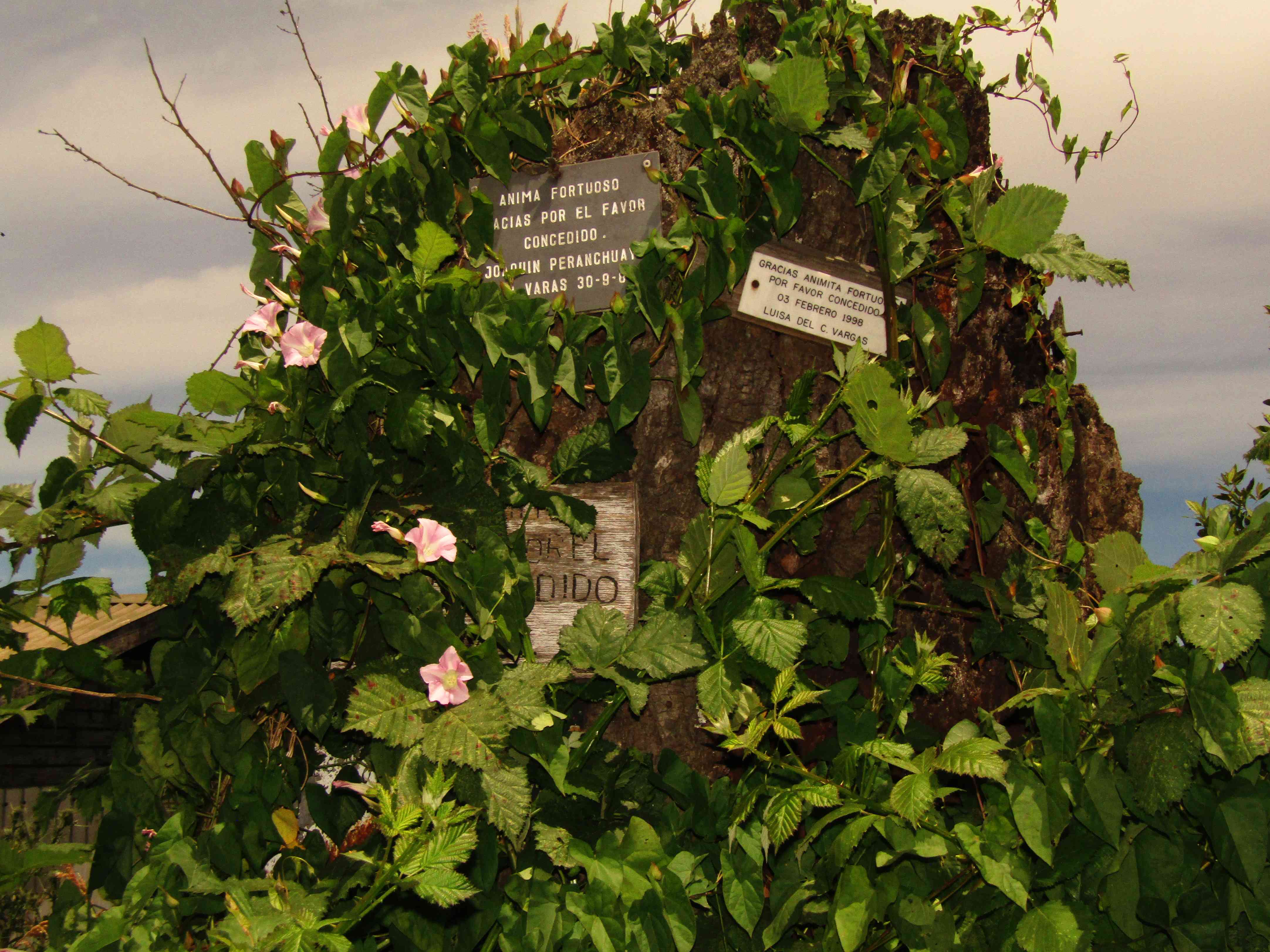
Fortuoso, Puerto Montt, Puerto Montt, Chile
Image 11. Animita de Fortuoso.
David Arturo Espinoza.
Las Quemas Street, Puerto Montt, Chile.
January, 2025.
“My, oh, my, love!
Back in the twenties
There was a violent death,
Miraculous little cheerleader.
Boy, did they kill
They killed a farmer,
Who will die a violent death
Miraculous little cheerleader.
Alas, his name was Fortuoso,
Boy, it's still going strong.
On Las Quemas road
A lot of people go there,
Miraculous animita
His name was Fortuoso,
It is still in force,
Miraculous little cheerleader.
To many people, oh yes!
By golly, he has delivered.
And you can find your badge
Grateful,
Miraculous little cheerleader.
The anima Fortuoso,
Gee, I'm respectful.”.
Cueca Fortuoso Soto - Mario Cárdenas with Los Piolitas Cueca Brava
Image 12. Animita de Fortuoso.
David Arturo Espinoza.
Las Quemas Street, Puerto Montt, Chile.
January, 2025.
“[...] Also, there is an important percentage [of animitas] that are lost in time, while others are maintained until eternity”.
Luis, fiscal inspector of the Ministry of Public Works (2025)
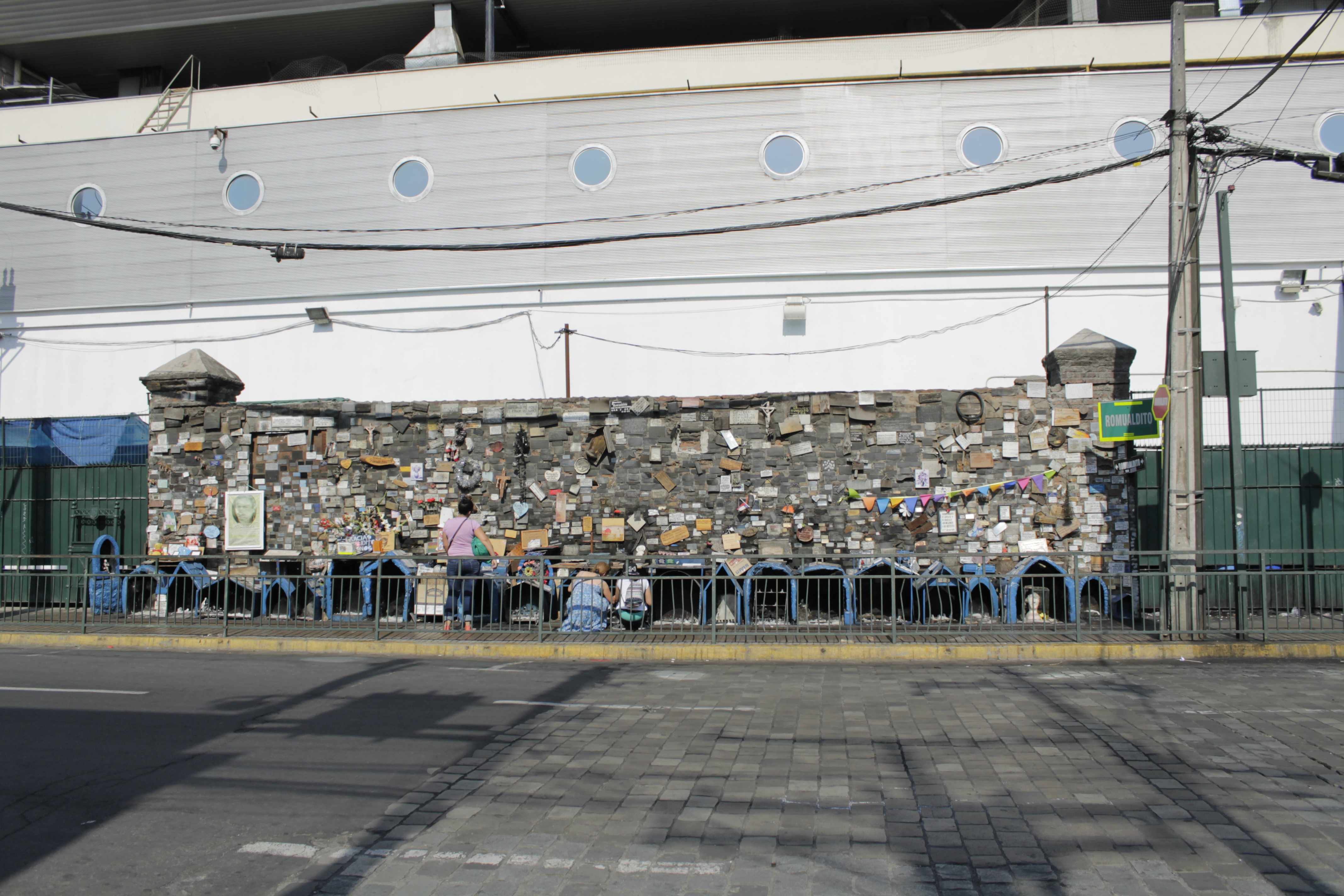
Romualdito's animita
Image 13. Animita de Romualdito.
Lili Almási-Szabó
Estación Central, Santiago de Chile.
January 2017.
“The children who pass by Romualdito point their fingers and ask aloud: ‘Mom, what's this?’ The answer: ‘It's Romualdito, see, he's a little saint! Say hello to him!’ Another mother, smiling, says to her little daughter, about a year old, who looks at her with her big eyes while in her arms: ‘Look! There's Romualdito! Bye, Romualdito!’. Surely they have passed that way several times. The woman slows down, but does not stop. They walk slowly. She holds up her daughter's hand, waiting for her to start wiggling her little fingers. Finally, the girl waves, and the duo disappears between the houses.”.
Lili Almási-Szabó, field diary (2017).
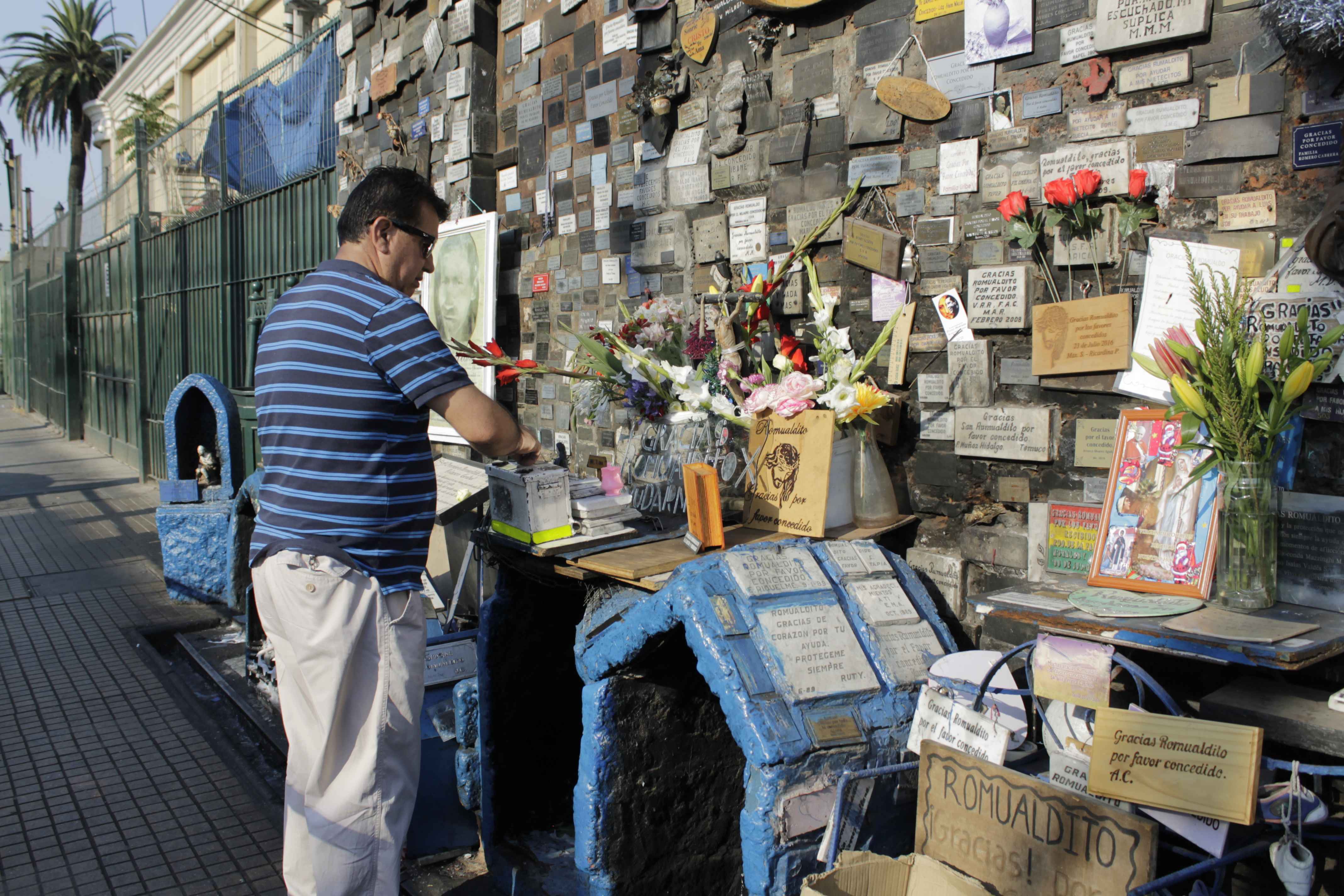
Image 14. Animita de Romualdito.
Lili Almási-Szabó
Estación Central, Santiago de Chile.
January 2017.
“Well, here [in this country] we believe in miracles. Where can this departed soul be now? Only he or God knows, we don't. Maybe he is resting, or maybe he is in heaven. I cannot tell you that, daughter. If this person died with Jesus, then he is now sleeping. If he died in sin, maybe he is in a lake of fire, or an angel or a bird will pick him up and take him to heaven. That I do not know. It is the faith and the requests of the people that move these beings. Look, here are the gifts, the messages. You have to say, ‘Look, Romualdito, I bring you a package of candles, a small gift, a plaque. You see?'” The gentleman pointed to a plaque of gratitude on which it said: “Thank you for favor granted” [...] “If you come here and ask for work, because you want to do this and that, you have to fulfill [the soul]”.
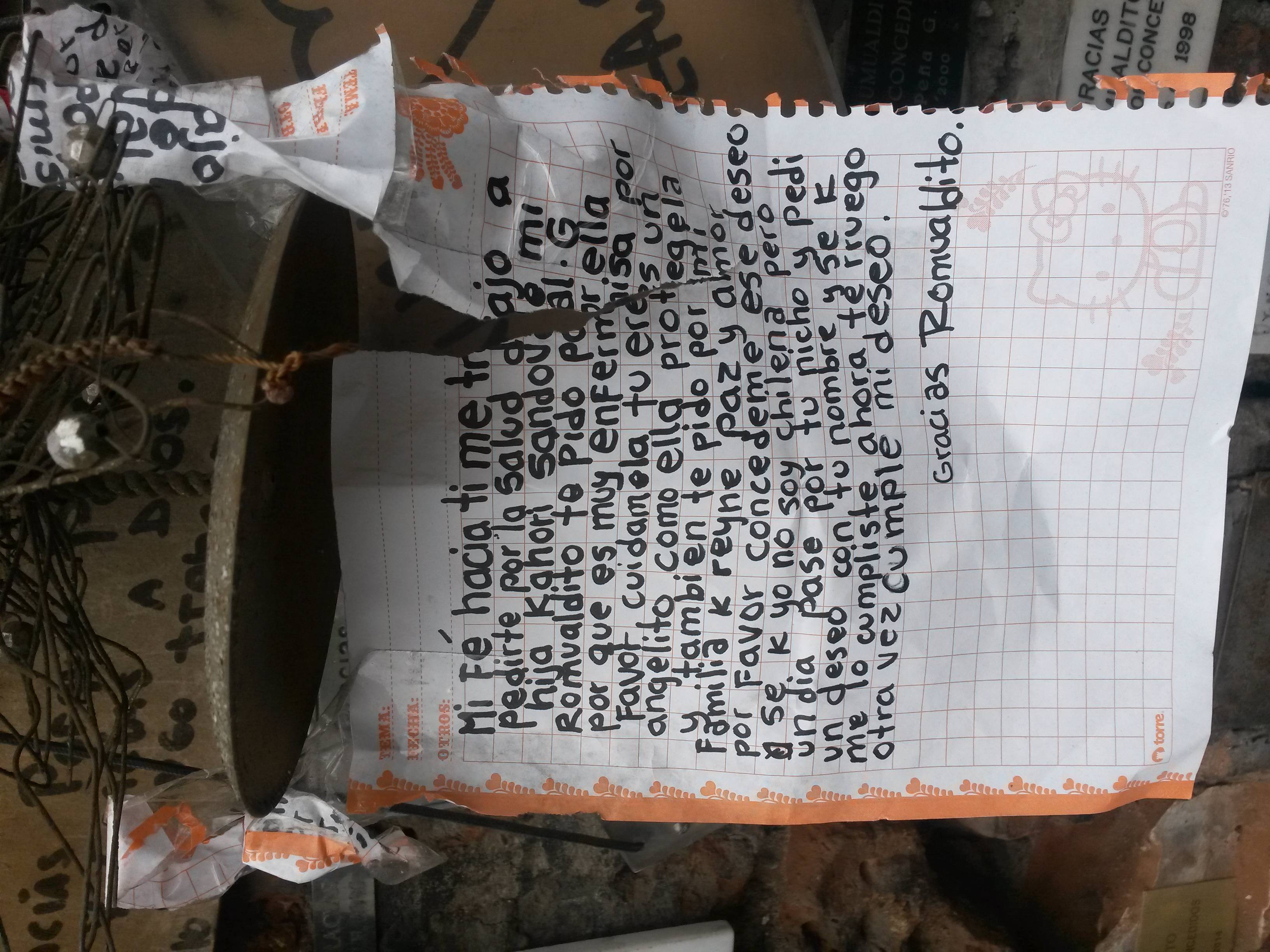
Letter to Romualdito's animita.
Lili Almási-Szabó
Estación Central, Santiago de Chile.
January 2017.
Astrid's animita, the Beautiful Girl
Image 16. “La Niña Hermosa”, Animita by Astrid Soto.
Lili Almási-Szabó
Km 22 of route 78, Santiago de Chile.
2023.
“I had a case on Route 78. There was a little girl, the Niña Hermosa. Her name was Astrid Soto. Her accident occurred in 1998. It was a very complex place, and it was better to change the roadway [...] The project contemplated making a structured memorial with parking, vehicular access and exit, with a roof, pavements, a little landscaping and lighting. And there was the dilemma of how to move the animita, because it is one thing to take the stuffed animals, but the dead person was on the other side. So it is not the same, in terms of affectivity. The conversations with the family went very well, and to solve the problem, a medium was hired. The medium indicated that Astrid was in favor of the change of location”.
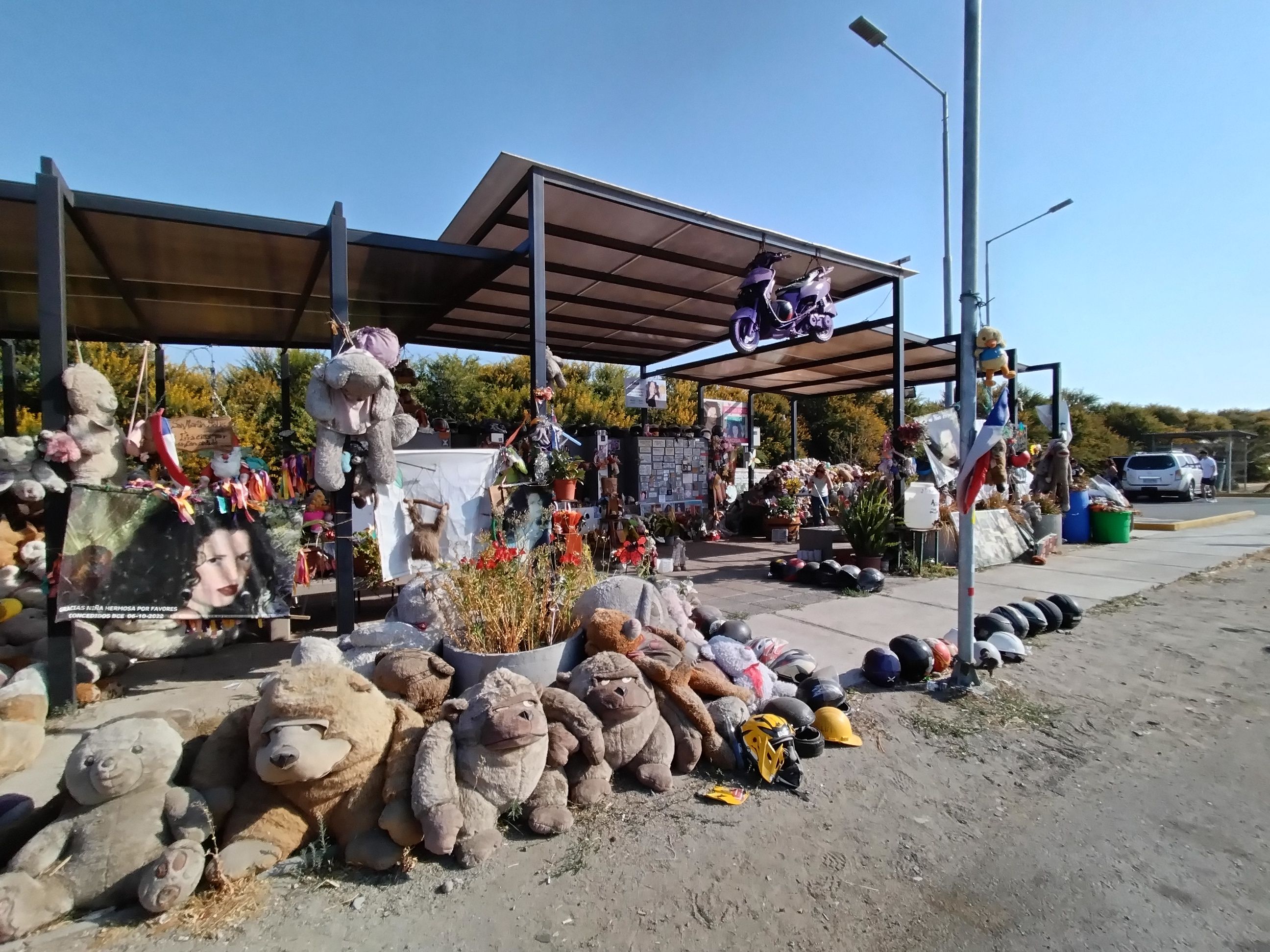
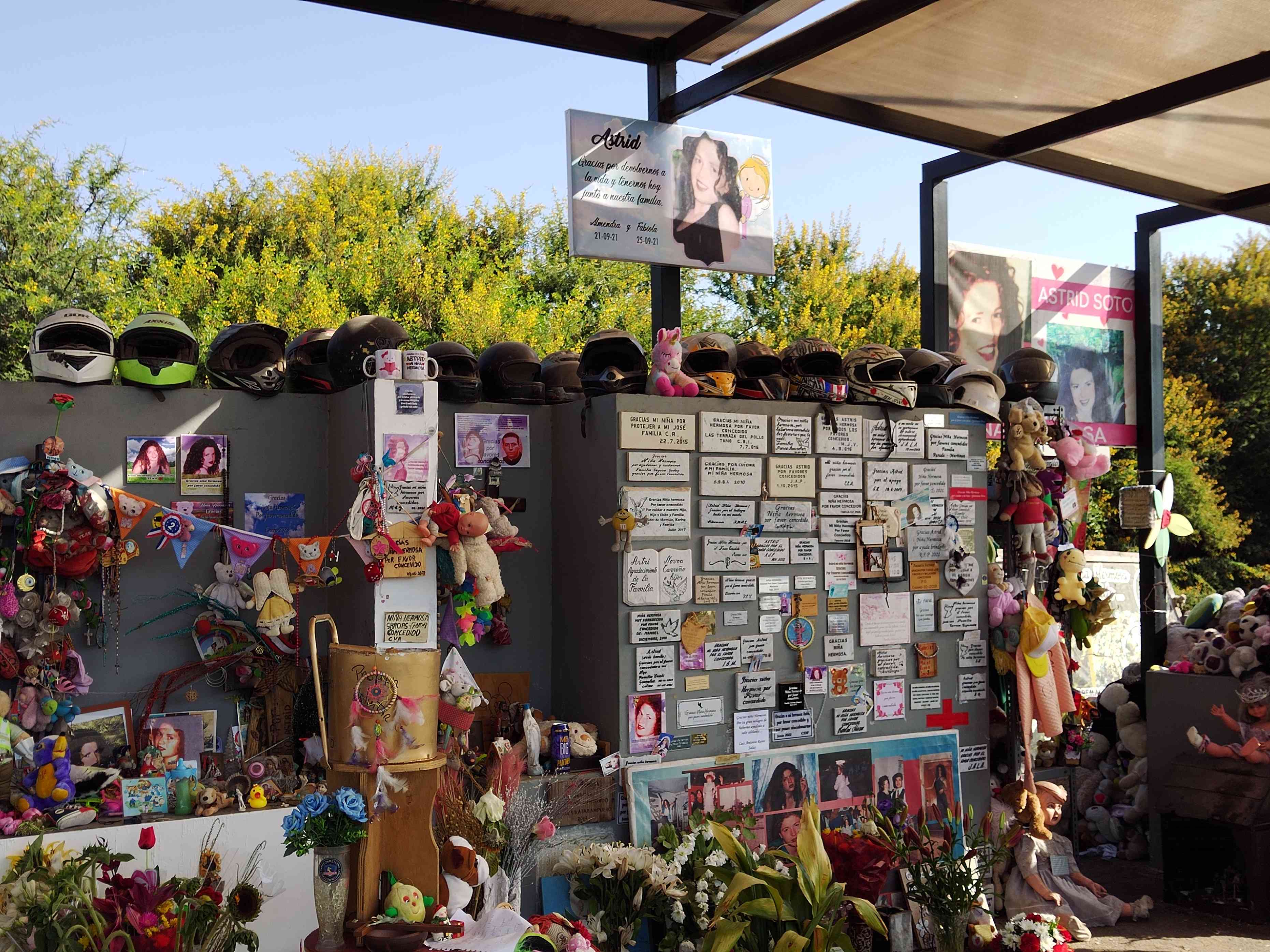
Image 17. “La Niña Hermosa”, Animita by Astrid Soto.
Lili Almási-Szabó
Km 22 of route 78, Santiago de Chile.
2023.
“My Beautiful Child, my Miraculous Child, my Majestic Child, today I come to visit you to thank you for your favor granted, to thank you for your presence in my life and the infinite help and blessings that you have given to my life to be able to achieve and make each of my requests come true. Astrid, thank you for accompanying me, taking care of me and protecting me in this journey so important to me, thank you for allowing me to do everything right. Please, I ask you to help me so that everything continues to go well with the issue of my licenses and reinstatements of the same, I ask you for the sales of the store and, well, you know that every dream and project I have in mind can go well and prosper. I ask you to achieve my prosperity and tranquility both physically, emotionally and economically. For the welfare of my family and all my loved ones”.
Animita in everyday space
Everyday encounters
Image 18. Untitled.
Lili Almási-Szabó
Clave Street, Barrio Puerto, Valparaíso, Chile.
October, 2024.
“Next to a little shop hidden at the foot of the hills of Valparaíso, right on the corner where the street narrows and almost gets lost among the tightly packed houses, there is a tiny, old, but well-kept anima. The sun has already faded its color. But it always has some flowers, as if someone takes care of it every day to leave it some love. From there, she seems to watch over those who go in and out to buy warm bread for breakfast or lunch, like a kind of silent guardian of the neighborhood. No one looks at her much, but everyone -even the stray dogs- respects her. They don't lift their paws like they do with the posts and walls. Some neighbors leave her a coin, others lower their heads as they pass, as if they know that this presence watches, observes, and accompanies”.
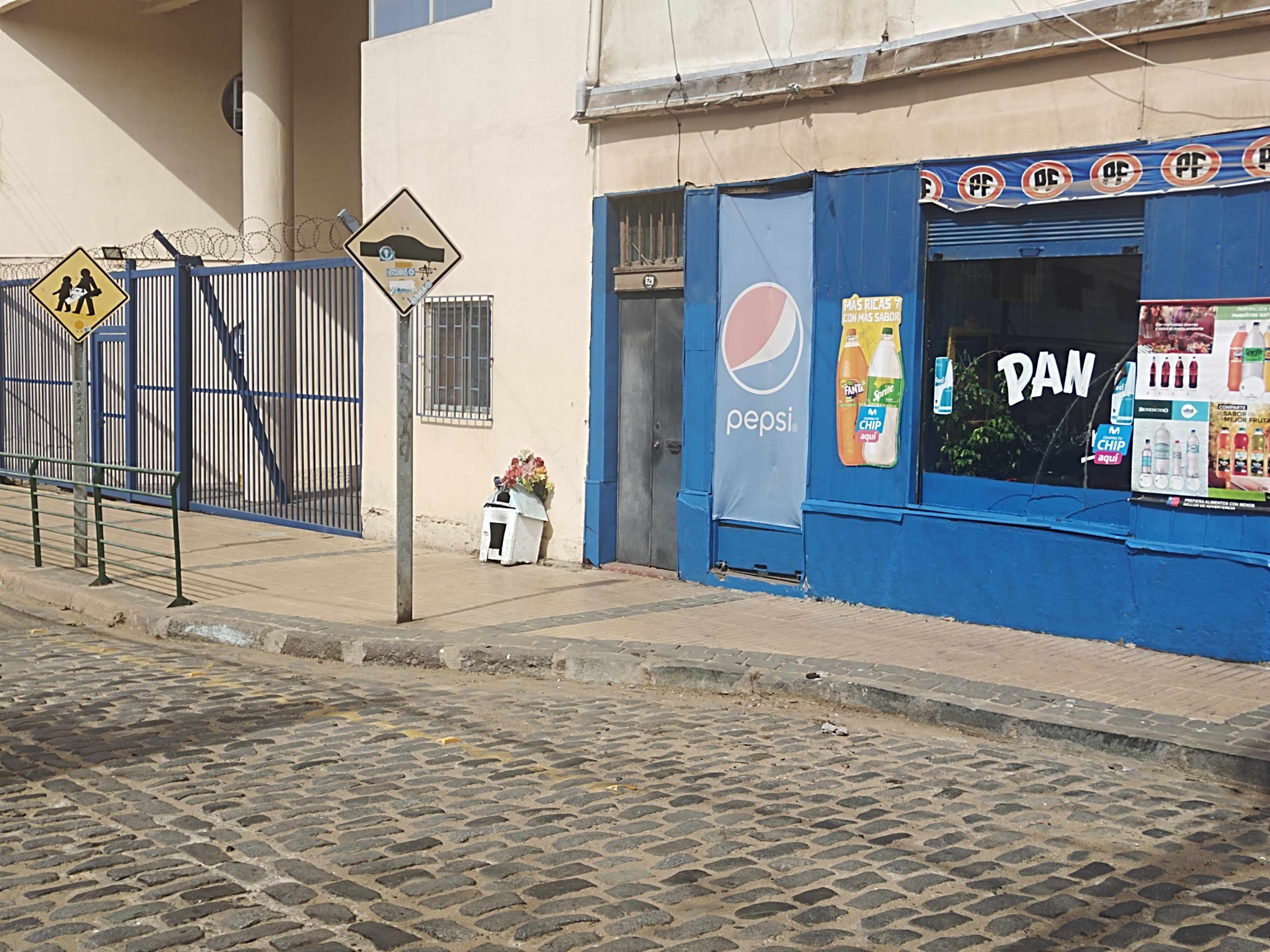
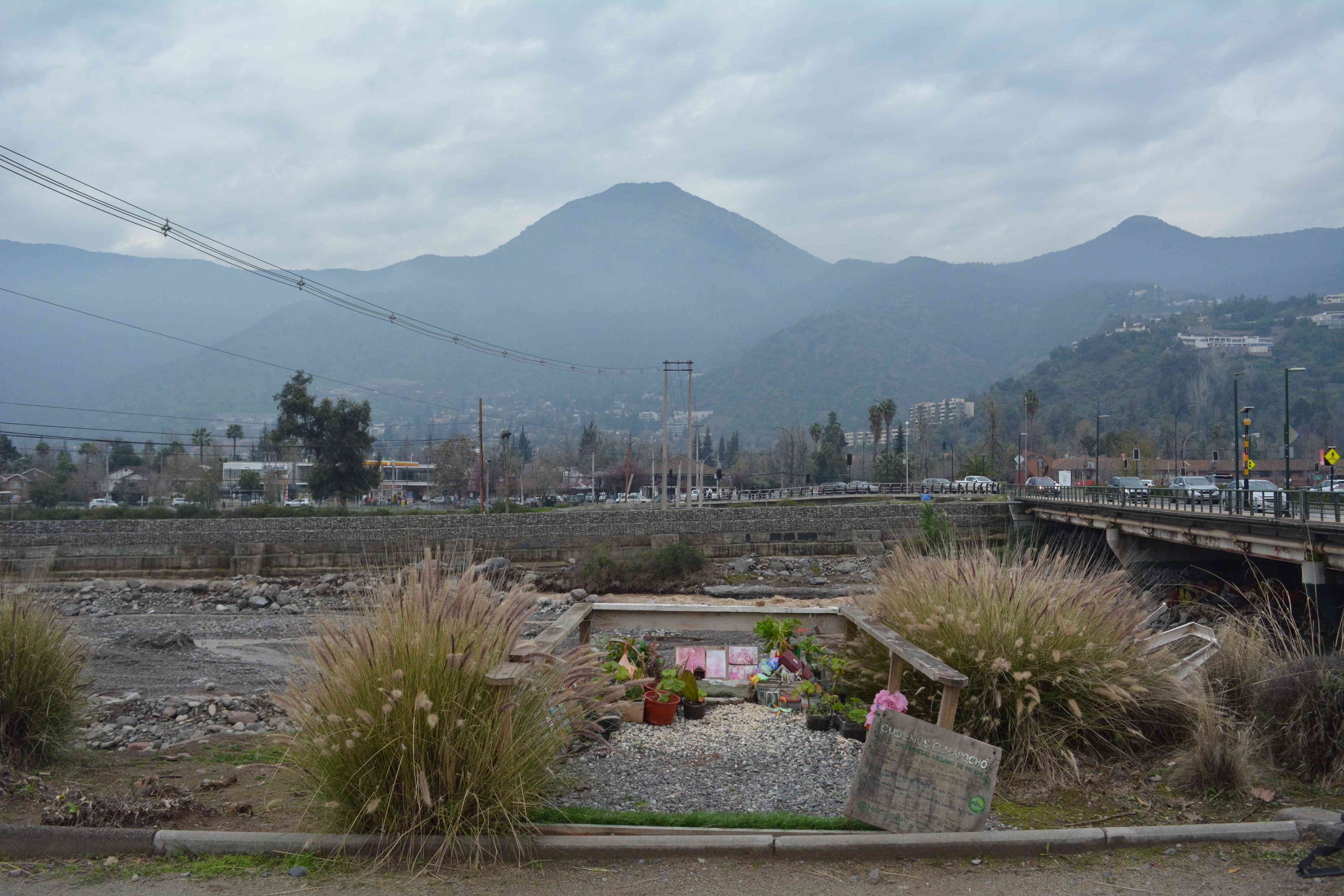
Image 19. Animita de Clemente
Santiago Urzúa
Curro Bridge, Carol Urzúa traffic circle, Vitacura, Santiago de Chile.
July, 2023.
“At the edge of the Mapocho River, just where the cyclists turn after crossing the bridge, there is a little animita unlike any other. It has no bars, no glass, no cement structure. It is an animita built of only potted plants. As if someone had been leaving them one by one, to shape an altar over time. Among the gray dust of the road, the dryness of the river, the green plants of the altar steal the attention. This place invites cyclists to stop and sit for a few minutes on its wooden benches to rest. Those who stop can admire the landscape, the faded photos of the altar, and young Clemente's collection of stones and small plants”.
Lili Almási-Szabó, observation story (2025)
Image 20. Animita by Mauricio Araya
Lili Almási-Szabó
Route 5, La Higuera, Coquimbo, Chile.
October 2025.
“In the north they are bigger and have a symbolic meaning, more around the history they have. Some of them are mansions [...] There the truckers honk their horns [...] You see there the little animitas in the middle of the desert. For example, it is common to find water bottles left by the truckers who stop there, because of the story of the Difunta Correa”.
Emilia, Ministry of Public Works official (2025)
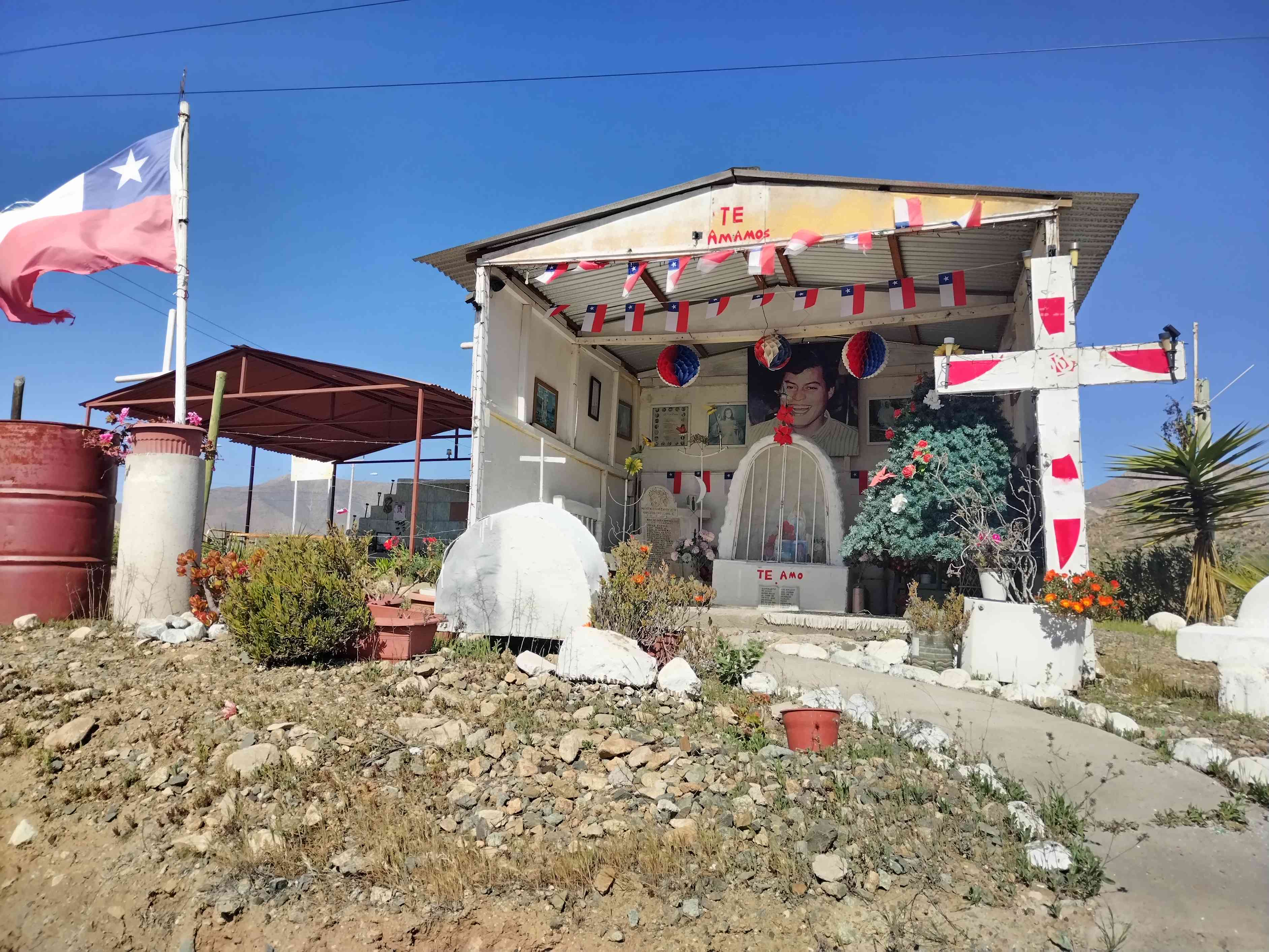
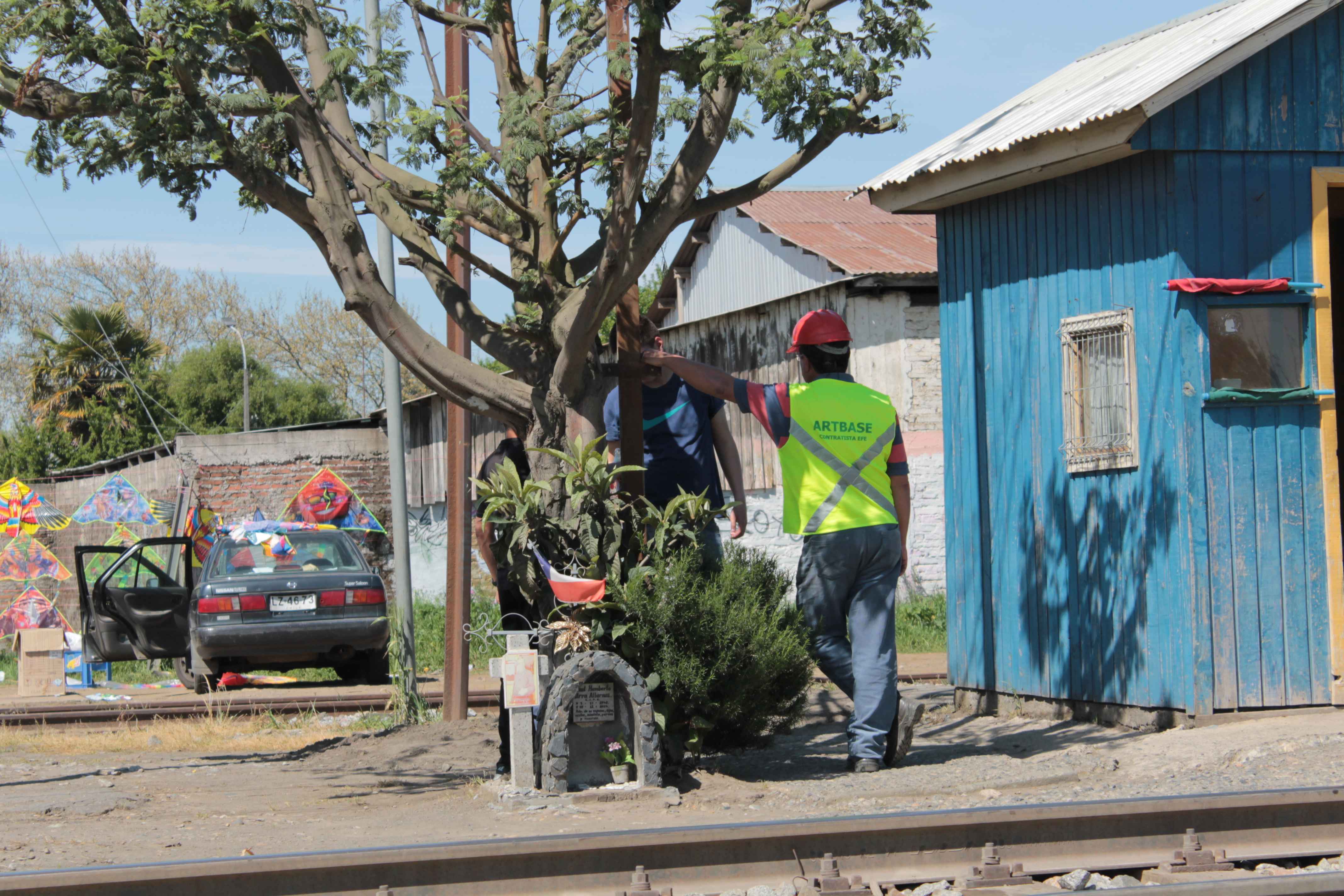
Image 21. Untitled.
Lili Almási-Szabó
Lantaño Park Road, Chillán, Chile.
September, 2015.
“Here, in the south, contact with the animitas is much more integrated into daily life. It is more related to power, to granting what one needs, for example, sick people, something magical [...] In the construction sites, the local workers, who are more directly linked to the [physical] work with the animita, show a total commitment. Many of them, in addition, sometimes know the mourners or know the story of what happened in the accident [...] According to the traditions, if someone takes something out of there, it is as if ‘the pains of hell’ fall on them. Seriously, there's a lot of respect for that. Anyone could take those things -walkers or people passing through the sector-, but they don't do it. It all stays there.
Manuel, tax inspector for the Ministry of Public Works (2025)
Claiming space
Image 22. Animita de Óscar
David Arturo Espinoza.
Carretera Austral, Puerto Montt, Chile.
January, 2025.
“Death can happen anywhere. That is why it cannot be regulated. Because death passes over everything, and over every written rule.”.
Javier, 51 years old (2025)
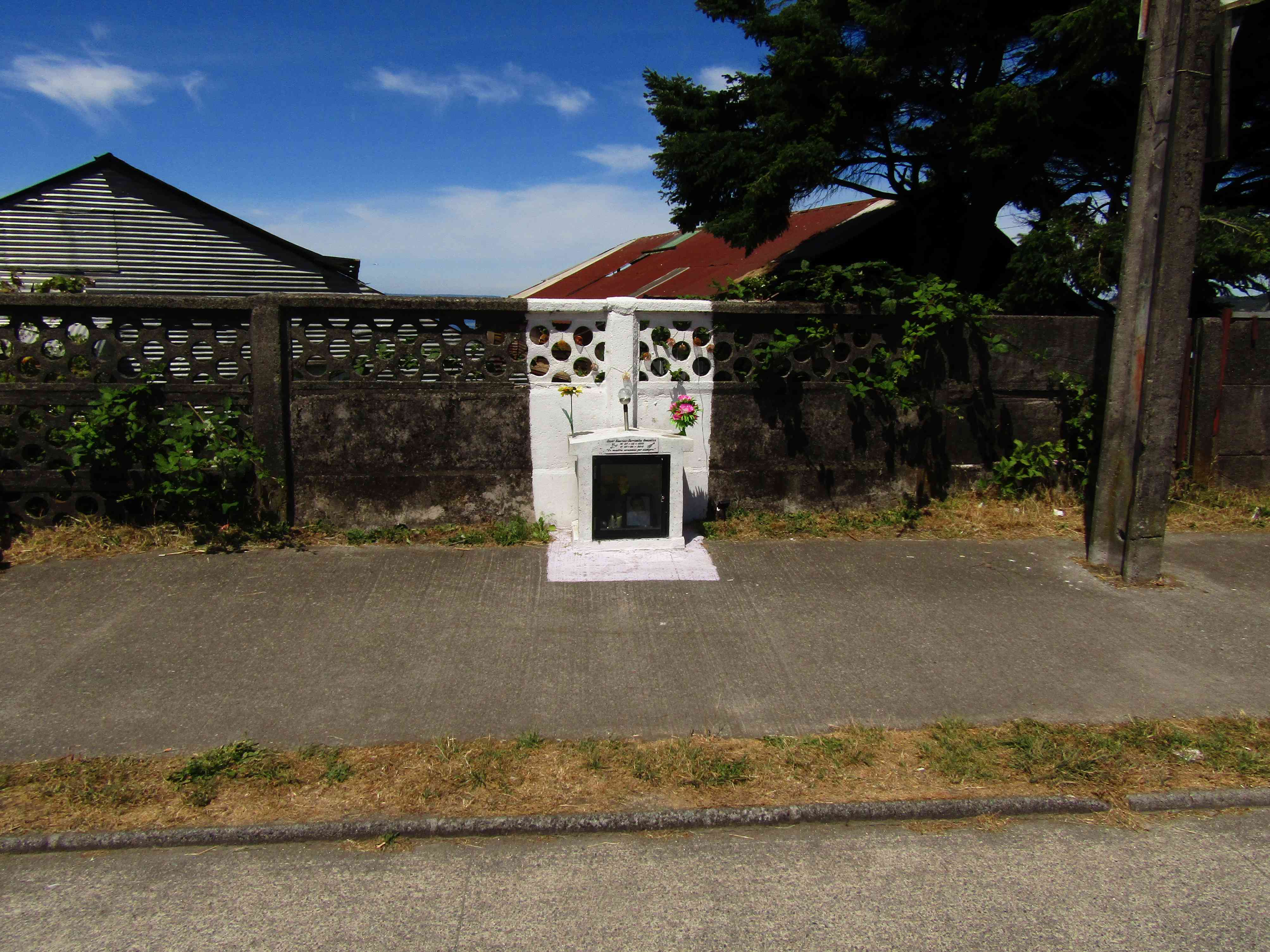
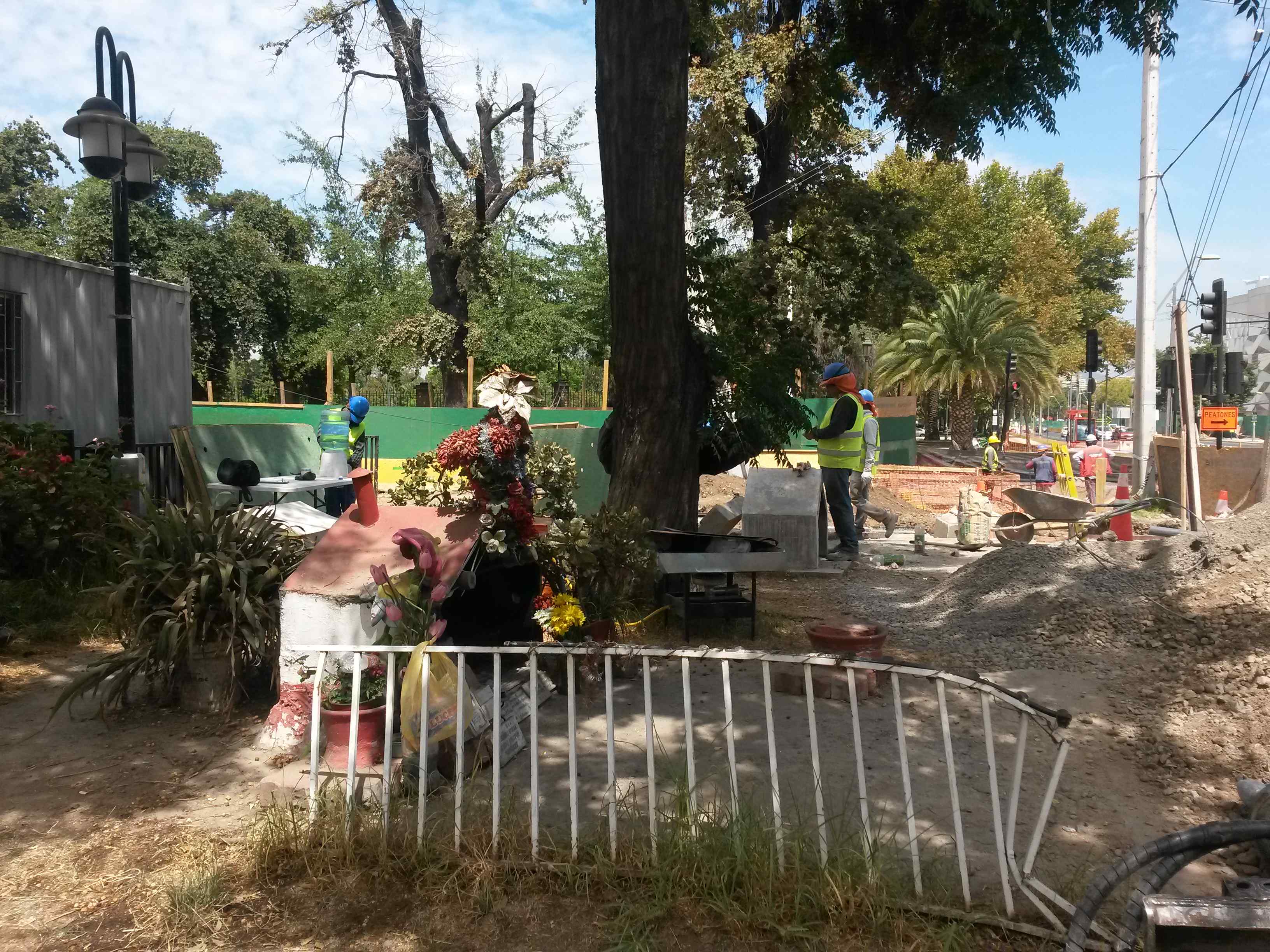
Image 23. Animita at construction site.
Lili Almási-Szabó
Cristobal Colon Av. with Zapaleri, Las Condes, Santiago de Chile.
December, 2017.
“I am also a good believer. I know that these places are very important for people, because it is where we can connect with our departed loved ones. The animita is that place where heaven and earth meet. When I work, I always make sure that my workers don't damage them. Obviously, every night we leave everything clean around, we tidy up well. At night they come to light candles. By then everything has to be clean. We always sweep. We don't leave tools, debris or garbage around. No way any of the workers would dare to break anything or take anything from here. Jaime also explained to me exactly what you can and can't do around them: ”For example, you can't lean on the roof of the casita or sit on it.
Image 24. Animita de Carolina.
Lili Almási-Szabó
Chorrillos with León Bustos, Linares, Maule Region, Chile.
July, 2017.
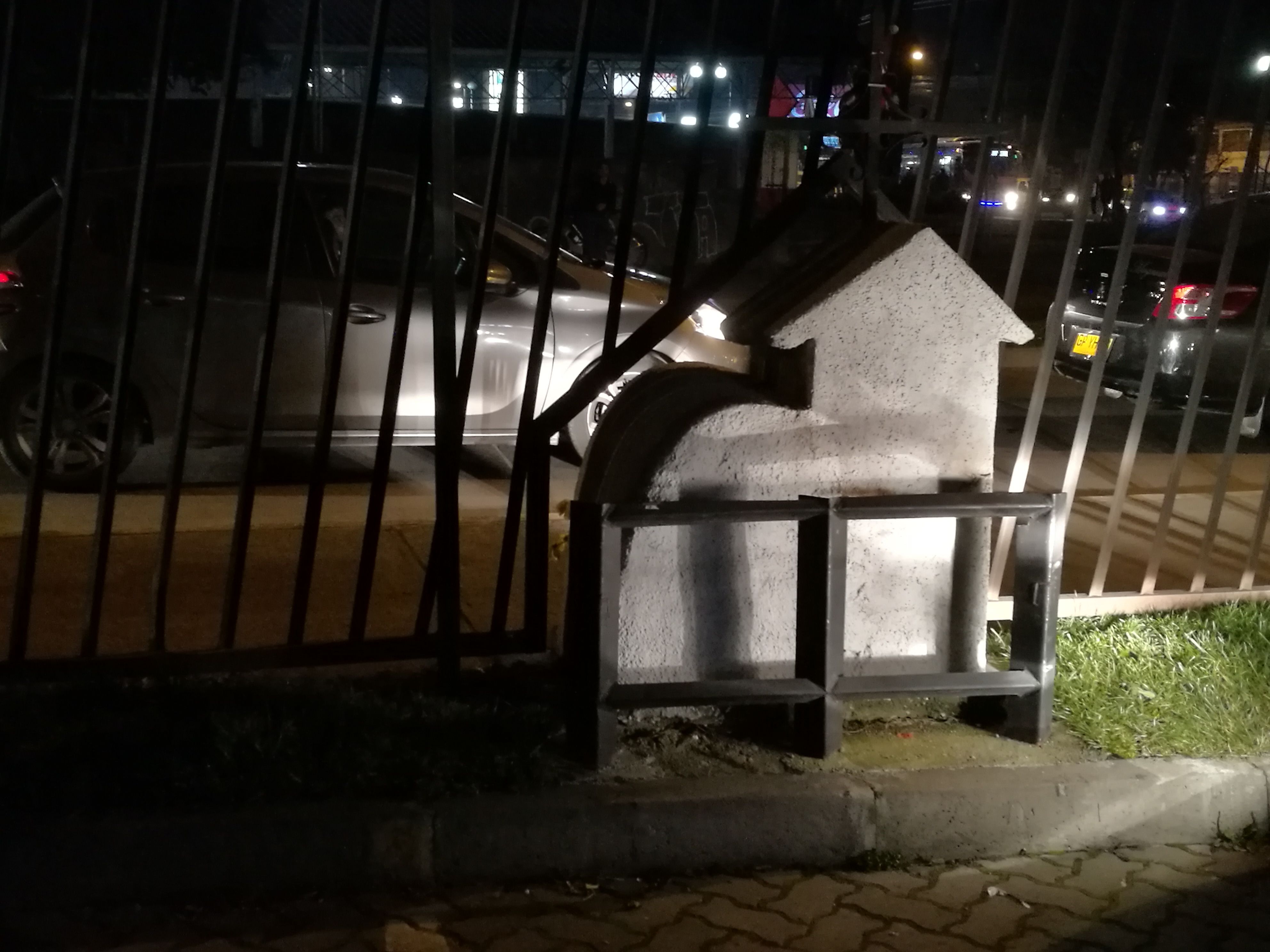
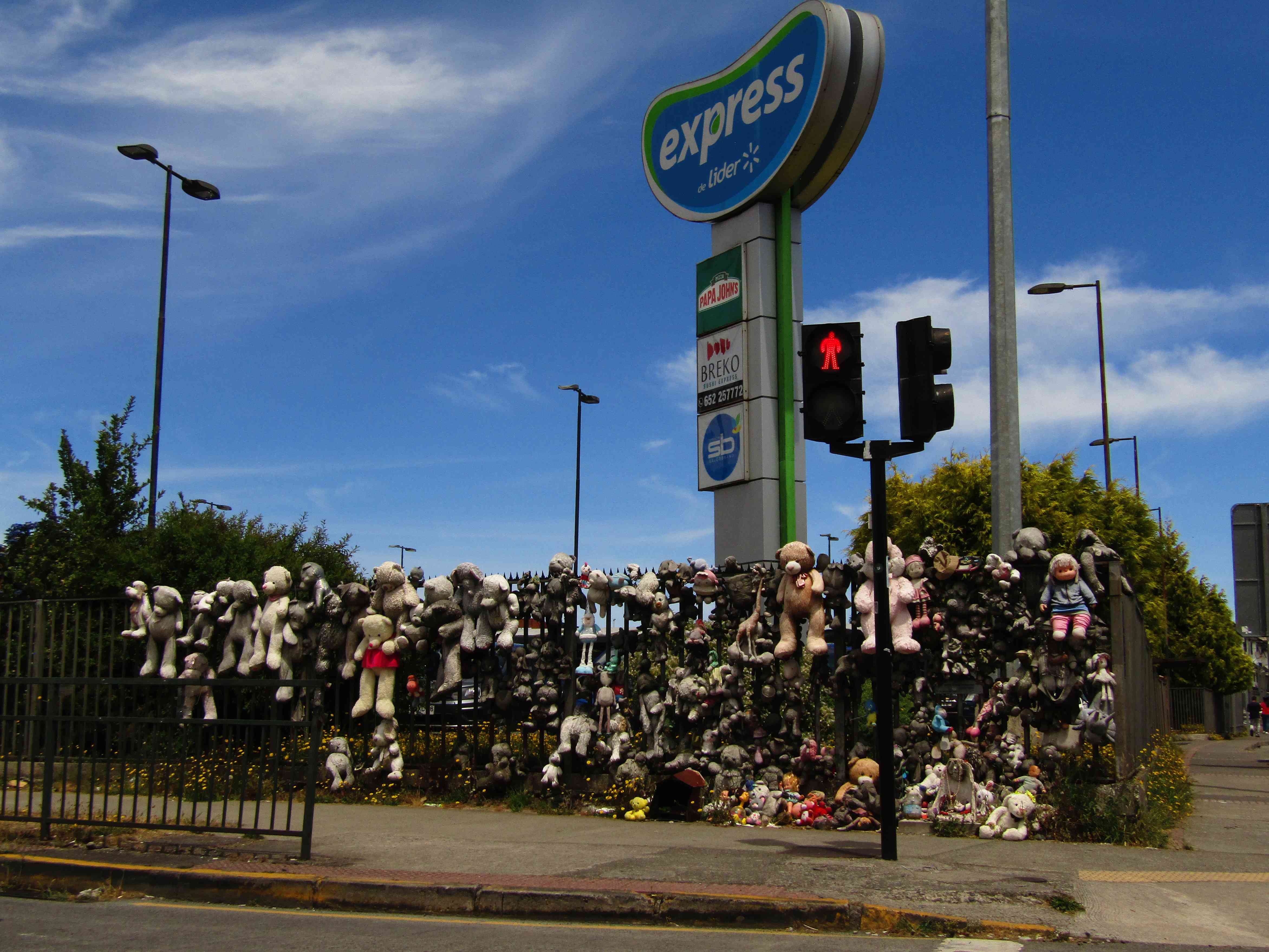
Image 25. Animita de Pia
David Arturo Espinoza.
Monsignor Ramón Munita, Puerto Montt, Chile.
January, 2025.
The animite as a person
Paola, the little port cheerleader
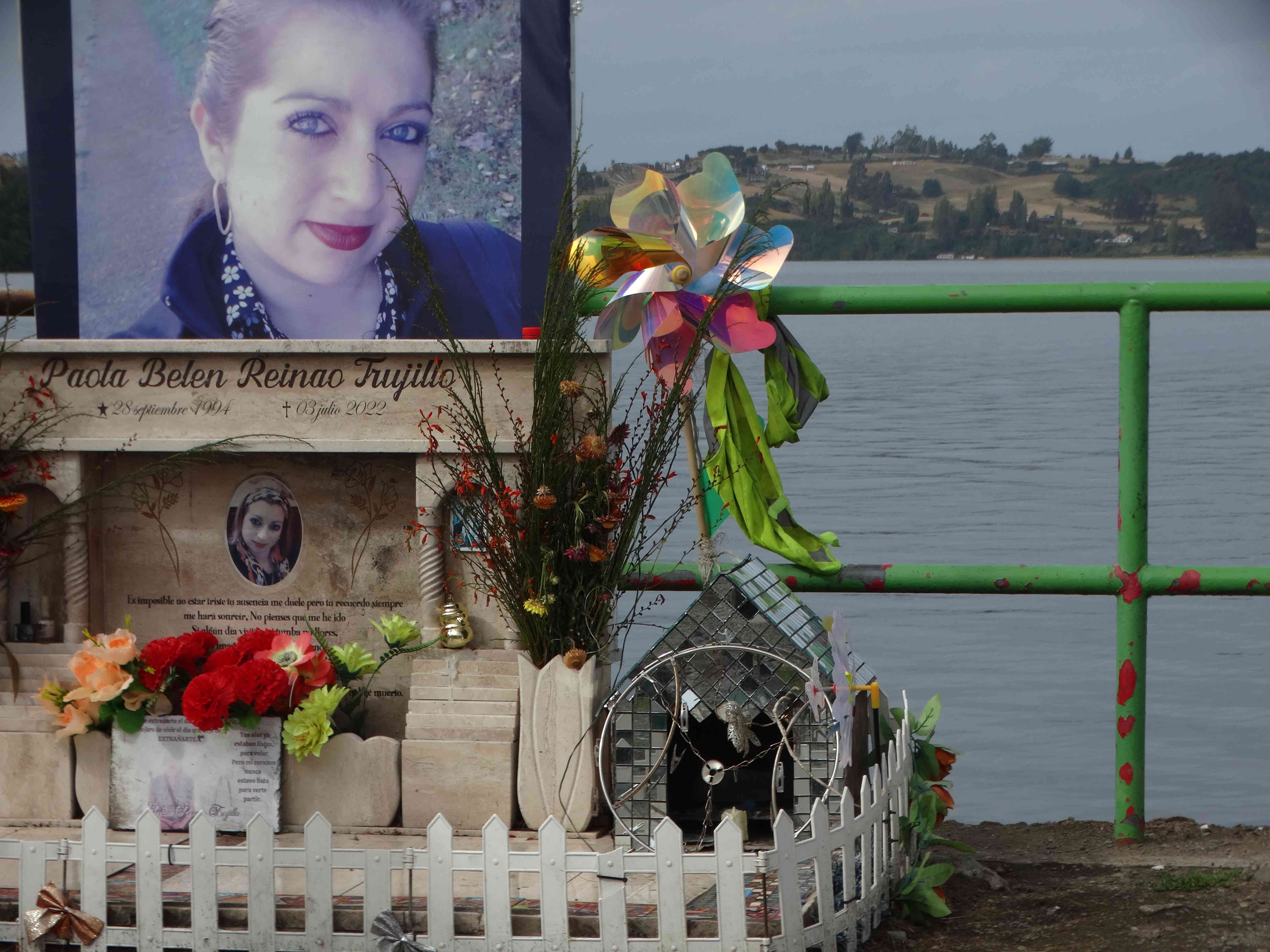
Image 26. Animita de Paola.
Pedro Pablo Medina
Port of Castro, Chiloé, Chile.
January, 2025.
“On Castro's waterfront, right where the port opens to the swaying of the sea and the wind, Paola's animita is affirmed with character. She was 27 years old when a driver under the influence of alcohol and drugs took her life in this place. Today, her memory lives on among fresh flowers and two large pinwheels that spin merrily, moved by the gentle sea breeze. The animita does not go unnoticed: it is colorful, firm, with some cheerful presence, as if to say that there is still life here, in spite of everything. That day the tourists, tall gringos with fisherman's hats and cameras around their necks, were in the majority. They would stop briefly in front of the animita, observe it with curiosity for about ten seconds, then continue on their way. One of them saw me taking a picture, and stopped for a few more seconds, perhaps wondering what I was seeing that he hadn't seen”.
Amber, between cigarettes and condoms
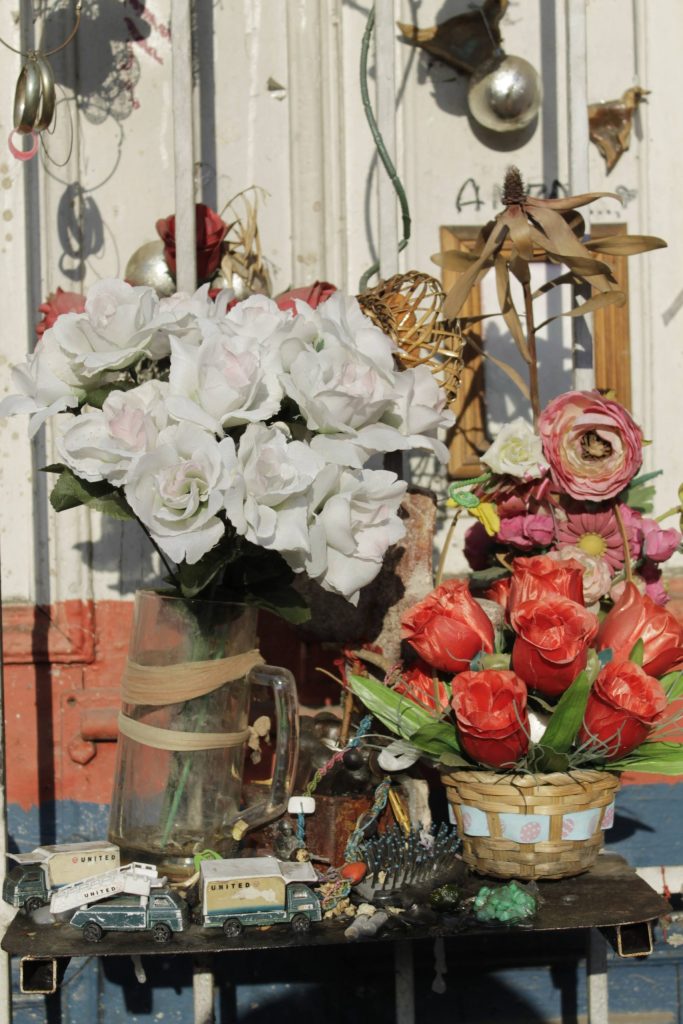
Image 27. Amber Animita
Lili Almási-Szabó
Fray Camilo Henríquez with General Jofré, downtown Santiago, Santiago de Chile.
December, 2016.
“Ah, I see you have brought fresh flowers for Amber,” I commented aloud. Don Danilo immediately invited me to the altar and began to explain. The purple and white flowers were brought by an old lady on Friday, whom he doesn't know. But, according to him, she is not related to Amber. There were also a couple of artificial flowers left next to him. I saw the remains of cigarettes left next to the three little toy cars and some condoms. There were exactly three cigarette butts. They were stuck (or had been stuck) to the altar with a few drops of candle wax. I learned that these cigarettes were smoked by Amber, i.e. they were brought as offerings. I mentioned that I had already heard about this custom in the cemetery. Don Danilo said that cigars are also often brought for Ámbar.
Panchita, the little girl from the beach
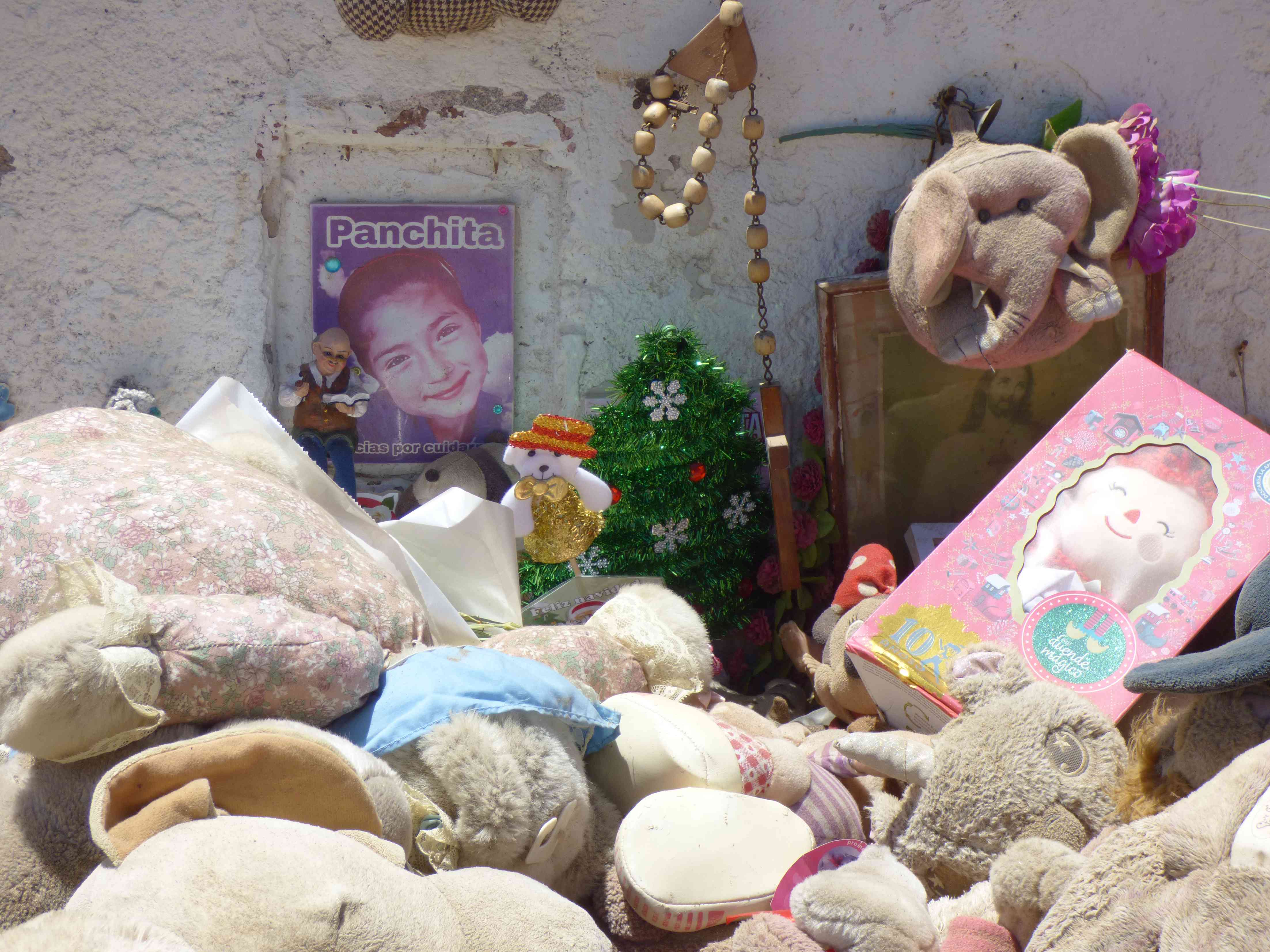
Image 28. Animita de Panchita
Sebastian Fuentealba
Las Torpederas, Playa Ancha, Valparaíso, Chile.
December, 2024.
“The animita serves to make the horrible place where the accident happened somehow beautiful and acceptable. Imagine if you had to spend every day at the corner where your 6-year-old son was run over. You would be depressed, then you wouldn't be able to handle the pressure and then you would have to move. From a psychological point of view, the animita is a great help to people. If the family builds an animita at the site of the tragedy, which is a little house with his picture, candles and his favorite toys, it is as if he is there. He is really there. You feel the child's presence there. Those who are saddened by his loss will surely be happy to go to that place, because he is there.”.
Paula, 27 years old (2016)
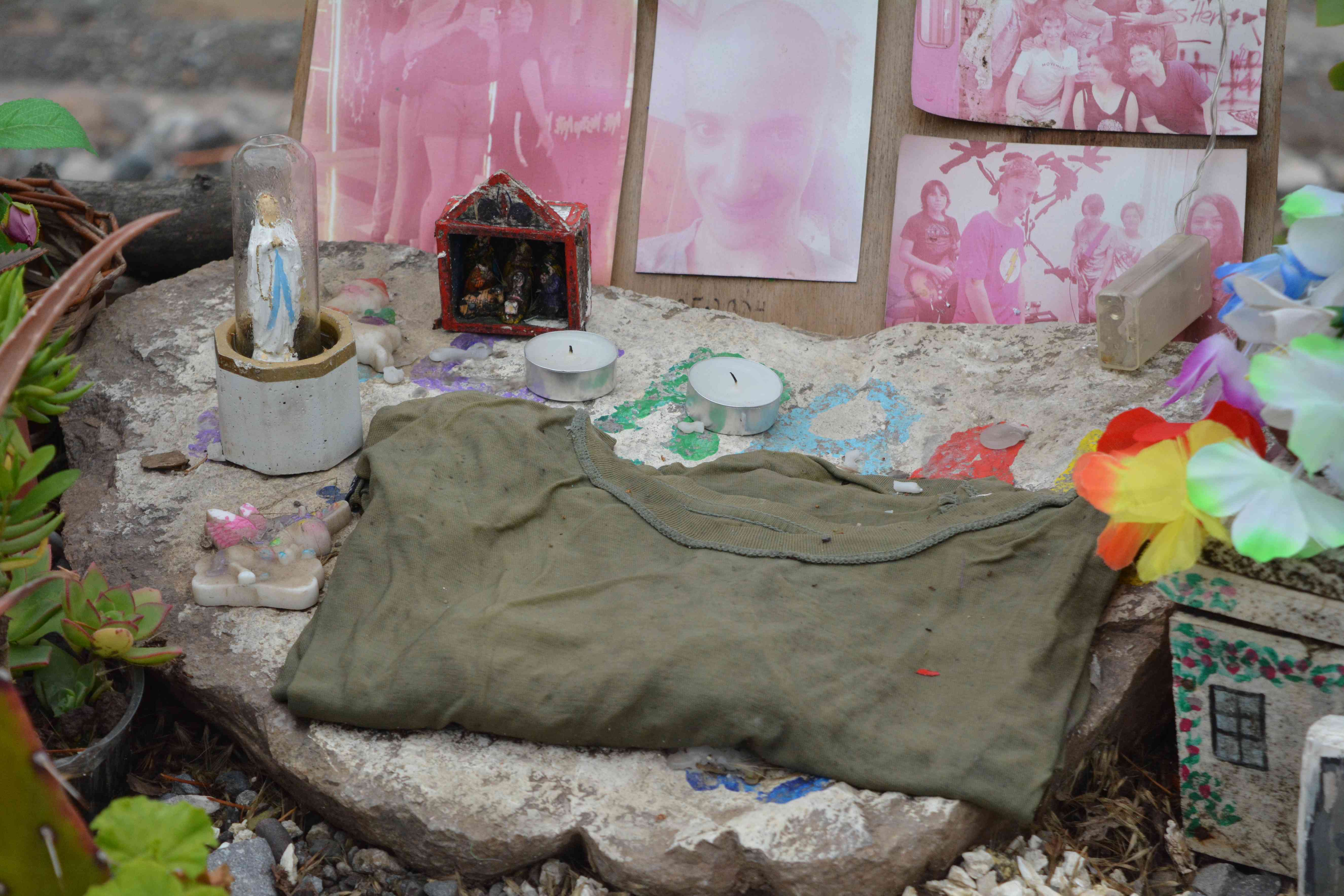
Clemente with his shirt
Image 29. Animita de Clemente.
Santiago Urzúa.
Curro Bridge, Carol Urzúa traffic circle, Vitacura, Santiago de Chile.
July 2023.
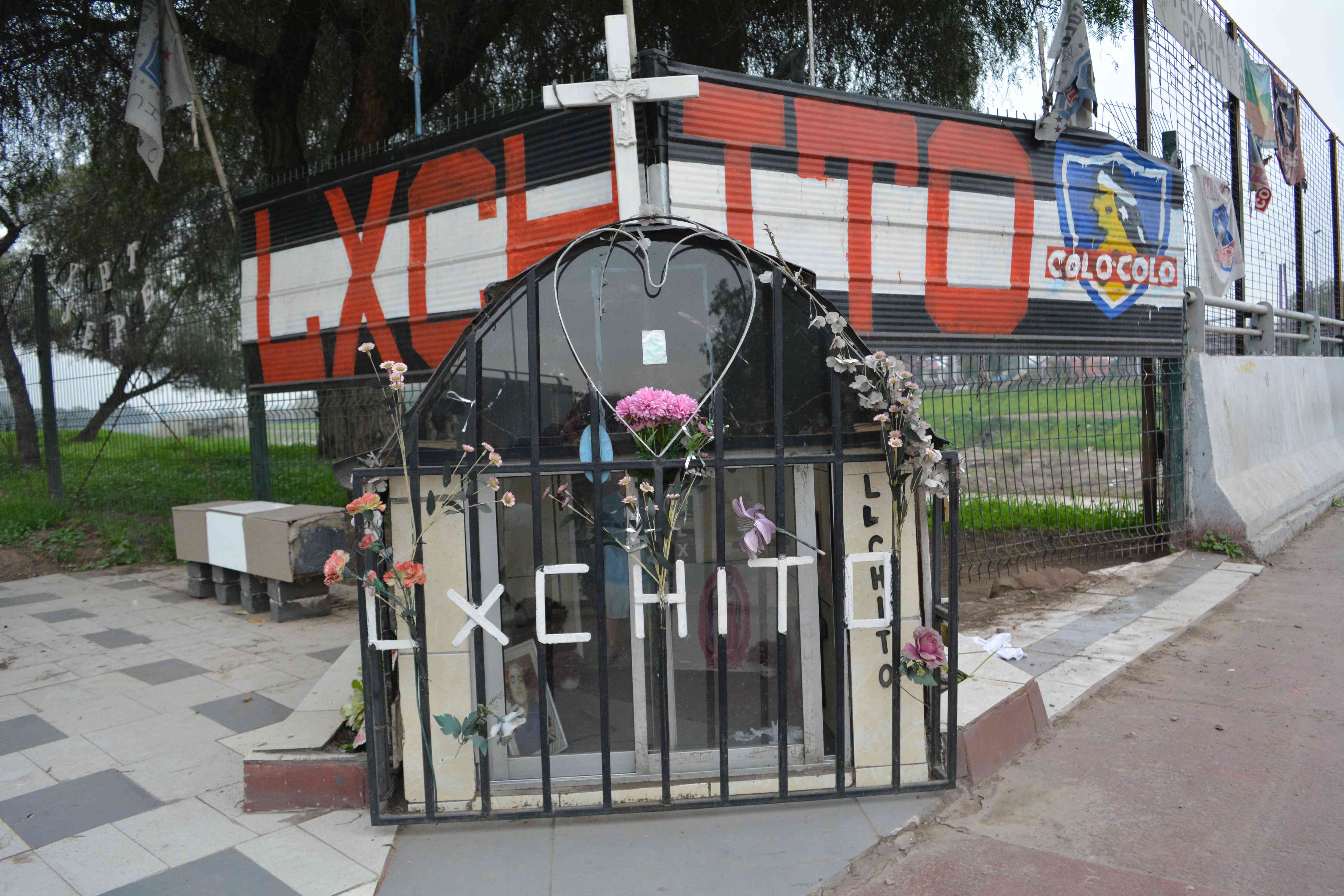
Lxchito the popular
Image 30. Untitled.
Santiago Urzúa.
Carrascal Avenue, Renca, Santiago de Chile.
July, 2023.
“I went to his animita and smoked a cigarette with him. I lit one, and gave him a bottle of Coca-Cola. I was sure that with this I could convince him, and it would help me. Anyway, he died young, so how could he not like cigarettes and coke? We sat down together and talked about my request”.
Maya, 16 years old (2016)
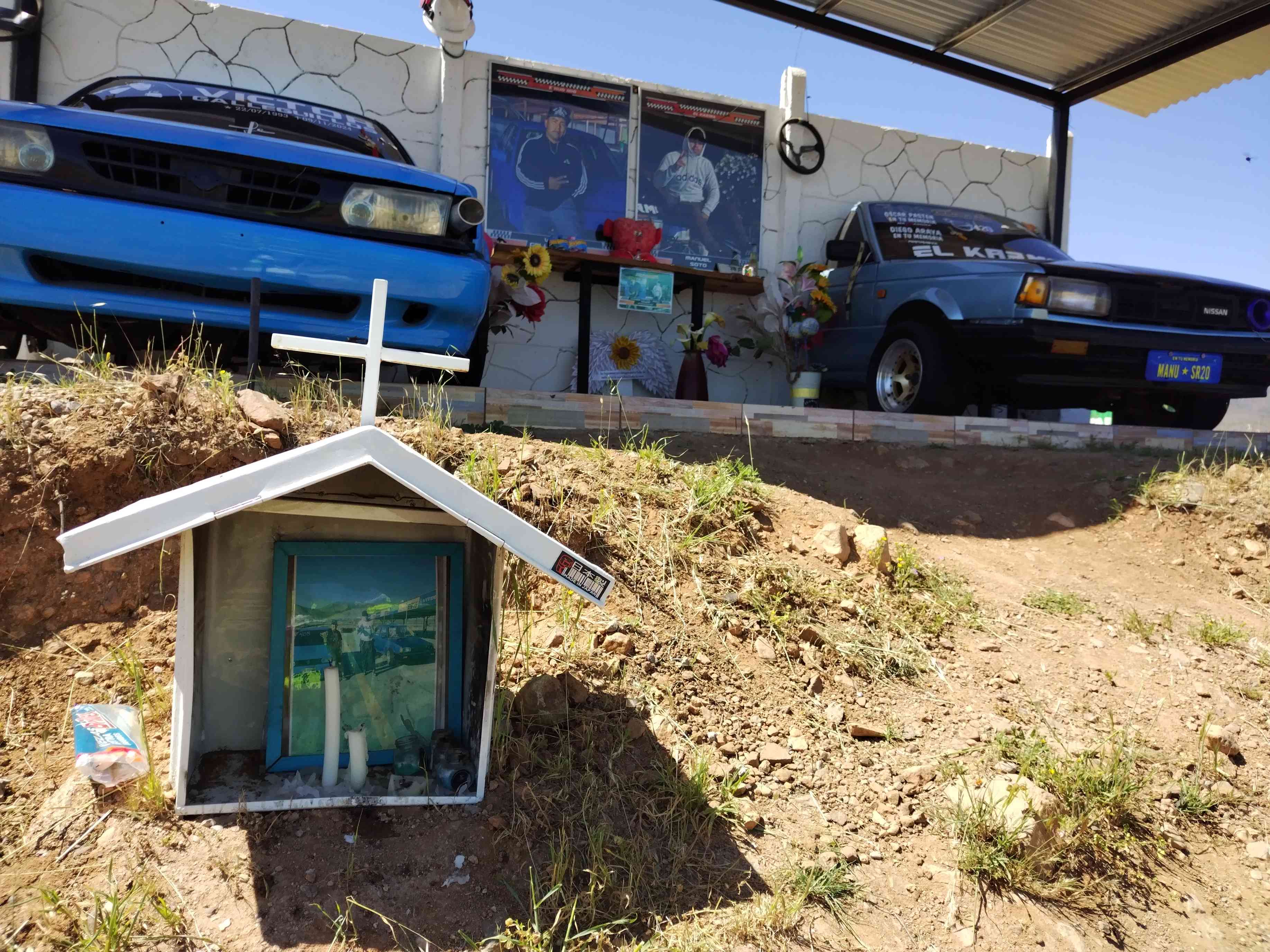
Victor and Manuel
Image 31. Untitled.
Lili Almási-Szabó
Ruta 43, km 52, Tambillos Sector, La Serena, Chile.
October 2025.
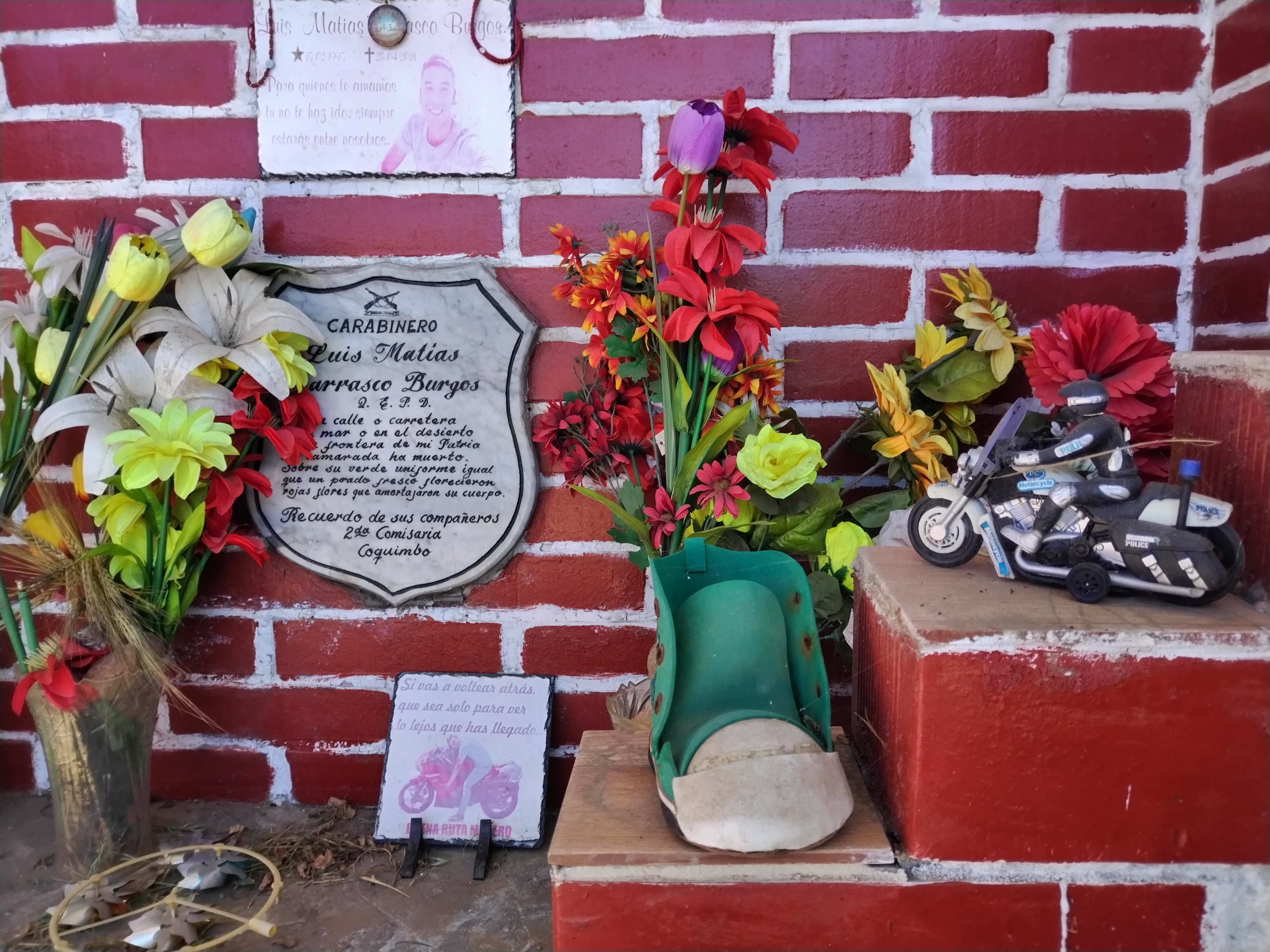
The carabinero's animita
Image 32. Animita by Luis Carrasco Burgos
Lili Almási-Szabó
Ruta 43, km 49, Sector Las Barrancas, La Serena, Chile.
October 2025.
“In the case of the death of carabineros, the Carabineros [as an institution] do not install animitas; those who install them are their relatives and, in general, their friends [...] We have a significant number of carabineros who have died both in the line of duty and for other causes. So, if you go around the cities, you will find little animitas with a photo of a person in a carabinero's uniform. In some cases, these are carabineros who died in the line of duty, to whom we have the greatest respect and gratitude. Because when you graduate from school, you take an oath. You swear before God and the flag to give your life, if necessary, to protect order and security, and obviously to defend the people. That oath to which this policeman committed himself, he fulfilled it”.
The animita can't be left out
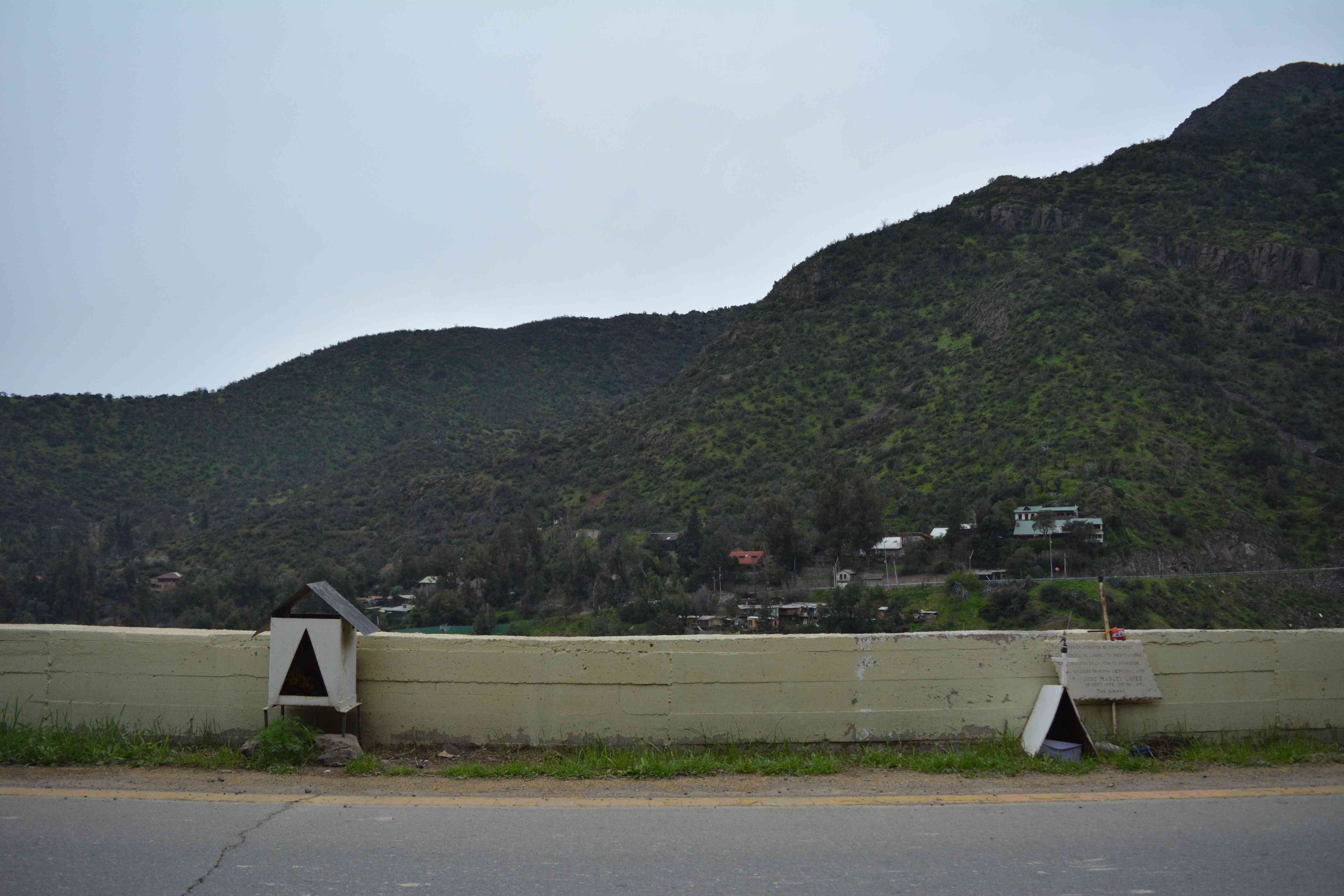
Image 33. Animitas without name.
Santiago Urzúa.
Road to Farellones, Lo Barnechea, Santiago, Chile.
March 2023.
“The animita, if you take it out of the road, it does not only affect the family: it is the territory, the neighbors, everyone who opposes this decision.
Carlos, fiscal inspector of the Ministry of Public Works (2025)
Image 34. Animita of Cristina and Mauricio
Lili Almási-Szabó
La Serena, Chile.
October 2025.
“For me, dealing with the animitas was like a stroke of empathy. You have to talk to people directly, there is no other way. When I came to work on the Acceso Sur project, between Santiago and Talca, I was quite disconnected from the subject. I saw a little cheerleader and I thought: ‘We have to take her out’. But soon after, they call me and tell me that it is not possible, that nobody is going to touch it, not even the workers, because -according to the people- the pains of hell will fall if someone does it. I thought: ‘How can people be so stubborn? Until I met with the relatives and they told me. Then it was a reality check: brutal accidents, very brutal, the kind you wish you never had to know about. But in this case I knew it up close. Many times, at the moment of the accident, not even the body is enough to recognize the person.
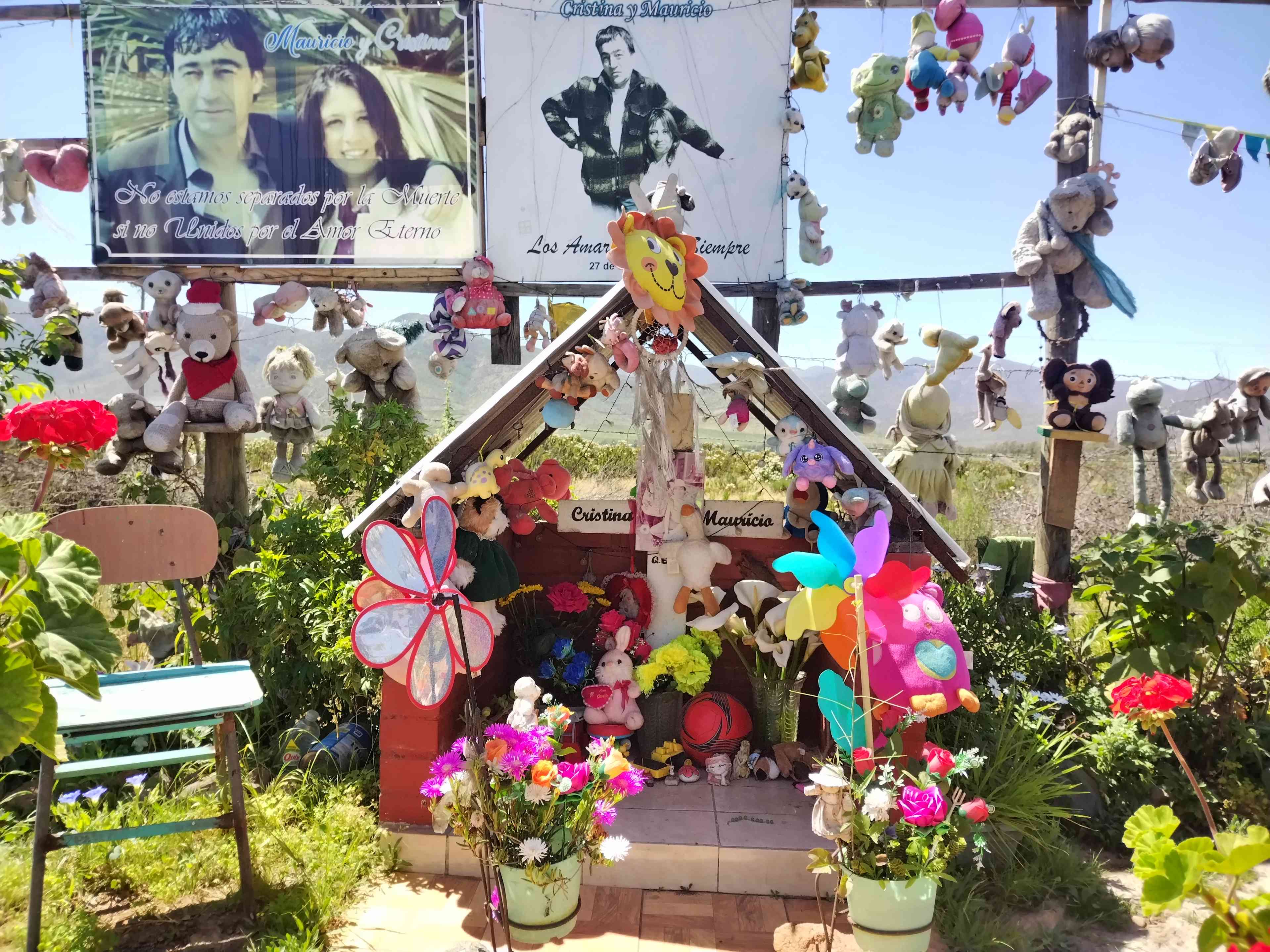
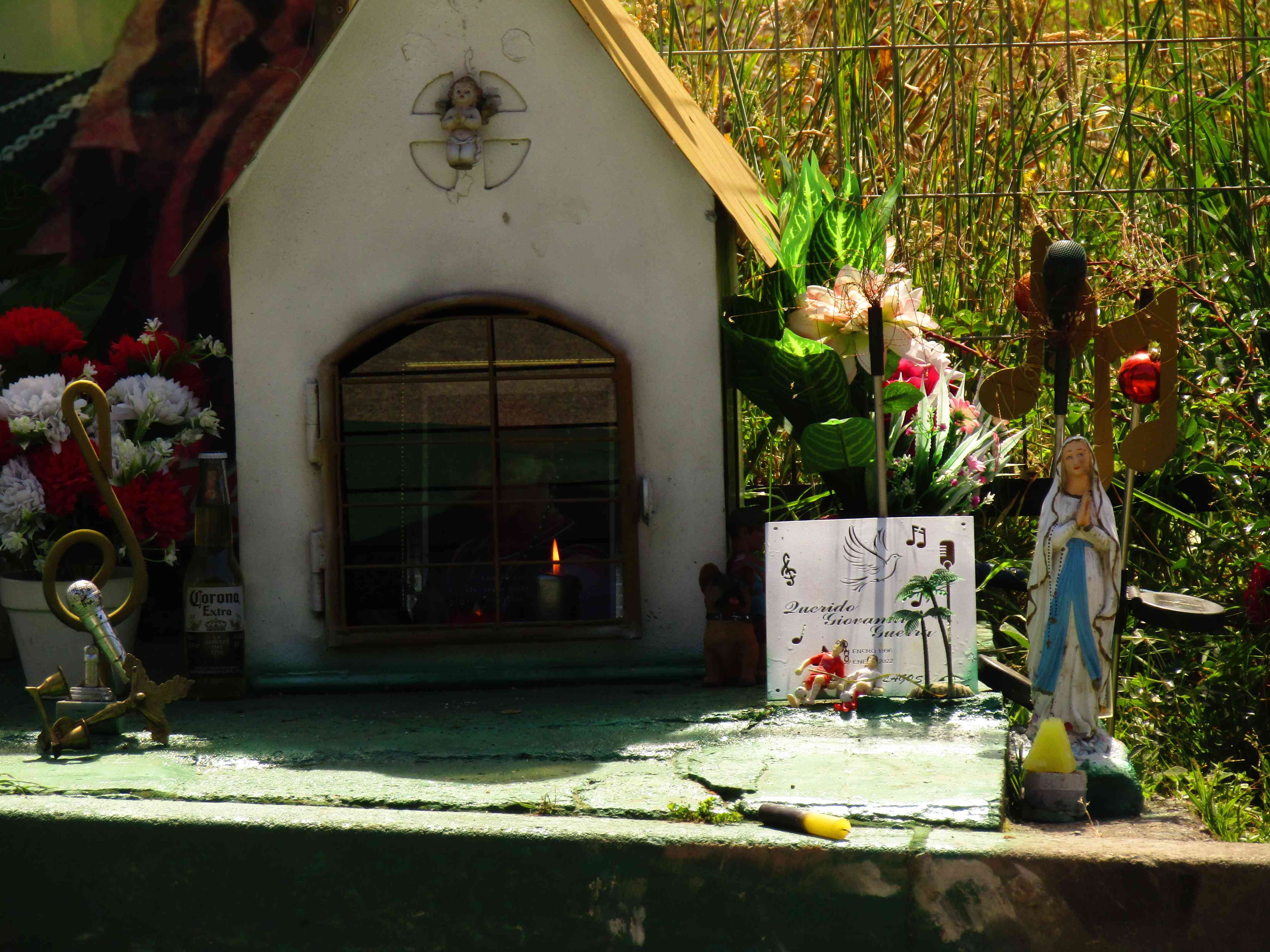
Image 35. Animita de Giovanni
David Espinoza
Regiment, Puerto Montt, Chile.
January 2025.
“The accident happened at an intersection, and we built my brother's little animita right where he died, on the side of the road [...] Shortly after the accident, my brother's animita began to be known as miraculous. The first plaque was not even ours, and that surprised us. We always visited him, but other people started to come too. My brother helped many people. He healed people with addictions: drug addicts, gambling addicts, smokers. They sought him out to get rid of those things. To this day he continues to work miracles [...] Years later, a driveway was built right where the animita was. As we had no money to ask for a permit, the animita was removed without any notice. We never found the parts of her little house. Several years have passed and it still hurts”.
Image 36. Animita de Juan José.
Lili Almási-Szabó and David Arturo Espinoza.
Maturana and Yunguay Streets, Villa Alemana, Chile.
September, 2025.
“If someone destroys the animita, either by bad intentions or ignorance, they lose the gifts that have been brought to Juan José. And those gifts have a lot of love behind them. They have been brought by his friends, other bikers or even neighbors who did not even know him in person, but who wanted to leave him something. All of that has a nice meaning, something very personal. For example, friends have brought him stickers of bikers, they also made him a little chain that was from his motorcycle and put it here. If he loses all that, he loses it. Now a neighbor made a drawing for him, and we are going to frame it and put it here too.
Claudia, 36 years old (2025)
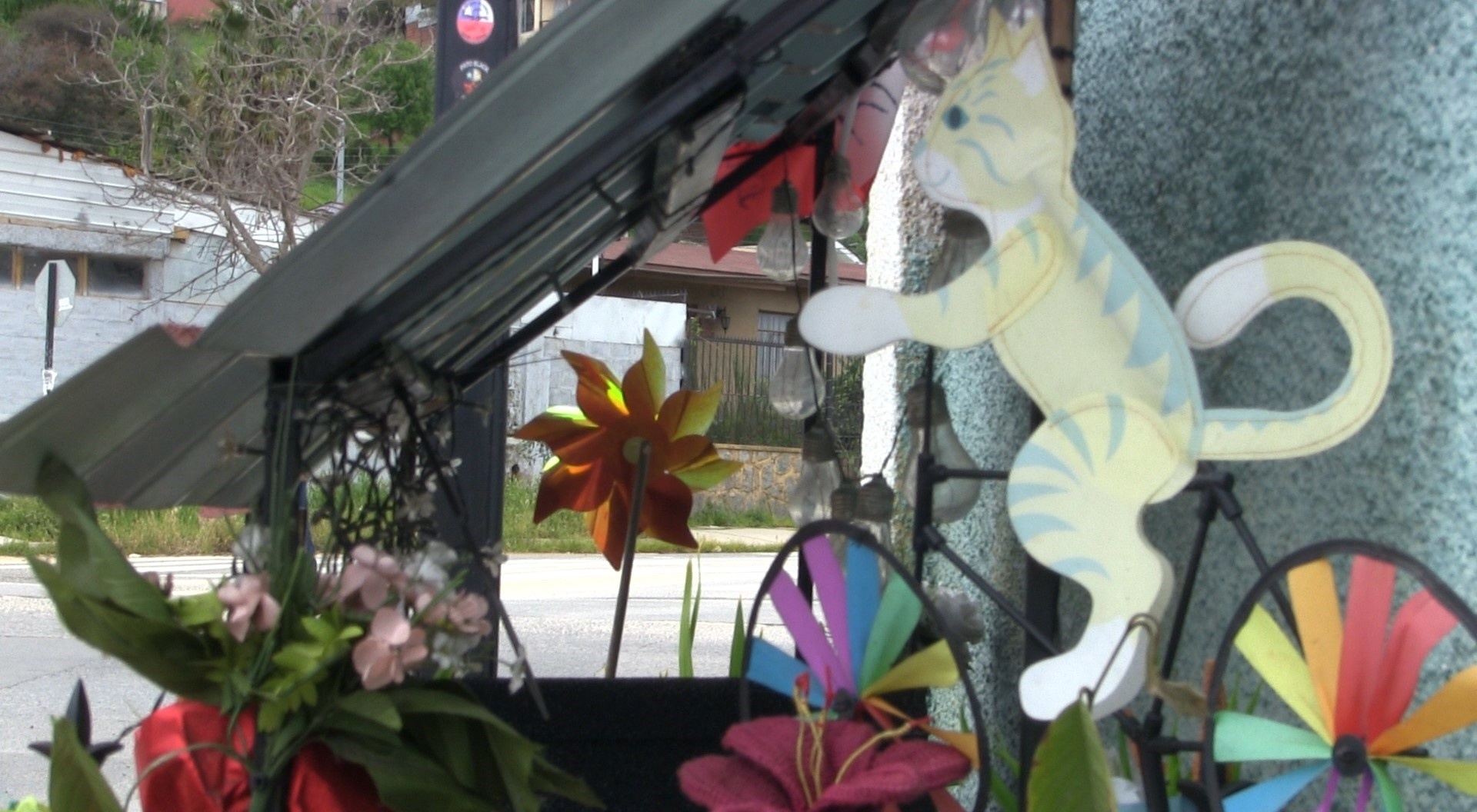
Where two souls heal
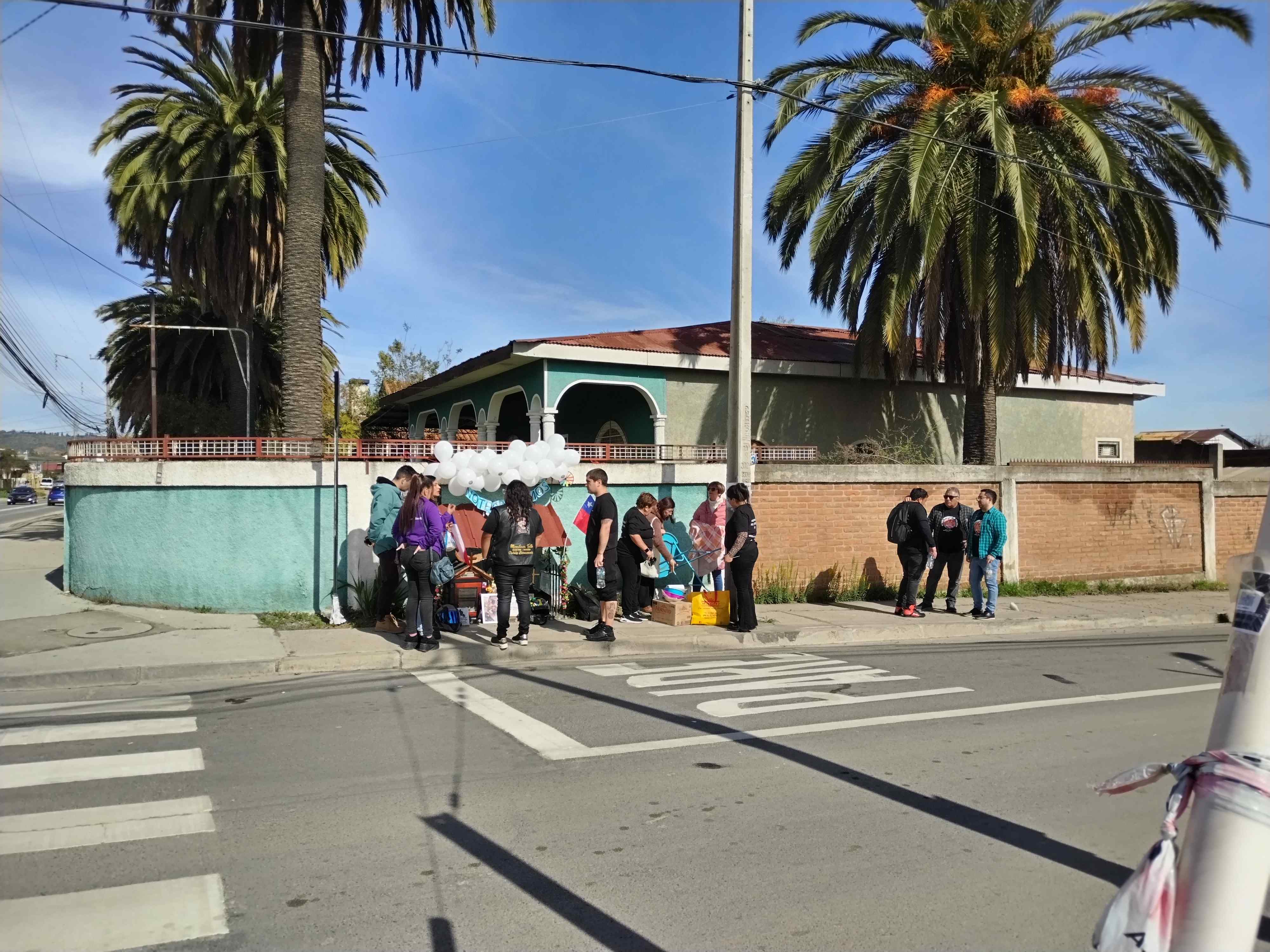
Image 37. Animita de Juan José.
Lili Almási-Szabó
Maturana and Yunguay Streets, Villa Alemana, Chile.
September, 2025.
“The animitas are the place where you can connect with the person who is gone. It's as if I go to see my friend at his house and have tea with him. For me, Juan José's animita is the place where I can connect with him. I talk to him. His body is in the cemetery, but this is where the whole accident happened, this is where he took his last breath [...] We put lights on it, because we wanted it to always have light. People who knew him said that Juan José shone, he shone with his smile and his jokes. So with the lights he will always shine, wherever he is”.
Claudia, 36 years old, Juan José's sister (2025)
Image 38. Animita de Rafita.
David Arturo Espinoza.
Tenglo Island, Puerto Montt, Chile.
January, 2025.
“I am not a believer, but I dare to say that in the event that tomorrow an accident happens to me with a fatal victim of one of my relatives, I would surely go for that little cheerleader, but I give you my word, yes or yes I will fight for that little cheerleader”.
Cristian, fiscal inspector for the Ministry of Public Works (2025)
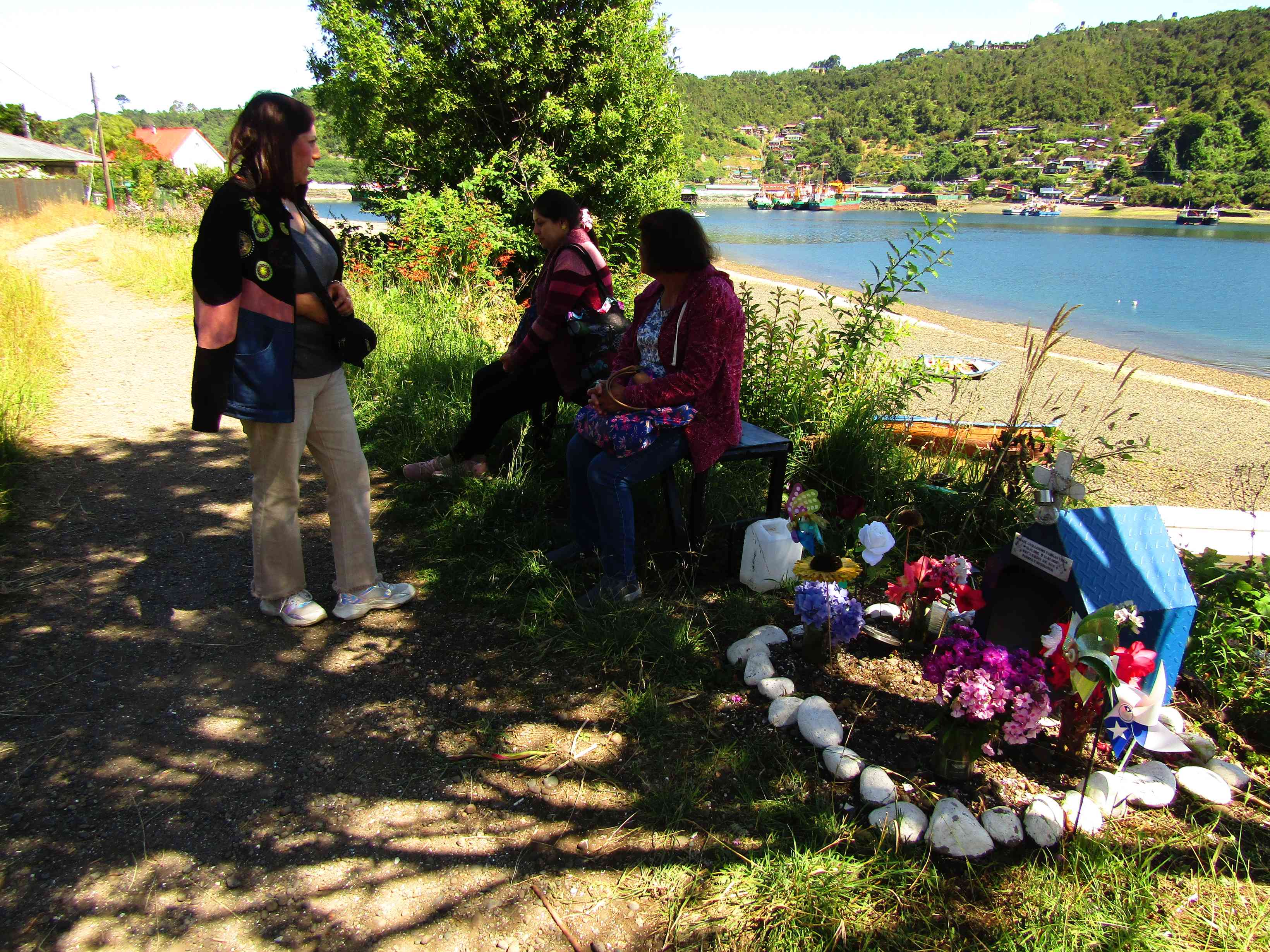
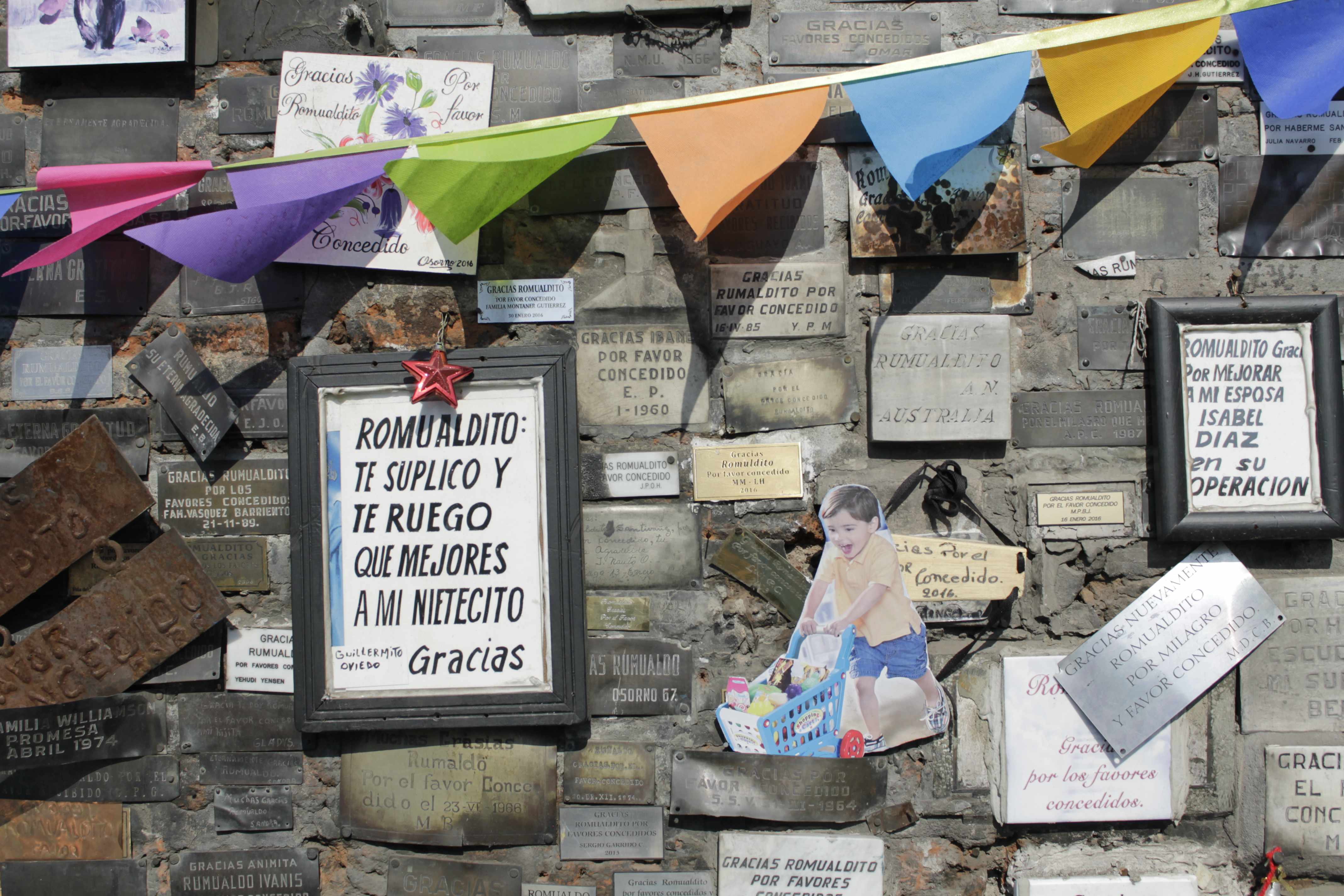
Image 39. Animita de Romualdito.
Lili Almási-Szabó
Estación Central, Santiago de Chile.
January, 2017.
In multiple visits and conversations with devotees in different popular sanctuaries, I have heard time and again how people talk about miracles as part of a system of exchange. The daily language of those who approach the animitas shows a logic where asking and giving back are part of the same value relationship. One woman, for example, told me quite naturally: “I have to pay Romualdito for the miracle he performed”. On other occasions, this logic of reciprocity appears more developed, even detailing what is given in return. One mother told me: “We asked Romualdito to heal our son, and in return we take him to him every year”. Another devotee shared: “Romualdito promised me that he would heal my leg, but in exchange I have to come to visit him every year”.
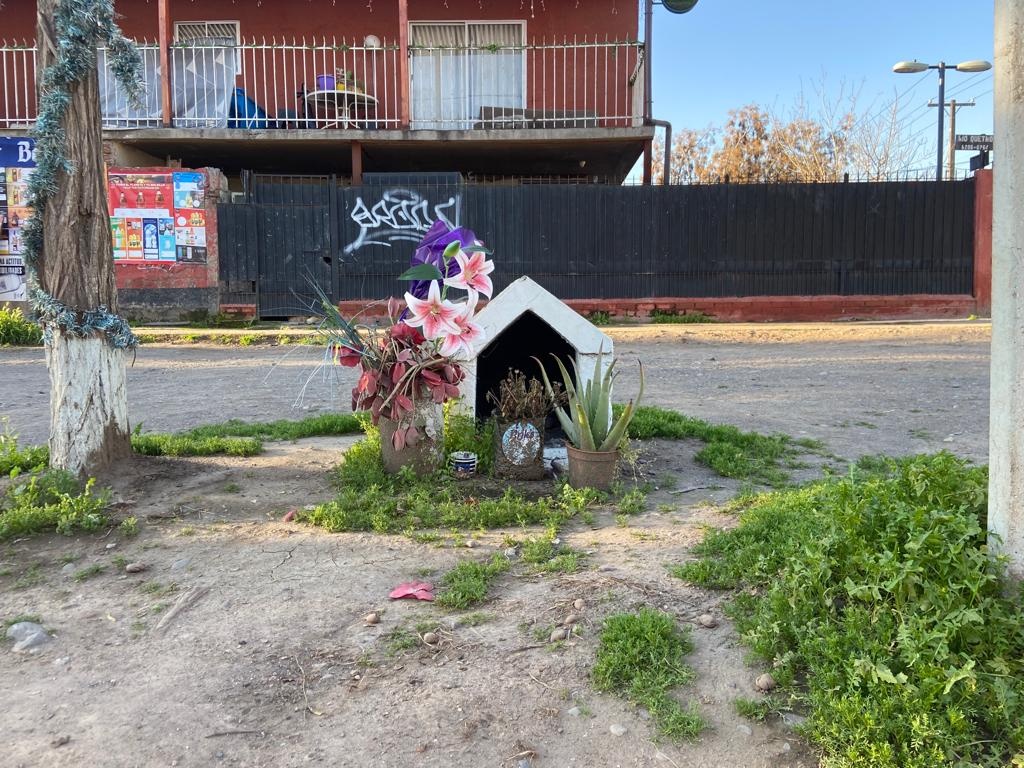
Image 40. Untitled.
Belén Miranda Osses.
Río Quetro with San José, Estación Central, Santiago, Chile.
September, 2023.
“In the place where an unexpected death occurs we put something: an animita. In the cemetery remains the body, but in the animita lives the soul. The little house makes it possible for us to meet that soul, and from this encounter comes healing. The family raises it to heal their loss, we the people ask it to face our own ailments, but also, in silence, to listen to theirs. These two souls meeting reminds us of the fragility of life, but from the celebration: they are vibrant, with flowers, stuffed animals and offerings. They speak not only of the person, not only of the family, but of everyone. In this daily interaction there is no need to laugh or cry. It is an instance where you heal from the silence: the animita and you”.
David Espinoza and Lili Almási-Szabó, final reflection



 EN
EN  ES
ES  FR
FR  PT
PT