
“Thanks to the Virgin”: Online Votive Offerings and Digital Religion in the Baroque Era
- Carlos Nazario Mora Duro
- - see biodata
“Thanks to the Virgin”: Online Votive Offerings and Digital Religion in the Baroque Era
Received: May 26, 2025
Acceptance: July 11, 2025
Abstract
This article analyzes online votive offerings as a phenomenon of digital religion, in which the sacred is transferred and adapted to the virtual realm to participate in online user conversations. Virtual altarpieces manifest as forms of entertainment, self-representation, mockery, and social criticism, which emphasizes their communicative nature, their status as both individual and collective documents, as well as their popular and potentially transgressive orientation. This transgression is not limited to popular participation but also points to a devotional shift toward a secular reinterpretation of religious images. The analysis draws on Baroque modernity, emphasizing the adaptive and subversive reinvention of cultural symbols, as well as the notion of lived religion, to understand how the religious and the everyday intertwine in the digital context.
Keywords: votive offerings, Internet, Baroque modernity, digital religion, lived religion
“Thanks to the Virgin”: Ex-Votos on the Internet and Digital Religion in Baroque Modernity
This article analyzes ex-votos within online user interactions as a form of digital religion, in which the sacred is transferred and adapted to virtual spaces. By focusing on virtual retablos as forms of entertainment, self-representation, mockery, and social critique, it shows how they function as modes of communication, as both individual and collective documents, and as popular and potentially transgressive expressions. This transgression extends beyond the participation of ordinary users, pointing to a shift in devotional practices toward the secular reinterpretation of religious imagery. The analysis draws on the concept of Baroque modernity—emphasizing the adaptive and subversive reinvention of cultural symbols—and on the notion of lived religion to understand how the religious and the everyday are interwoven in digital contexts.
Keywords: Ex-votos, Internet, digital religion, Baroque modernity, lived religion.
Introduction
The contemporary votive offering is a communicative expression of an action linked to religion. This work understands religion as relating to a moral community bound together by its shared references to the sacred and the profane, as defined by Émile Durkheim in his book The elemental forms of the religious life (1912). For the French sociologist, one of the characteristics of the divine is its communicative nature. God It is not only an entity that human beings can rely on, but also one on which they can lean. It is precisely this narrative characteristic that stands out in votive offerings as testimonies situated within a specific temporality and spatiality.
Votive offerings are also historical documents. In the case of Mexico, expressions of gratitude to the divine emerged with the spread of colonial Catholicism. Alberto del Castillo asserts that during the New Spain period, large-scale pictorial representations predominated. However, by the century xix and xx Votive offerings underwent a transformation thanks to the introduction of new materials. Artists shifted from wood and fabric to copper sheets. This material made votive representations accessible to the working classes. As a result of this change, their production took on “a popular character and style that would become one of their main characteristics over the last two centuries” (Del Castillo, 2005: 5).
For its part, the painting technique used for votive objects also evolved over the centuries. Just as the themes depicted in votive offerings took on a ethos In the vernacular, artistic techniques were adapted to popular production. According to some research, the creation of sacred art was affected by political and historical changes, particularly by the establishment of a secular ideology in the Mexican government. Secularism in the 19th century xix —identified as an assertive ideology that established the separation of politics and religion (Kuru, 2009)—reduced the scope of Mexican religious painting, affecting its quality and identity. Thus, political secularism influenced the tradition of religious painting, steering new production in the country’s workshops toward other forms of expression with costumbrista and secular leanings (Hernández Vargas, 2024).
By the century xx, votive offerings have seen a decline in production and popularity among the Mexican population; this situation is likely due to changes in the country’s religious landscape, particularly after the 1970s. Since that time, Mexico has experienced a decline in its Catholic population and an increase in Protestant and Evangelical groups, as well as in the number of people with no religious affiliation (De la Torre et al., 2020; Mora Duro, 2025; Mora Duro and Fitz Herbert, 2024).
However, in recent decades, votive offerings have experienced a noticeable resurgence, and this proliferation is also evident on the internet. On websites and social media, one can find digitized altarpieces as well as new interpretations of votive paintings. These religious images, which originated within popular Catholicism beyond the control of the ecclesiastical hierarchy, seem to emphasize their transgressive elements in this context. on-line (Juárez Becerril, 2024), as a way of incorporating religion into everyday conversation, as outlined by the perspective of lived religion in virtual environments (Campbell, 2005; Helland, 2005; Knibbe and Kupari, 2020).
This article reflects on the votive offerings that have emerged and circulated on the internet in recent years; it examines the distinctive features of these altarpieces, the discourses accompanying their dissemination online, and the socio-anthropological implications of their proliferation. on-line. The images shown were collected from websites and social media platforms such as Facebook and x (formerly Twitter). The selected sample was not chosen based on numerical representativeness; rather, it was determined with the methodological goal of including a diverse range of elements related to contemporary themes and manifestations of altarpieces in the digital context.
The following section explores the structure of votive images, as well as their adaptation to the digital context. Next, ex-votos are characterized as socio-anthropological documents, emphasizing their communicative dimension and their popular, transgressive orientation. Subsequently, the theoretical framework of Baroque modernity is developed, highlighting the subversive reinvention and adaptation of cultural symbols, as well as the analytical concept of digital religion. Finally, the analysis delves into a selection of digital altarpieces, highlighting the shift away from the devotional and the preeminence of secular discourse in the communicative sphere. on-line.
Structure of the votive offerings
Votive offerings are objects given to express a request or gratitude to the divine (hence the name “milagritos”), which may include letters, photographs, newspaper advertisements, figures representing part or all of the body, as well as a specific item that has come into contact with the person who received the blessing (González, 1986). In addition to embodying an explicit invocation, these religious artifacts involve the invocation of an agent associated with the religious universe within the lifeworld of social actors, demonstrating how the sacred intrudes upon everyday life and intertwines with popular, intramundane experience (Gómez Arzapalo and Juárez Becerril, 2018).
Contemporary altarpieces or pictorial "milagritos" are a specific category of ex-voto. These usually consist of a painting on a metal sheet, in which the individual connects with a religious entity. They therefore include prayers, expressions of gratitude, and performative representations of miracles that have been granted or are still awaited. Amy Hamman (2006) notes that Mexican ex-votos are almost always oriented horizontally. Their dimensions range from 18×25 cm to 25×35 cm. The typical components of these pictorial works are a depiction of the divine, an illustration of the event, and a textual passage or inscription. Image 1, titled “Contemporary Ex-voto in Altarpiece Format,” was generated by artificial intelligence using dall-e, and Chatgpt de Openai, to illustrate the format of the ex-voto.
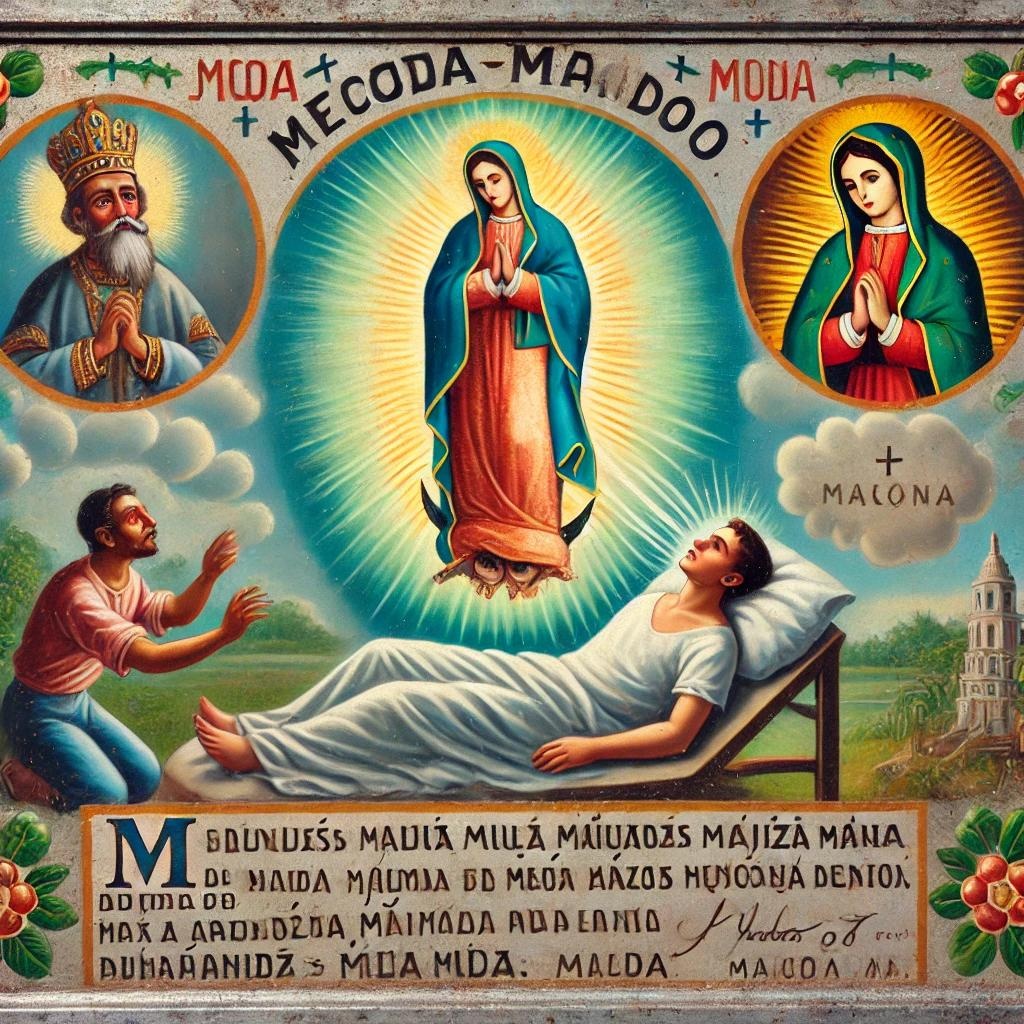
Generally, the text on the ex-voto expresses the petitioner’s gratitude for divine intervention and is placed at the bottom of the votive painting. These messages convey emotional accounts of dire circumstances that require the intervention of the deus ex machina. That is, the mechanism by which the intervention of a religious figure leads to the resolution of the problem. The name of the petitioner and the date of the miraculous event also often appear in the text of the message, which is why votive offerings serve as historical documents.
Furthermore, the main component of the altarpiece is usually the dramatic scene that illustrates the danger or uncertainty facing the social actor. These scenes vary significantly and reflect both the individual’s unique circumstances—health, economic, or legal problems, among others—and the artist’s creativity in interpreting the action. Today, digital altarpieces adapt the narrated scenes not only to address acute problems but also to address social tensions or even to depict playful activities (Mora Duro, 2019); in other words, pictorial votive offerings are also an anthropological document.
The adjectives “virtual” or “digital” are added to the concept of votive offerings to refer to their existence on the internet, although this does not mean that the altarpieces exist only on websites or social media. The digitization of votive paintings involves a process of adapting the production of altarpieces offline to digital environments. This period involves a process of healing, in which the selection of images is guided by the—generally secular—objectives of the users and their platforms for expression. Although, on the other hand, the creation and distribution of digitally native ex-votos—that is, those created entirely within the digital environment—has been documented. on-line.
It is worth noting that the votive images circulating on the internet are not an entirely new phenomenon from a socio-anthropological perspective, but rather reflect trends already evident in altarpieces. offline. This is consistent with recent research that recognizes that communicative elements on the Internet are part of an expanded socialization process and reflect continuity across contexts offline and online (Miller, 2021). Email, for example, is an evolution of traditional letters. Far from representing a new form of social interaction, email messages have streamlined and popularized forms of online communication, giving rise to novel dynamics in human communication.
In this era of cultural digitization, popular representations take on particular significance through their reproduction and distribution on the internet. Some recent studies agree that any type of information can be copied through imitation and distributed creatively online. Memes are a prime example of materials that are reproduced on a massive scale. These are digital items that share characteristics of form, content, and/or orientation. Memes are usually created with an awareness of each of these dimensions and are circulated, imitated, or transformed by many internet users (Shifman, 2014).
Memes encompass various forms of expression: stories, songs, habits, skills, inventions, and ways of doing things that are copied from one person to another (Blackmore et al., 2000). What they have in common is their imitative nature and their tendency toward mass circulation. In this sense, digital altarpieces are no exception to these dynamics. It can be said that votive offerings undergo a process of memeification as they are replicated and shared by different users on the network. This phenomenon per se It highlights certain socio-anthropological elements identified in religious altarpieces, as discussed in the following section.
Altarpieces as Socio-Anthropological Documents
It is important to highlight certain socio-anthropological characteristics of religious altarpieces. Although their narrative centers on the individual—that is, it emphasizes the individual’s communication with a saint, the Virgin Mary, or Jesus Christ himself—these altarpieces also serve as testimonies to collective memory (Garnett and Rosser, 2019). This underscores their nature as social and historical documents. The individuals and communities who turn to votive painting express social expectations and fears, as well as various collective processes. These include social breakdown, economic crises, conditions of oppression, social issues, and demographic processes such as migration (Sandell, 2014; Durand and Massey, 1995).
A recurring theme in votive offerings is the request for health—or, more precisely, for recovery from illness—in which the divine agent may intervene to alleviate the petitioner’s discomfort and cure their illness. Some studies suggest that narrating health issues has symbolic efficacy and a therapeutic effect among individuals and communities (Abad González, 2016). For example, the COVID-19 pandemic, as a contemporary global event, gave rise to its own votive altars in a very short time, demonstrating the dynamism of these communicative objects (Dilley, 2021; Primiano, 2023).
The following votive offering (Image 2) tells the story of Daniel Córdova, who writes: “I contracted COVID-19 and had to be hospitalized; I spent several days on a ventilator with little hope of recovering. I am infinitely grateful to Saint Jude Thaddeus that, little by little, I regained my health and was able to survive this terrible disease.” The altarpiece in question was created by artist Gonzalo Palacios from the city of Puebla, Mexico, reflecting people’s reactions to the global pandemic and their trust in both medical interventions and the religious figure of Saint Jude Thaddeus.
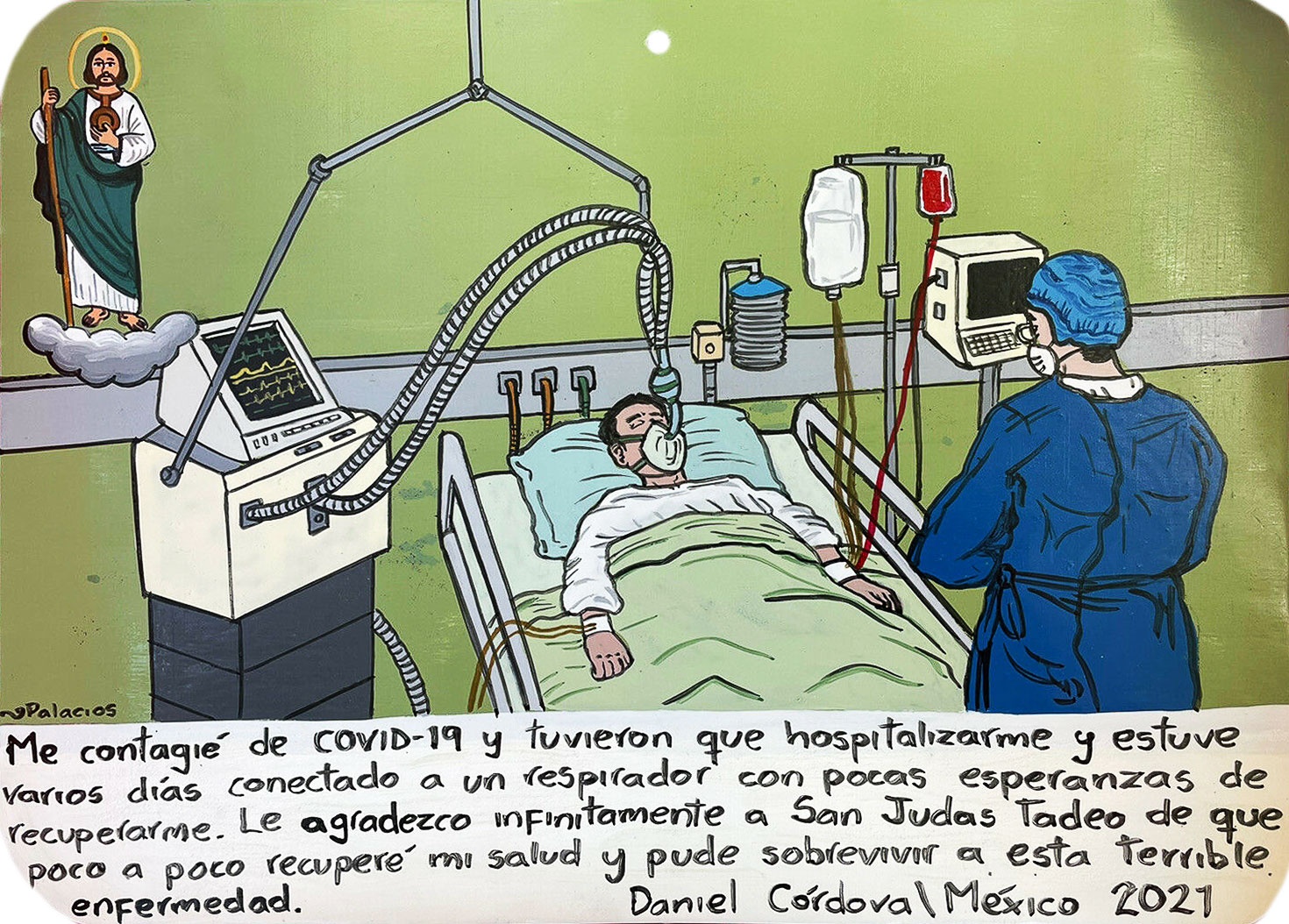
It is worth noting that, despite the rise of secular discourses such as those of science and the medical field, Latin American modernity recognizes that religious narratives and the intervention of the divine remain relevant as forms of communication and as a means for individuals to connect with collective imaginaries. Thus, some researchers of religion in Latin America observe that people visit the doctor and place their trust in medicine; however, upon leaving the hospital, they go to church to seek divine help in the face of health problems. This coexistence of the religious and the secular is understood by social researchers as an “enchanted modernity” (Morello et al., 2017).
With regard to altarpieces, Salvador Rodríguez Becerra (1985) explains that the communicative climax between the believer and the divine agent lies in the miracle. "Little miracles," therefore, involve the direct and effective intervention of the sacred on behalf of those who make requests, the effect of which also has repercussions on the validation and popularity of the shrines that house the votive offerings.
Miracles are tangible and perceptible events produced by a supernatural intervention that transcends the normal order of things […] Miracles—the ability to act beyond human limitations—appear at the level emic of the chroniclers and storytellers who extol the virtues of an image […] Without miracles, there is no possibility of fostering devotion; these are the expression of the image’s power, and all those in need turn to it in search of solutions, which undoubtedly results in healings, alms, greater dissemination of heavenly favors, finer buildings, and so on (Rodríguez Becerra, 1985: 102).
On the other hand, the depictions and invocations on the altarpieces also demonstrate a commitment to faith and devotion in specific societies and eras. Discursively, their message acknowledges the presence and intervention of a sacred entity. As such, they reflect the persistence or irrelevance of gods, saints, or virgins within the collective imagination. It is worth recalling what Durkheim (1912: 42) said: “If it is true that man depends on his gods, the dependence is reciprocal. The gods, too, need man; without offerings and sacrifices, they would die.”.
That said, votive paintings are recognized for their popular character, which they have acquired historically—as mentioned—due to their widespread accessibility through the use of materials such as metal sheets and the work of folk artists. In this regard, the category typically used for the study of altarpieces, from an aesthetic standpoint, is that of vernacular art or folk religious art (vernacular religious art, religious folk art) (Fraser Giffords, 1974). These approaches emphasize that the production of votive art is more closely tied to the lifeworld of the subaltern strata, in contrast to the culture and religion of the ruling classes and also at a distance from the rationality of religious bureaucratic elites.
The popular nature of the “milagritos” is not limited to their connection with the lower classes; they also have a transgressive character in both form and substance. Jorge González (1986) argues that, from their very conception, ex-votos represent “the only spatial realm within the sanctuary where the people can intervene with relative freedom, as they break the sober, solemn, and orderly semantic unity imposed by the sanctuary.” In other words, “the right of the secular community to define the sacred site” (Garnett and Rosser, 2019: 55). For Enrique Dussel (1986), in fact, popular religion has the power to grant agency to “the people,” especially regarding a type of faith over which the official religion has no control or of which it is not even aware.
In light of the above, this paper argues that the social-communicative and transgressive nature of votive paintings tends to be accentuated on the internet. Transgression in the digital context is not limited to horizontal participation but also involves a shift from the devotional toward a secular and profane reinterpretation. In other words, virtual votive offerings lose their original religious character to become part of the everyday conversations of online users. The framework of Baroque modernity—in the Mexican context—and the ways in which individuals simultaneously interweave the religious and the secular, analyzed from the perspective of lived religion, offer relevant analytical tools for reflecting on digital votive offerings. The following section explores the implications of this conceptual framework.
Ethos Baroque and Living Religion
According to the philosopher Bolívar Echeverría, modernity as it has taken root in Latin American countries such as Mexico reflects different forms of adaptation to and resistance against the social order promoted by the Western capitalist model. The ethos Baroque is one such movement, consisting of the theatricalization of modern attitudes. The performance Baroque art is capable of subverting the devastation of the social and natural core of local life and rescuing that core, at least on the level of the imagination (Echeverría, 2019).
Renée de la Torre has reflected on this ethos cultural significance and its relevance to contemporary religiosity. The anthropologist explains that, due to their Baroque nature, religious images and figures have the capacity to generate symbolic power that transcends the devotional realm and becomes embedded in current social and political dynamics. The ethos The Baroque style, therefore, allows us to understand the interplay of symbolic elements, images, and beliefs that bridge the boundaries between the religious and the secular, creating novel spaces for cultural hybridization (De la Torre, 2023).
De la Torre also adds that in the technological age, the religious becomes “ultra-baroque,” due to the rapid transformation of spiritual symbols outside of institutions, giving rise to innovative aesthetic forms imbued with new meanings. Following this logic, the ultra-Baroque itself transforms the aesthetic features of symbols to bring to light those contradictions that were historically assimilated through mimesis. One example is the images of Our Lady of Guadalupe, which evolve and multiply, shifting from colonizing mimicry to a Baroque logic that challenges colonial structures and reflects a decentralized religious identity (De la Torre, 2021, 2023; Echeverría, 2007).
For its part, the perspective of lived religion proves useful within the cultural framework of the ethos Baroque to understand the transformation of religious images in people’s daily lives, beyond formal beliefs and affiliations, as well as official institutions and theologies. This analytical concept emphasizes how individuals weave the sacred and the profane into everyday conversation, far removed from or parallel to the parameters and limits imposed by dogma and ecclesiastical structures; that is, how the sacred is invoked in daily life, anywhere and in any form. According to Nancy Ammerman (2013, 2014), wherever social relationships exist, the sacred and the secular can coexist and intermingle, especially when spiritual assumptions—originating from the margins of official religions—find a place in people’s everyday conversations.
Studies of lived religion note that there are settings that foster dialogue with the sacred, such as workplaces where individuals come into contact with sick or vulnerable people. In this sense, the hospital is one of the quintessential settings where the religious and the secular can coexist (Collins, 2016). According to Peter Berger (2015), religious people confront their reality in both religious and secular terms, finding ways to apply these two discourses to different areas of life—perhaps, at times, in ways that are not theoretically consistent. For the sociologist, therefore, the hospital does not represent an irresolvable conflict between modern discourses—such as science and medicine—and religion. The setting would in fact witness an interaction peaceful between the secular discourse that should prevail at the medical center even if God did not exist (as if God did not exist), and the beliefs and practices of believers.
In addition to the above, lived religion also emphasizes that totalitarian identities—that is, those in which only a single identity prevails, whether religious or secular—are rarely found in people’s everyday experiences. Ammerman (2014) argues that qualitative studies show that everyday social life is both secular and religious, since we are never defined by a single identity—not even when our affiliation can be categorized entirely as religious; such would be the case with the bureaucratic leadership of a church organization.
On the other hand, the digital context—which is often assumed to be a secular and modern space—contains various expressions related to the sacred and the religious (Brasher, 2001). The perspective of religion as lived on the internet acknowledges these online religious expressions, contrary to classical theories such as secularization. The latter perspective, of course, suggests that the greater the technological development and integration into modernity, the less public expression of religion there will be. Thomas Luckmann (1967) described this trend in Western modernity as a process of the invisibilization of religion, noting its retreat into the private sphere.
Contrary to the notion of an “invisible” religion, it is possible to find websites of religious organizations and individual expressions online where users intertwine the religious and the secular, not necessarily to assert a spiritual identity. Some researchers contrast online religion (religion online) or online religion (networked religion) to discuss the activities of institutionalized religions; and religion online (online religion) or the third space of digital religion, which focuses on religiosity not regulated by ecclesiastical institutions; in other words, religiosity that arises through users’ experiences (Dawson and Cowan, 2004; Helland, 2000).
The third dimension of digital religion involves incorporating the perspective of lived religion into the analysis of spiritual and religious expressions on the internet. This space brings together religious traditions, new expressions, hybrid forms, and even anti-religious stances—in the sense of criticism of established religions (Hoover and Park, 2007). The aim is to recognize the innovative forms that emerge in digital spaces due to user engagement, as users flexibly employ spiritual and religious elements based on their own understanding and subjectivity.
Digital religion is understood as the technological and cultural space evoked when discussing the transfer of religious practices to the virtual environment, but also as the process of reconfiguring religious practices and beliefs mediated by technology, shifting from an institutional approach to one of lived religion. As Heidi Campbell and Wendi Bellar (2023) have noted, digital religion is a field of symbolic production where authority, identity, and spiritual experience are negotiated in interaction with the logic inherent to the digital realm.1
From this perspective, digital votive offerings are not merely a replica of traditional devotional practices. Beyond expressions of religious identity on the internet, these images are a manifestation of digital religion in which the sacred or spiritual is brought into online discourse to discuss and address everyday, secular issues—especially within a framework of Baroque theatricality, such as the Mexican context. As noted in the following section, religious representations engage in forms of entertainment, mockery, criticism, and virtual self-representation, which highlight the socio-anthropological elements of devotional images in the digital environment—such as their dual nature as both individual and collective documents, their communicative character, and their popular and potentially transgressive orientation.
Analysis of Altarpieces on-line
To begin our analysis, let’s take a look at the Facebook page “Exvotos, retablos, and milagritos.” The page was created in 2017 by a private user who posts Mexican exvotos with varying frequency; these were produced mainly during the second half of the century xx. The administrator often shares links to specialized sites such as the media library of the National Institute of Anthropology and History (inah) in Mexico, as well as information about some public events in Mexico City. The purpose of this space is to showcase votive offerings—“gifts” that “may be contemporary works by Mexican artists” (Facebook-erm, 2019). In this regard, some altarpiece makers in the context offline They are mentioned in the shared images, which help spread the word about their artistic work.
Facebook users interact and engage in a collective conversation in which votive images serve as the currency of exchange, and social capital is accumulated in the form of “likes” and support on social media. In this virtual dialogue, one of the aspects of the altarpieces that stands out is their playful nature (Mora Duro, 2019). By highlighting the farce or the paradox in the shared votive offerings, users emphasize the comic and entertaining nature of the religious figures, which refers to the performance subversive nature of the ethos Baroque. Echeverría observes in this logic that Baroque theatricality “undermines” and diminishes modern logic by mocking its own “realism” (Echeverría, 2019: 179). By way of illustration, here is a painting published in February 2023 (Image 3).
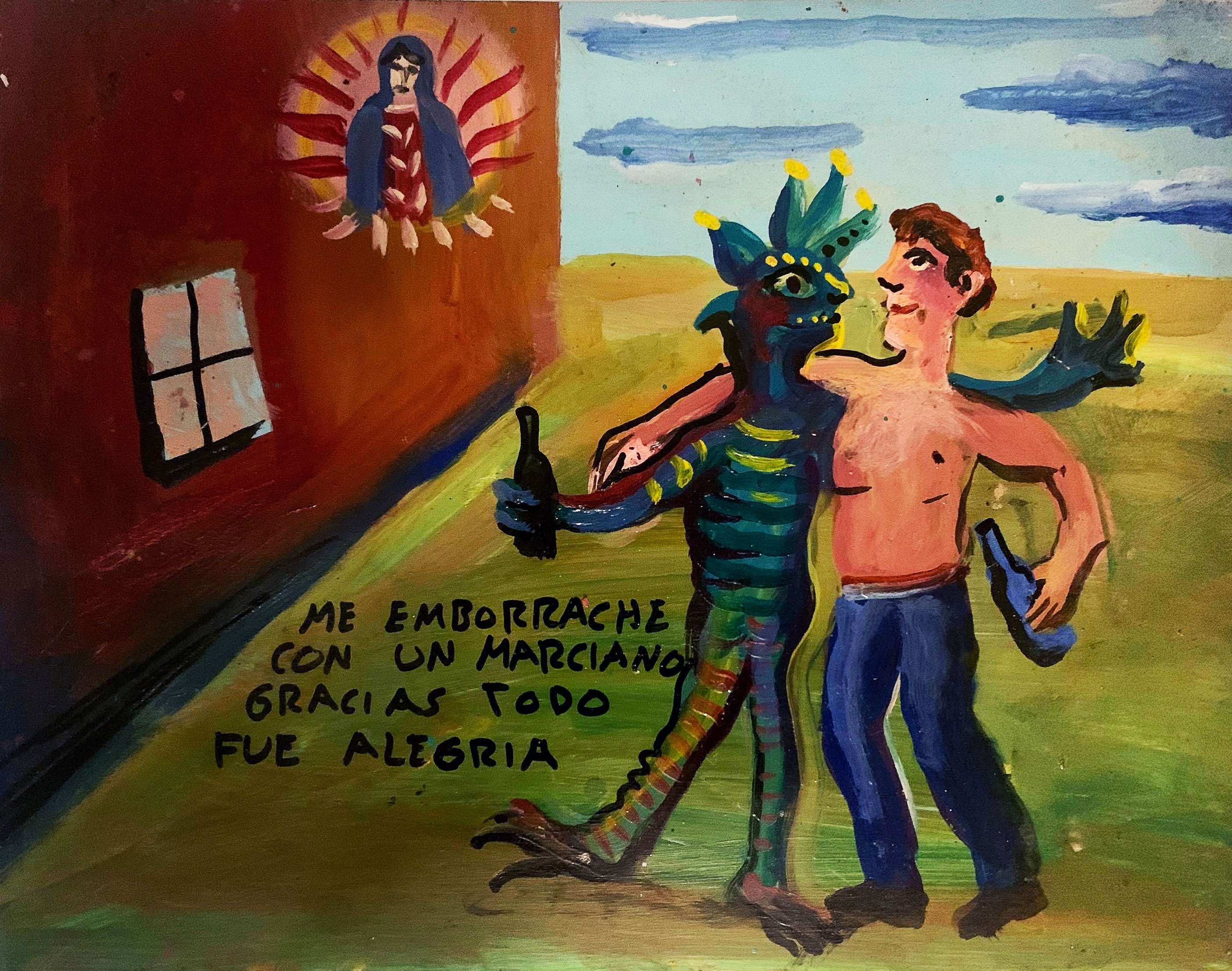
The artist who created the image is the painter Miguel Hernández. It depicts an encounter between a half-naked man and an eloquent alien; both are drinking alcohol. The caption on the altarpiece reads, “I got drunk with a Martian; thank you—it was all joy.” In the upper left corner appears the religious figure of the Virgin of Guadalupe, suggesting that the thanks are directed toward this figure in Mexican popular Catholicism and that the extraordinary encounter had a happy ending. happy.
Among users“ comments on this painting, several emphasize its satirical nature. Reactions include humorous remarks and expressions of self-recognition: ”I can totally relate,“ ”This is a story that could happen to us.“ Some messages interpret and describe the action depicted in the altarpiece, suggesting that the figure in the painting may have consumed some kind of narcotic substance (“it was something like ayahuasca [sic]”) or that the intoxicating beverage was a Mexican distillate known as pulque, emphasizing its popularity. Online interactions allude to both moral judgments and the collective imagination of Mexican society. Meanwhile, the devotional is transformed into its profane expression. The aim is not to recreate a religious identity through the use of miraculous paintings or to desecrate sacred symbols, but rather to affirm the relevance of religious symbols in everyday conversation, within which internet users recognize themselves and define their positions.
On social media x We can also find various votive expressions and users who share and comment on the digitized miracles. See, for example, the hashtags ##retablos and ##exvotos, as well as the @mexicanexvotos profile (https://x.com/mexicanexvotos). Often, the users who interact have a specialized and institutional background; that is, they are painters or have some connection to the arts and culture sector. Based on this orientation, the dialogues on-line tend to emphasize the aesthetic value and cultural of the votive offerings, as well as their documentary and artistic analysis.
Although there are people interested in the retablos who may serve as site administrators or actively share content on social media, this does not imply the existence of centralized management of the retablos or control over interactions among users. Communication on-line reflects the structure of a social network, in which each of its nodes participates in the digital public sphere in a spontaneous and organic manner, following the socialization dynamics of the “network society” paradigm (Castells, 2000, 2001). In certain cases, administrators act as catalysts, encouraging user participation in the network. This dynamic facilitates the individual appropriation of religious symbols—that is, the phenomenon of “lived religion” fostered by digital environments.
Despite the above, online ex-votos cannot be separated from perspectives aligned with the power and interests of religious or political institutions. By way of illustration, in December 2021, the U.S. Ambassador to Mexico, Christopher Landau, shared a votive offering related to his diplomatic work in the country (Image 4). The altarpiece shared on the U.S. politician’s social media reads as follows: “I give infinite thanks to Our Lady of Guadalupe for having heard my prayers when I asked her to have me appointed U.S. Ambassador to Mexico. It has been an unforgettable experience for our family, and we will always hold Mexico in our hearts.”.
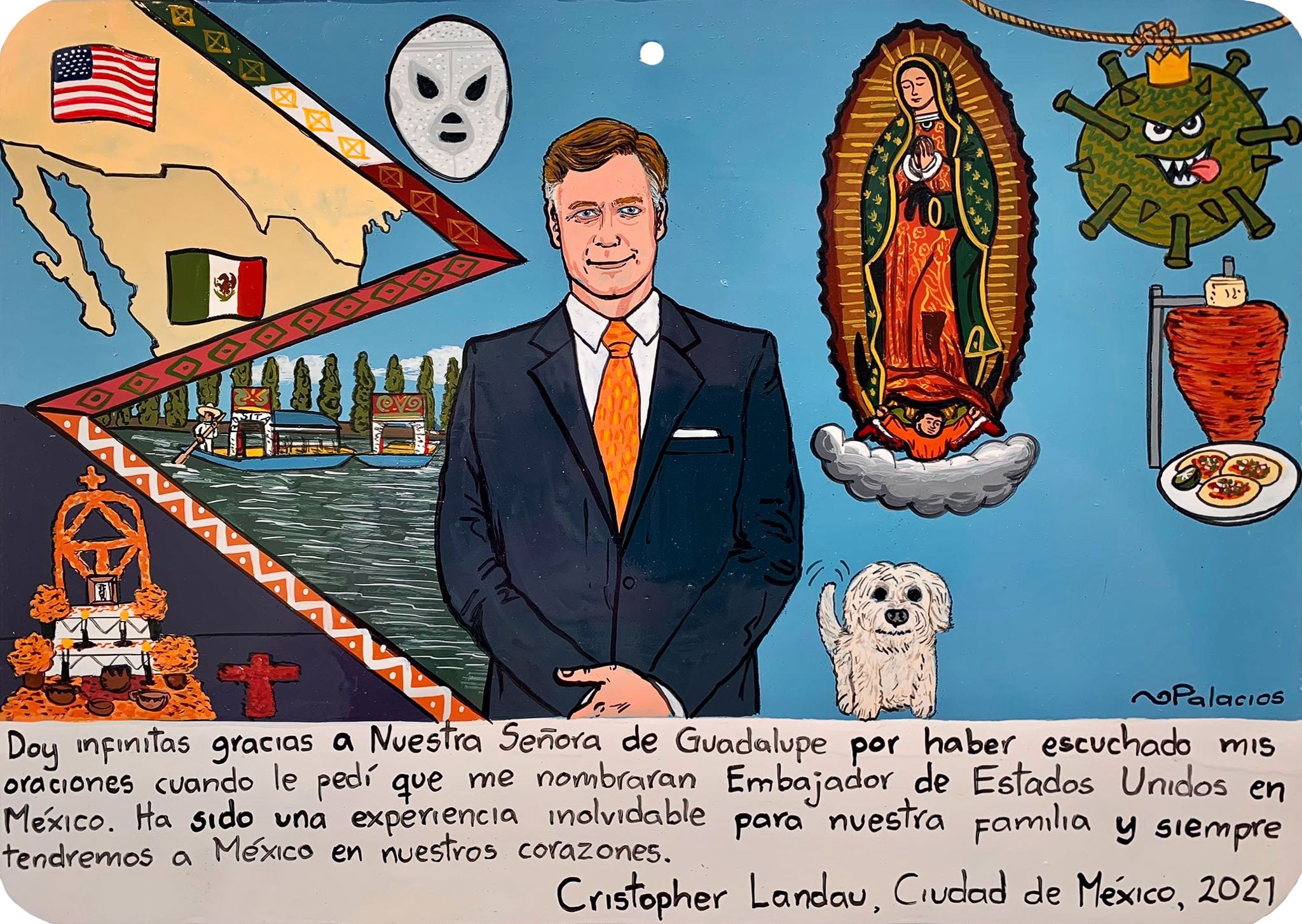
There is a striking contrast between the ambassador’s need to appear attuned to the relationship between the sacred and the secular in Mexico and the statements made by President Donald Trump, who, during the same period, issued anti-Mexican messages and expressed anti-immigrant positions within his domestic political context. The U.S. ambassador also displayed other votive offerings from his family, expressing gratitude to various saints from the popular religious tradition as a way of showing his affinity for the imagery that is meaningful to Mexicans (Ávila, 2021).
For Dussel, one of the aspects of popular religion has to do with the reproduction of oppression, when people are viewed as passive recipients of religious symbols, which would give rise to a tendency toward populist manipulation of religious symbols to legitimize the power being exercised. However, the same philosopher highlights another liberating direction, identified in phenomena such as church-based communities in Latin America. In these communities, popular religion takes on a political character when it is oriented toward social action within the world of life (Dussel, 1986).
In this context, we note that some votive offerings also display a transgressive orientation through the ironic and socially critical depiction of certain social scenes. The theatricality is not focused, then, on the sacred, but rather on its impact on the collective conversation. Evidence of this is the series of altarpieces addressing abortion, created by the association Católicas por el Derecho a Decidir México. In 2020, the association and other civil society groups organized an exhibition of votive images in the city of Oaxaca to depict the experiences of religious women who have had abortions. This initiative sought to highlight the relationship between faith and the right to choose, questioning traditional dogmas within the Catholic Church (Jiménez, 2020).
Unlike the playful or self-reflective conversations generated by some digitized altarpieces, votive offerings aimed at social criticism seem to serve as a tool for intervening in the public sphere and connecting the believer’s actions with the saints, virgins, and gods of the collective imagination. The non-institutionalized nature of religion on the internet seems to foster an experience of “e-rejía” (Sbardelotto, 2014), in which the religious is interwoven with the profane to question and propose new forms of subjectivation of belief in everyday social practices.
Finally, some votive offerings produced in the context on-line They also seem to demonstrate a significant flexibility in both the content and form of the traditional votive format. In 2023, illustrator @adrianab_n shared on social media x A votive offering to celebrate the 116th anniversary of Frida Kahlo’s birth. Image 5 reads as follows: “Mr. and Mrs. Guillermo and Matilde Kahlo thank Our Lady of Carmen for healing their daughter Frida from polio. Although she was left with one leg that was thin and shorter than the other, she was able to walk again. Coyoacán, 1913.” The creator of the ex-voto commented: “Today I made this fictional ex-voto, in which I took many liberties to recount other events in Frida Kahlo’s life” (Adriana Ilustrada [@adrianab_n], 2023).
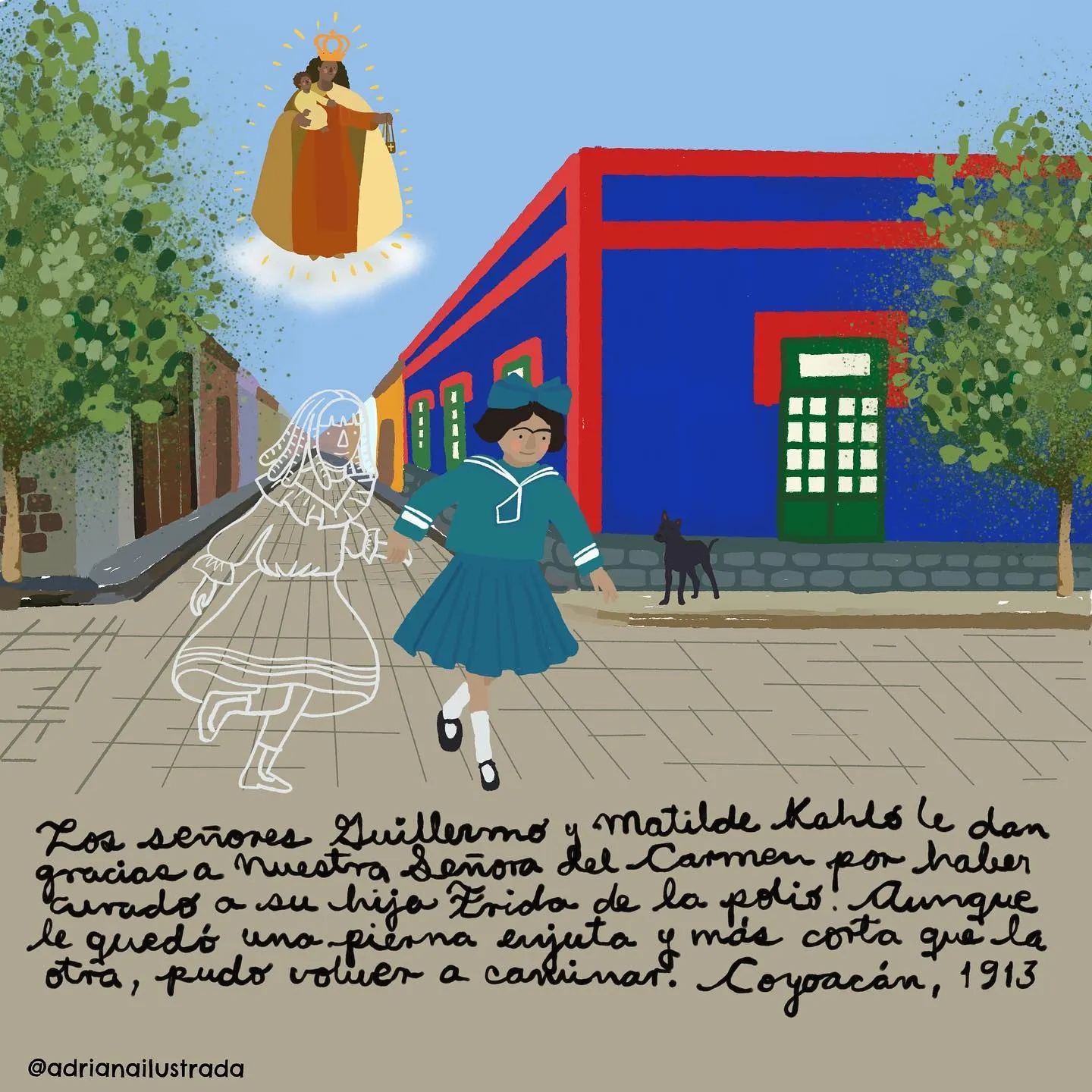
The concept of fake votive offering It reflects the artist’s self-determination to produce an evocative object outside the bounds of institutional religious regulation. The votive-style image features a figure from popular culture—Frida Kahlo—and a divine intervention by the Virgin of Carmen. However, this ex-voto was not commissioned by a believer to attest to a miracle. Rather, the altarpiece is a communicative object for the online context, centered on the user’s interests: playful entertainment, digital social capital, or social reflexivity. Within this framework on-line Religious and secular aspects intertwine, as described by the "lived religion" approach, moving beyond the confines of official religions to recreate a collage Baroque in Everyday Life.
The illustrations in question reinforce the experience of religion in the digital environment by incorporating digital altarpieces taken out of their original context offline. In this sense, the dissemination of religious images of saints, virgins, and gods does not seek to reinforce people’s religious identity or desecrate their spiritual symbols; rather, it fosters collective conversations in which the religious and the secular intertwine to reaffirm their Baroque relevance, participating in everyday communication or social reflection on issues relevant to social actors.
In conclusion
Votive offerings have historically served as expressions of gratitude and petitions to the divine. In recent years, however, these objects of popular piety have adapted to the technological and cultural changes brought about by the internet. This demonstrates the persistence of religious symbols in communication mediated by information technologies. Like other digital artifacts—copied and distributed on a massive scale on the internet—retablos have become part of the digital polyphony through a process of memeification, bringing dynamism and flexibility to religious depictions.
On the internet, votive offerings are used as a means of expression and creative exchange. One consequence of this dynamic is the accumulation of social capital generated in digital environments. However, beyond their expressive value, these votive offerings constitute collective documents. Digitized religious images document social expectations and fears, such as economic, social, and health crises. In this regard, this article has shown how altarpieces amplify their socio-anthropological relevance on websites and social media. In particular, it highlights their nature as historical and social documents, as well as their popular and potentially transgressive dimension.
One of the aspects that has been analyzed in digital altarpieces is their playful nature. This reveals how some votive objects are used as communicative artifacts, highlighting their ability to generate a collective conversation and a sense of self-recognition among online users. The farce and contradiction displayed in this appropriation of religious images remind us of the performance subversive nature of the ethos Baroque, reflecting the adaptation and subversion of the expected forms of Western modernity in the Mexican context.
It has been observed that virtual “milagritos” highlight the horizontal participation of laypeople in the production and distribution of religious images, while the digital environment fosters a Baroque reinterpretation of cultural symbols, giving them new secular and everyday meanings. This popular and transgressive dimension opens up a space for discussing controversial topics in the public sphere, as digital altarpieces can challenge traditional norms and serve as tools for reflection and social critique. The proliferation of votive offerings on the internet thus constitutes an expression of digital religion, in which the sacred intermingles with and adapts to everyday communication to discuss and address issues important to users.
While transgression in the digital context is not limited to the productive participation of laypeople in the sacred sphere, the shift in devotional practice is particularly notable. In other words, virtual votive offerings lose their religious character to become part of everyday online conversations. However, this adaptation to the media on-line It also entails potential processes of moralization and indoctrination in the interests of certain social sectors or groups close to power. An additional finding shows that religious objects can be exploited for political purposes or used to legitimize institutions, as is the case with the populist orientation of some altarpieces. The many facets of the appropriation of cultural symbols are continually on display online.
Bibliography
Abad González, Luisa (2016). “Narraciones sobre la enfermedad en ermitas y santuarios de devoción: un modelo de storytelling en la proyección sociocomunitaria del sufrimiento”, Revista San Gregorio, núm. 13, pp. 30-39.
Adriana ilustrada [@adrianab_n] (2023, julio 6). “Hoy hice este falso exvoto donde me tomé muchas licencias para narrar otros sucesos de la vida de Frida Kahlo para conmemorar el 116 aniversario de su nacimiento “#frida #fridakahlo #casaazul #casaazulfridakahlo #coyoacán #coyoacán #méxico #méxico #exvoto #exvotos” [actualización de estado de Twitter]. https://x.com/adrianab_n/status/1676770014496452608
Ammerman, Nancy T. (2013, junio). “Spiritual but Not Religious? Beyond Binary Choices in the Study of Religion”, Journal for the Scientific Study of Religion, vol. 52, núm. 2, pp. 258-278. https://doi.org/10.1111/jssr.12024
— (2014). “Finding Religion in Everyday Life”, Sociology of Religion, vol. 75, núm. 2, pp. 189-207.
Ávila, Mary Carmen (2021, enero 4). “¡Christopher Landau presume sus ‘milagritos’ pintados por mexicanos!”, El Sol de México. https://www.elsoldemexico.com.mx/doble-via/fotos-christopher-landau-embajador-eu-retablos-milagritos-exvotos-pintados-mexicanos-6204246.html
Berger, Peter (2015). “The Hospital: On the Interface between Secularity and Religion”, Society, vol. 52, núm. 5, pp. 410-412.
Blackmore, Susan et al. (2000). “The Power of Memes”, Scientific American, vol. 283, núm. 4, pp. 64-73.
Brasher, Brenda (2001). Give me that Online Religion. San Francisco: Jossey-Bass Publishers.
Campbell, Heidi (2005). “Spiritualising the Internet: Uncovering Discourse and Narrative of Religious Internet Usage”, Online-Heidelberg Journal of Religions on the Internet, vol. 1, núm. 1. http://archiv.ub.uni-heidelberg.de/volltextserver/volltexte/2005/5824/pdf/Campbell4a.pdf
— y Wendi Bellar (2023). Digital Religion: The Basics. Londres: Routledge.
Castells, Manuel (2000). “Toward a Sociology of the Network Society”, Contemporary Sociology, vol. 29, núm. 5, pp. 693-699.
— (2001). The Internet Galaxy: Reflections on the Internet, Business and Society. Oxford: Oxford University Press.
Christopher Landau [@ChrisLandauUSA] (2021, diciembre 12). “Hoy me uno al agradecimiento en , y todo el a Nuestra Señora de Guadalupe. Necesitamos su intervención más que nunca. Un fuerte abrazo a todos los guadalupanos donde sea que estén ”. [actualización de estado de Twitter]. https://x.com/ChrisLandauUSA/status/1470104018647195655
Collins, Peter (2016). “Acute Ambiguity: Towards a Heterotopology of Hospital Chaplaincy”, en Abby Day, Giselle Vincett y Christopher R. Cotter (eds.). Social Identities between the Sacred and the Secular. Londres: Routledge, pp. 39-58.
Dawson, Lorne y Douglas Cowan (2004). Religion Online: Finding Faith on the Internet. Londres: Routledge.
De la Torre, Renée (2021). “La Virgen de los mil y un rostros: del mimetismo colonizador al ultrabarroco guadalupano”, en Emerson Giumbelli y Fernanda Arêas Peixoto (eds.). Arte e religião: passagens, cruzamentos, embate. Brasilia: aba Publicações, pp. 19-54.
— (2023). “Saints and their Replicants: A Decolonization of Power through Ultra-baroque Devotion”, en Gurminder K. Bhambra et al. (eds.). The sage Handbook of Global Social Theory. Londres: Sage, pp. 315-333.
— Nahayeilli Juárez Huet, Carlos Nazario Mora Duro y María del Rosario Ramírez Morales (2020). “Sin religión”, en Renée de la Torre, Cristina Gutiérrez Zúñiga y Alberto Hernández (eds.). Reconfiguración de las identidades religiosas en México, t. ii. Diversidad religiosa. Ciudad de México: El Colegio de la Frontera Norte/ciesas, pp. 127-154.
Del Castillo, Alberto (2005). “Familia y sociedad: imágenes y representaciones en el mundo de los exvotos en México en las primeras décadas del siglo xx”, Anais do Museu Paulista: História e Cultura Material, vol. 13, núm. 1, pp. 175-203. https://doi.org/10.1590/S0101-47142005000100006
Dilley, Gerald (2021, mayo 3). “Centuries-Old Religious Folk Art Finds New Subjects in Covid-19 Pandemic”, Mexico News Daily. https://mexiconewsdaily.com/mexico-living/centuries-old-religious-folk-art-finds-new-subjects-in-covid-19-pandemic/
Durand, Jorge y Douglas S. Massey (1995). Miracles on the Border: Retablos of Mexican Migrants to the United States. Tucson: University of Arizona Press. https://doi.org/10.2307/j.ctvz0hb6g
Durkheim, Émile (1912 [2013]). Las formas elementales de la vida religiosa: el sistema totémico en Australia (y otros escritos sobre religión y conocimiento). México: Fondo de Cultura Económica.
Dussel, Enrique (1986, agosto). “Popular Religion as Oppression and Liberation: Hypotheses on its Past and Present in Latin America”, Concilium, vol. 186, pp. 82-94.
Echeverría, Bolívar (2007, octubre). “El guadalupanismo y el ethos barroco (Meditaciones sobre el barroquismo ii)”. Ponencia presentada en Moving Worlds of the Baroque. Toronto: University of Toronto. http://bolivare.unam.mx/ensayos/el_guadalupanismo_y_el_ethos_barroco
— (2019). Modernity and “Whiteness”. Trad. Rodrigo Ferreira. Cambridge: Polity Press.
Facebook-erm (2019). “Exvotos, retablos y milagritos” [página web]. https://www.facebook.com/Exvotos-retablos-y-milagritos-1489 14932314654/
— (2023, agosto 1). “Me emborraché con un marciano, gracias, todo fue alegría” [publicación en Facebook]. https://www.facebook.com/photo?fbid=557281266436874&set=a.459383322893336
Fraser Giffords, Gloria (1974). Mexican Folk Retablos. Albuquerque: University of New Mexico Press.
Garnett, Jane y Gervase Rosser (2019). “The Ex Voto between Domestic and Public Space”, en Maya Corry, Marco Faini y Alessia Meneghin (eds.). Domestic Devotions in Early Modern Italy. Leiden: Brill, pp. 45-62.
Gómez Arzapalo, Ramiro y Alicia María Juárez Becerril (2018). Hierofanías de lo cotidiano: irrupciones de lo sagrado en la ordinariedad. Análisis de exvotos. Ciudad de México: Senda Libre.
González, Jorge A. (1986). “Exvotos y retablitos. Religión popular y comunicación social en México”, Estudios sobre las Culturas Contemporáneas, vol. 1, núm. 1, pp. 7-51. https://www.redalyc.org/articulo.oa?id=31610102
Hamman, Amy (2006). Faith and Politics: The Socio-Political Discourses engaged by Mexican Ex-Voto Paintings from the Nineteenth-Century and Beyond. Denton: University of North Texas.
Helland, Christopher (2000). “Online-Religion/Religion-Online and Virtual Communities”, en Jeffry Hadden y Douglas Cowan (eds.). Religion on the Internet: Research Prospects and Promises. Londres: jai Press, pp. 205-223.
— (2005). “Online Religion as Lived Religion: Methodological Issues in the Study of Religious Participation on the Internet”. Online-Heidelberg Journal of Religions on the Internet, vol. 1, núm. 1, pp. 1-16.
— (2016). “Digital Religion”, en David Yamane (ed.). Handbook of Religion and Society. Londres: Springer, pp. 177-196.
Hernández Vargas, Paulina (2024, junio). “Del taller a la Academia a la nada. La arista artística de la secularización decimonónica en la Ciudad de México”. Ponencia presentada en el xxv Encuentro Red de Investigadores del Fenómeno Religioso en México (rifrem). Guadalajara: Universidad de Guadalajara.
Hoover, Stewart y Jin Kyu Park (2007). “Religión y sentido en la era digital: internet y religión. Investigación de campo”, en Peter G. Horsfield (ed.). Medios y creencias. Perspectivas culturales del cristianismo en el entorno mediático. Distrito Federal: Universidad Iberoamericana/Plaza y Valdés Editores, pp. 179-199.
Jiménez, Christian (2020, noviembre 26). “Las católicas también abortan: presentan exposición pictórica de exvotos y testimonios”, El Universal Oaxaca. https://web.archive.org/web/20201126220024/https://oaxaca.eluniversal.com.mx/sociedad/26-11-2020/las-catolicas-tambien-abortan-presentan-exposicion-pictorica-de-exvotos-y
Juárez Becerril, Alicia María (2024). “Exvotos de trasgresión social a partir de un enfoque desde la religiosidad popular”, Diálogos de Campo, vol. 7, núm. 13, p. 29.
Knibbe, Kim y Helena Kupari (2020). “Theorizing Lived Religion: Introduction”, Journal of Contemporary Religion, vol. 35, núm. 2, pp. 157-176.
Kuru, Ahmet T. (2009). Secularism and State Policies toward Religion: The United States, France, and Turkey. Cambridge: Cambridge University Press.
Luckmann, Thomas (1967). The Invisible Religion: The Problem of Religion in Modern Society. Londres: Taylor & Francis.
Miller, Daniel (2021). “The Anthropology of Social Media”, en Heather Horst y Daniel Miller (eds.). Digital Anthropology. Londres: Routledge, pp. 85-100.
Mora Duro, Carlos Nazario (2019). “Milagritos virtuales y e-rejía: apropiación de exvotos en el contexto de internet”, paakat: Revista de Tecnología y Sociedad, vol. 9, núm. 17, p. 13.
— (2025). “Believing and Doubting in Science and Religion”, Austral Comunicación, vol. 14, núm. 2, p. 26.
— y Arturo Fitz Herbert (2024). “Atheist Thanks to God: Exploring the Secular Paradox among Latin American ‘Nones’”, Secular Studies, vol. 6, núm. 2, pp. 164-191.
Morello, Gustavo, Catalina Romero, Hugo Rabbia y Néstor da Costa (2017). “An Enchanted Modernity: Making Sense of Latin America’s Religious Landscape”, Critical Research on Religion, vol. 5, núm. 3, pp. 308-326.
Openai (2024). Exvoto contemporáneo en formato retablo [imagen generada por inteligencia artificial usando dall-e, asistido por Chatgpt de Openai].
Primiano, Leonard Norman (2023). “Contemporary Political Ex-Votos from the Era of Trump and covid-19”, Politics of Religion: Authority, Creativity, Conflicts, vol. 3, pp. 103-122.
“Retablos by Gonzalo Palacios” (2015). Retablos. The Biggest Collection of Modern Retablos. http://retablos.ru/en/artists/gonzalo-palacios/
Rodríguez Becerra, Salvador (1985). “Exvotos de Andalucía. Perspectivas antropológicas”, Gazeta de Antropología, vol. 4, núm. 1, p. 5.
Sandell, David P. (2014). “Mexican Retablos”, Journal of Folklore Research: An International Journal of Folklore and Ethnomusicology, vol. 51, núm. 1, pp. 13-47.
Sbardelotto, Moisés (2014). “La reconstrucción de lo religioso en la circulación en redes socio-digitales”, La Trama de la Comunicación, vol. 18, núm. 2, pp. 151-170.
Shifman, Limor (2014). Memes in Digital Culture. Cambridge: mit Press.
Carlos Nazario Mora Duro He holds a Ph.D. in Social Sciences from El Colegio de México. He has been a postdoctoral researcher at the Max Planck Institute for Social Anthropology and at the University of Leipzig. He is currently a research associate and lecturer at the University of Tübingen in Germany. His main areas of interest are the sociology of religion, narratives of migration and integration, and the use of information technologies and social media. In his doctoral dissertation, he analyzed the relevance of secularization in Mexico through a qualitative approach focusing on people without religious affiliation in urban and rural-indigenous contexts.
Institutions



 EN
EN  ES
ES  FR
FR  PT
PT