
Listening as a Method: The Scope and Prospects of Oral History
- Ignacio Salvador Durán Ricardez
- Natalia Zepeda Cazarez
- - see biodata
Listening as a Method: The Scope and Prospects of Oral History
Received: April 9, 2026
Accepted: May 4, 2026
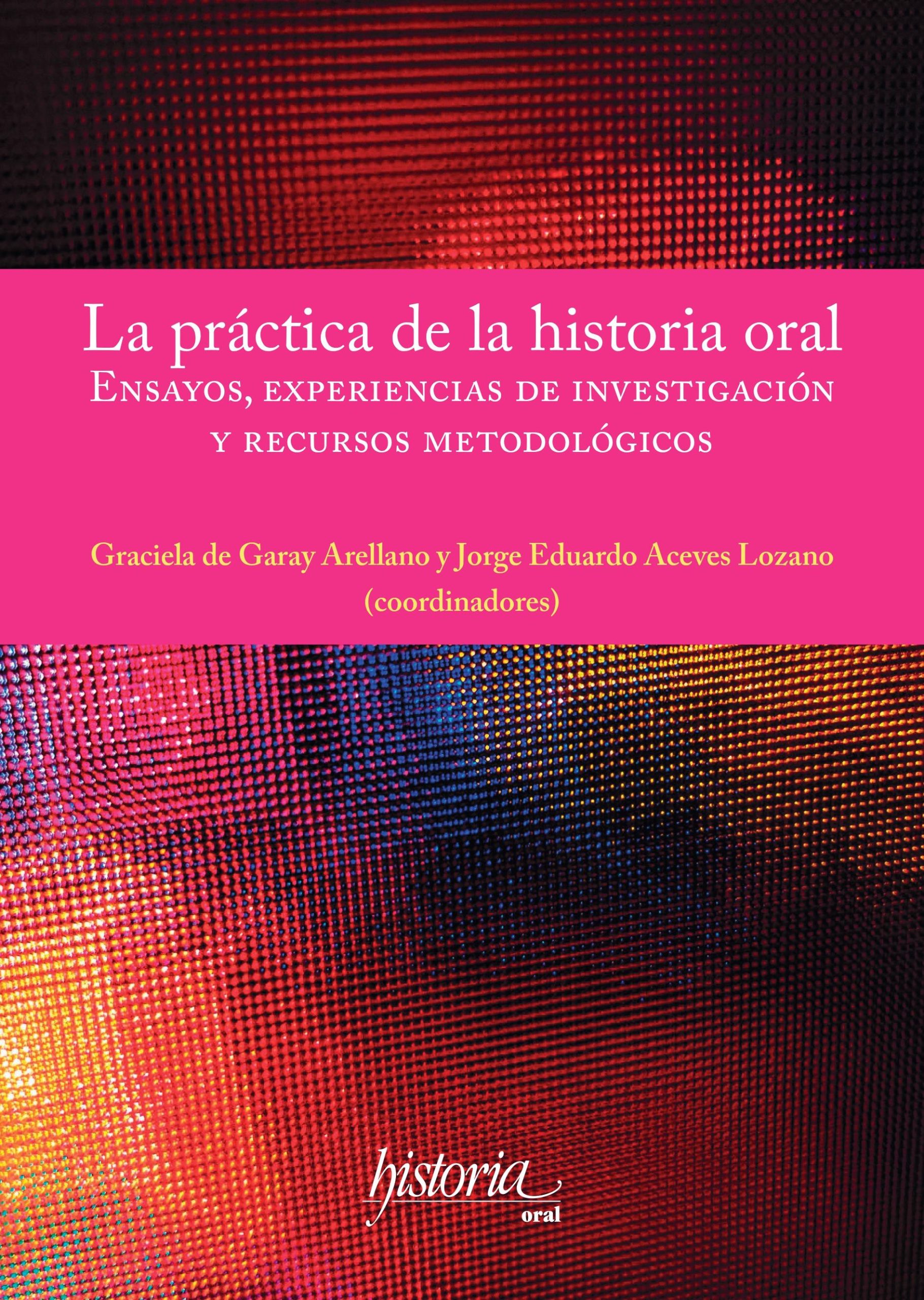
Listening as a Method: The Scope and Prospects of Oral History
Graciela de Garay and Jorge Aceves (eds.), 2024 Instituto Mora, Mexico, 553 pp.
This anthology, edited by Graciela de Garay and Jorge Aceves, brings together a collection of essays written by authors interested in the practice of oral history. As a starting point, the book explores the tension between two historiographical models: one that is documentary or self-sufficient in nature, rooted in positivism, and another that is radically constructivist. The debate centers on whether the task of historiography should be to reproduce what actually happened or to focus on the interpretation and social construction of memory and narratives. Oral history opts to construct historical knowledge that recognizes subjectivity, agency, memory, and emotions as legitimate dimensions of the past, analyzing them critically through evidence, contextualization, and methodological rigor.
This work is the result of research conducted since 2022 at the Mora Institute’s Oral History Seminar, an academic forum that is part of the activities of the Mexican Association of Oral History (amho); for more than three decades, the amho It has served as a forum for communication and collaboration among practitioners of oral history, life stories, and biographical approaches. Its authors—drawing from a wide range of social disciplines—are part of one of the groups that have developed and continue to keep this research movement alive; accordingly, they share an agenda that, in their own words: “Consists of seeking empirical evidence of memories, but also understanding the ambiguities of memory as part of the interpretation of history […]” (p. 21). Based on this premise, this book is dedicated to exploring in depth the experiences and methodological resources that have guided their research processes.
The content is organized into fifteen chapters grouped into six parts. The first part aims to “Revisit the experience and reflect on the field of oral history.” As a starting point, Jorge Aceves discusses the moments, spaces, influences, and experiences that shaped his academic work as part of a movement that has developed thanks to the efforts of various actors. He also provides an overview of the styles and methods of producing oral sources, as well as the analytical strategies that fall within interpretive, objectivist, and hybrid approaches. The following chapter, by Gerardo Necoechea, delves into an aspect of oral history focused on the direct participation of communities in the recording, analysis, and use of memory as a political tool, as well as the researcher’s collaboration with groups and communities within shared processes. Subsequently, Perla Chinchilla reflects on the place oral history has come to occupy within historiography, as a field immersed in the tensions between what the author terms “scientific history” and “practical history.” Drawing on the history taught in schools, the public history and the digital humanities, it shows how oral history makes it possible to overcome the crisis in academic history and actively engage individuals with their past based on their own questions and needs.
The second part, titled “Exploring Emotions, Affections, and Morality in the Public Sphere,” begins with a chapter written by Graciela de Garay, in which the author analyzes the emotions of a group of people in Mexico City and its surrounding areas during the COVID-19 pandemic, and reflects on how lived experiences not only affect us but also shape the way we express them and relate to others. Silvia Dutrénit and Bianca Ramírez devote their essay to exploring the methodological challenges of using oral history through virtual means when interviewing two Guatemalan women who are human rights activists and have family members who have disappeared. The authors show that, despite the lack of physical proximity, tools such as reflective listening and attention to patterns in speech and gestures make it possible to “connect” virtually. In the following chapter, Patricia Pensado presents a collective narrative created by participants in the workshop “Life Stories: Experiences in the Labor Struggle,” in which it was possible to build an affective archive and explore the feelings, affinities, and bonds that developed, as well as the violent events they experienced during their struggle. This section concludes with a text by David Luján and Diana Guillén, which analyzes everyday political relations in the Miguel Hidalgo municipality of Mexico City, highlighting that political analysis must incorporate subjective and affective dimensions that oral history makes accessible.
The third section addresses “Memories of Struggle and Resistance Among Indigenous Youth and Settler Organizations.” Rocío Martínez and Mario Camarena begin with a critical analysis of the construction of collective memory in San Francisco Cherán, and how this has rendered invisible the fundamental role of young people in the community’s major social and political conflicts. As the authors demonstrate, reconstructing the memories of young people is essential to understanding the complexity of the autonomy process, as well as the generational continuity of resistance. For her part, María Concepción Martínez delves into the processes of organization and resistance among the residents of Los Pedregales de Coyoacán, who are fighting to defend their right to water in the face of urban real estate development. Her analysis, based on the comparison and contrast of oral testimonies and newspaper articles, reveals the plurality of memories and discourses that shape the social experience of the conflict.
The fourth part of the book is devoted to the “Avatars of Diplomatic Life.” To this end, Mónica Toussaint presents a chapter in which she analyzes the diplomatic practices of three figures from the Mexican Foreign Service in Central America, covering the period from the 1970s to the 2020s. Drawing on the testimonies of Antonio de Icaza, Gustavo Iruegas, and Carmen Moreno Toscano, her text examines the interplay between the principles of Mexican foreign policy and personal styles of diplomatic action in contexts of conflict. In closing, Araceli Leal presents the experiences of six women who sought asylum at the Mexican embassy in Chile during the dictatorship. Their experiences were documented in official and personal records that allow us to learn about other important women—often rendered invisible in political processes—whose participation in the public sphere was sidelined.
The fifth section takes an interesting turn as it delves into the realm of “Independent Theater and Popular Music.” In the chapters that comprise it, the authors explore the effects that arise from engagement with various forms of artistic expression. Carlos Domínguez analyzes oral testimonies from independent theater artists in Mexico City, showing how internalized narrative structures shape and give meaning to their memories and frame the testimonies in dramatic terms, while also resulting from an intersubjective negotiation between interviewer and interviewee. In turn, Rodrigo Laguarda writes about how the popular songs of a given era function as cultural artifacts that organize the desires, contradictions, and moments of sociability fundamental to an emerging group, such as the gay community in Mexico City in the 1960s.
The sixth and final part of the book focuses primarily on “Resources and Methodological Guides” related to the study of oral history. Felipe Morales explores in depth what it was like to go to movie theaters in Mexico City at different times during the century xx. To this end, she proposes an approach based on the use of images and videotaped oral history—a combination that allows her to explore the potential of audiovisual recordings in the study of socio-historical processes. In the final chapter, Erika Tapia presents an interesting approach to the use of the software maxqda in the analysis of qualitative data generated through oral history. Drawing on the experience of the “Culture of Legality” project, the author discusses the possibilities this tool offers for the systematization and analysis of qualitative data.
As can be seen, the book adopts a strategic thematic and disciplinary openness that allows it to highlight the versatility of oral history. The mosaic of experiences and resources it offers shows that, while this practice emerged from paradigmatic discussions in historiography, it has also been able to engage with other disciplines and provide the social sciences with a new and productive perspective: listening focused on biographical and community narratives that help analyze the tensions between structural conditions and the agency of individuals. This outlines the contours that encompass the diversity of themes and perspectives within a single practice, placing at the center those accounts which, from their own vantage points, are just as valuable for understanding past and present historical processes as traditional sources.
The various sections and chapters shed light on the path we have traveled thus far, but they also invite us to reflect on what the future holds and how oral history will address the challenges and new possibilities facing the social sciences today. A reflective thread proposes exploring the conflicts and tensions of the present from the subjects’ perspective, as well as the effects these have on their individual and collective lives. It shows how social, cultural, political, and economic transformations are interpreted and given new meaning by the narrators. In this sense, oral testimonies provide information about the past, but they also allow us to investigate how individuals construct their memories and experiences in the face of current structural dynamics. Consequently, oral history expands the explanatory power of the social sciences by revealing the tensions, forms of resistance, and agency that are generally omitted from official historical narratives. In a context of complex challenges, multiple economic and environmental crises, and a loss of institutional legitimacy, understanding processes of change from the perspective of the actors involved allows for the incorporation of new and valuable analytical perspectives.
Another key to unlocking the potential of oral history is to examine its interdisciplinary nature. By bringing together tools and techniques from history, sociology, anthropology, and cultural studies, it enriches traditional methods of social research to incorporate symbolic, emotional, and relational dimensions. In this way, it offers various disciplines the opportunity to strengthen their own methods through an open, reflective, and inclusive approach, fostering comprehensive and integrative analyses of their subjects of study. Examples of this include social psychology, legal studies, and political science—disciplines that find in oral history a pathway to engage with, contribute to, and benefit from these debates and exchanges, which have already undergone a long and productive evolution.
A third point of interest is to reflect on the connections that oral history can establish with artificial intelligence (ia), whose presence in society is becoming increasingly prominent and is significantly transforming its conditions. The mass production of information through large language models (llm, (acronym) calls on us to reflect on the value of the knowledge held in the memories of individuals and groups. The practice of oral history takes on a central role here, as it delves into dimensions of human experience that the ia cannot achieve. The production of knowledge is based on the researcher’s interaction with his or her collaborators—on the intersubjective nature of that encounter—unlike the information generated based on algorithmic and statistical (non-experiential) patterns of the ia.
In addition to the above, it is undeniable that these technologies open up interesting possibilities for optimizing the storage, organization, and processing of data, which can benefit social researchers and, in particular, practitioners of oral history. As Erika Tapia points out, new social media platforms, blogs, and historical archives of digitized sources are emerging every day, demonstrating their vast capacity to produce oral sources and process them in an organized and agile manner (p. 517). But also, the development of the ia The tools available on the market and the wide range of technological recording devices—such as high-end voice recorders—which offer the ability to transcribe, filter, and organize information, point to an exciting future for innovations in data processing and analysis.
This landscape is innovative, yet it also presents us with challenges. While we develop new ways of working that can take advantage of these new possibilities and resources, it is essential to take precautions against risks such as algorithmic bias, the possibility of plagiarism, violations of privacy and data security, and the persistence of hallucinations. All of this is compounded by the need to reflect on the incorporation of the ia in social research, as a tool that enhances our own processes of understanding, rather than as a substitute that compromises our autonomy. Venturing into new contexts requires deep reflection on both ethical and methodological levels.
The possibilities and challenges for the future of oral history paint a complex and ever-changing picture, in the face of which this practice must maintain a critical stance. The work reviewed in these pages represents an effort to distill the lessons and applications that oral history has developed from various perspectives. Readers new to this field will find accessible material to help them engage with current discussions and the field’s various applications; meanwhile, those with experience who are already familiar with its potential will be able to delve deeper into the debates presented in each chapter and engage in dialogue based on their own perspectives.
Ignacio Salvador Durán Ricardez He holds a Ph.D. in Social Sciences with a specialization in Social Anthropology from the ciesas Occidente, and a postdoctoral fellow in the Contemporary Culture and Identities research track at the same institution. Her research interests focus on the reconfiguration of social identities in the face of urban growth, the relevance of traditions and rituals linked to popular religiosity, and the ways in which collective memory is recreated from the present. She is currently working on the project “Popular Religiosity and the Transmission of Tradition in Suburban Towns of the Guadalajara Metropolitan Area: A Proposal for Intergenerational Analysis.”.
Natalia Zepeda Cazarez is a postdoctoral fellow at the ciesas She holds a master’s degree in Contemporary Culture and Identities and a Ph.D. in Social Sciences with a specialization in Social Anthropology from the same institution. Her research interests focus on the application of qualitative and ethnographic methodologies to analyze the socio-historical transformations of territories and communities, as well as the agency of women and families in their practices and daily lives. She is currently conducting a research project with artisan families along the shores of Lake Chapala.
Institutions



 EN
EN  ES
ES  FR
FR  PT
PT