
Asking for and Giving Thanks for Miracles Granted: The History, Practices, and Social Significance of Votive Offerings in the Chapel of Jesús Malverde
- Diana María Perea Romo
- - see biodata
Asking for and Giving Thanks for Miracles Granted: The History, Practices, and Social Significance of Votive Offerings in the Chapel of Jesús Malverde
Received: May 26, 2025
Acceptance: July 31, 2025
Abstract
This article examines votive offerings and votive practices at the Jesús Malverde Chapel, located in Culiacán, Sinaloa. Here, the ex-voto is approached as a religious expression through which a community of believers has, for more than a century, expressed both their requests and their public gratitude. To this end, we examine a collection of 200 offerings displayed on the chapel’s walls; their images and texts allow us to analyze the religious practices of the devotees: petitions, expressions of gratitude, and testimonies of miracles, as well as the social significance of these objects and the issues for which believers seek or give thanks for divine intercession.
Keywords: Acknowledgments, votive offerings, Jesús Malverde, miracles, requests
The History, Practices, and Social Significance of Ex-Votos in the Chapel of Jesús Malverde
This article examines ex-votos and the practices surrounding them in the Jesús Malverde chapel, located in Culiacán, Sinaloa. It approaches the ex-voto as a religious expression that has allowed a community of believers to articulate petitions as well as public expressions of gratitude for over a century. The study analyzes a corpus of 200 offerings displayed on the chapel walls. The images and texts provide insight into the religious practices of devotees, which include petitions, expressions of gratitude, and descriptions of miracles they have experienced. It also analyzes the social significance of these objects and the areas in which believers seek or acknowledge divine intervention.
Keywords: Jesús Malverde, votive offerings, miracles, petitions, gratitude.
Introduction: The History and Votive Offerings at the Malverde Chapel
Although its name comes from Latin: ex, of, and votum, promise; in most cases, the term “ex-voto” is understood as “a symbol of gratitude from an individual or a group of individuals” (Fraser Giffords, 2000: 11); however, the purposes of ex-votos are not limited to this, as they also serve functions such as making requests, expressing gratitude, and bearing witness to a miracle received (Zires, 2014: 19). This article aims to explore, both qualitatively and quantitatively, the various forms of ex-votos found at the shrine dedicated to Jesús Malverde in Culiacán, Sinaloa, Mexico. Through the study sample, we analyze the presence of prayers offered to the deity and broaden our understanding of votive offerings to include objects offered with the purpose of seeking or giving thanks for miracles.
In the shrines dedicated to popular saints—defined as those individuals or “contemporary Mexican religious icons who were born outside the religious institution […] and who are venerated by the people” (Jónsdóttir, 2014: 13)— the ex-voto has been accorded great value as “a historical, cultural, artistic, and communicative artifact that reveals continuities but also expresses significant transitions” (Arias, 2007: 187). Their presence speaks to an immemorial votive tradition, as well as to the wealth of symbolic meanings imbued in them by those who express their faith through them. In the case of Saint Jesús Malverde, the offering of ex-votos is even part of the origins of the belief and the earliest accounts of his miracles. Thanks to documentary sources, such as the press, we know that since the early years of the century xx The belief in a miraculous bandit known as “Malverde” or “Valverde” was already deeply rooted in society and was characterized by the presence of votive offerings on “a pile of stones; on top of which stood a cross, almost always adorned with fresh flowers, and almost always with several lit candles” (La Patria, August 1, 1903, p. 2).1
Over the decades, his cult was accompanied by changes in the sites and practices of worship, which can be divided into at least three distinct periods: the death of the bandit (ca. 1903-1909),2 whose body was taken down and covered with stones that served as his grave, atop which “Malverde’s cross” was placed (García, 2017: 11; Lazcano, Ochoa, and Córdova, 1992: 215). The second phase, between 1940 and 1970, saw the construction of tombs and headstones bearing crosses (Vidaca, 2015: 97), covered with stones, candles, flowers, and increasingly diverse offerings (Northwest, November 3, 1979, pp. 1 and 5A).3 Third, the relocation of the saint's remains to the site where the current chapel was built and dedicated, a process that took place between 1981 and 1983 (The Debate, November 4, 1981, p. 1; Perea, 2020a: 319), which coincided with the unveiling of the bust depicting Malverde for the first time (Valenzuela Arce and Valenzuela Arámburo, 2023: 71), as well as the proliferation and diversification of the objects preserved within the site.4
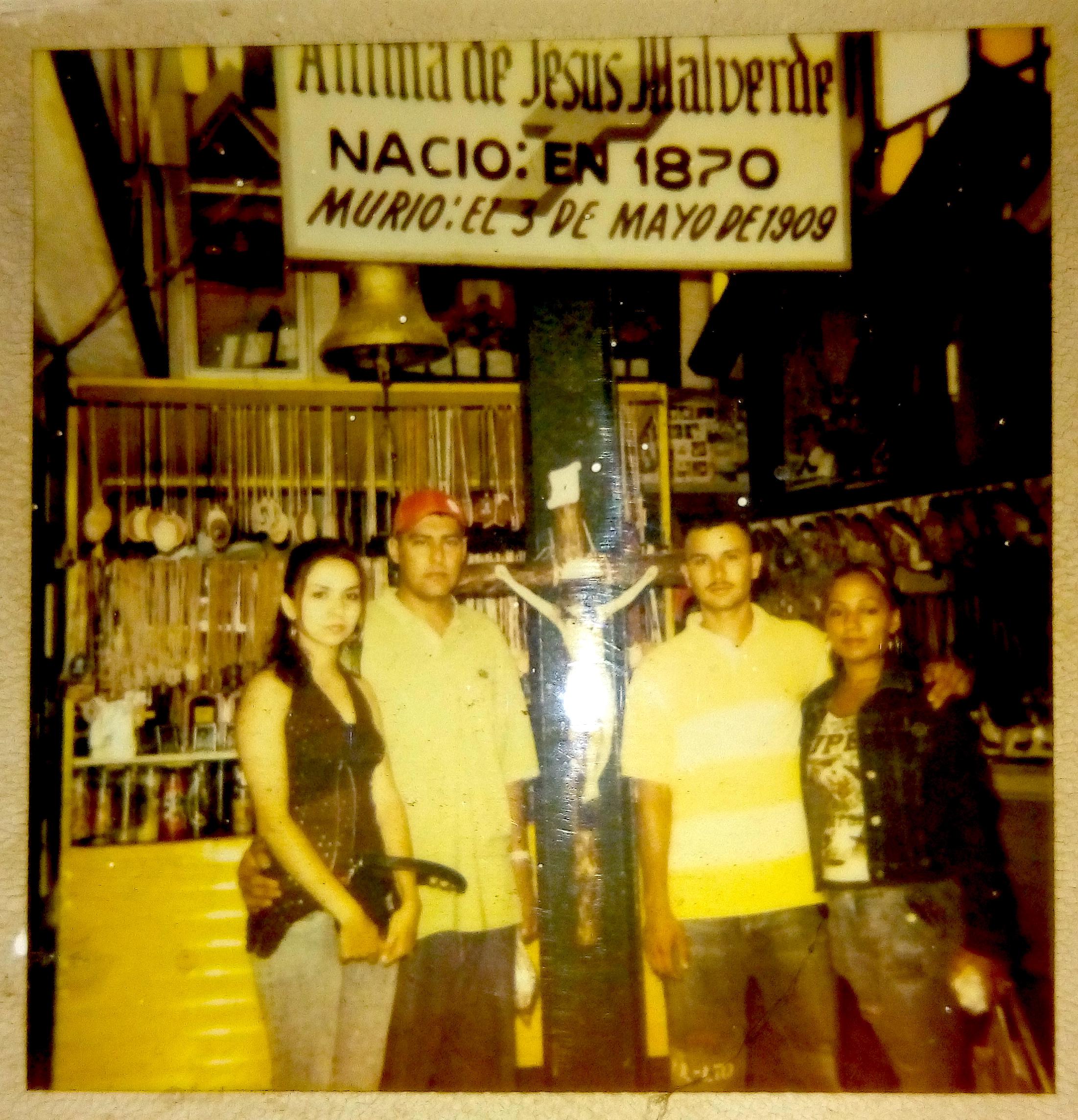
Between the 1990s and the 2000s, the votive offerings in the chapel continued to multiply and evolve in terms of materials and depicted themes, leading to a constant renewal of the objects—an indicator of the vitality of individual ways of believing and practicing religion, in contrast to the weakening of the Church’s presence (De la Torre, 2018: 189). At the dawn of a new century, it became clear that, far from disappearing, “the practice of making votive offerings continues. The need to ask for and give thanks to the divine has not been lost, despite the trends toward modernization and secularization in our contemporary society” (Zires, 2014: 22).
The works currently on display within its walls take us back to the social experiences of the first two decades of the century xxi and the proliferation of an increasingly intense devotion, which involves the constant replacement of older objects with newer ones. There are many types of offerings at the shrine, associated with different moments of devotion, such as stones and wax candles, which were offered to the figure of the social bandit from the beginning of the century xx; the flowers, letters, and written messages found at Malverde’s grave around the 1940s; the objects that began to be kept in the chapel starting in 1980, such as Polaroid photographs, paintings, and plaques made of granite, metal, and wood; banknotes and tokens of devotion that continue to fill the walls of the sanctuary to this day. In our conception of the ex-voto, this temporal nature is fundamental, as it allows us to view them as part of a living tradition steeped in history (Fraser Giffords, 2000; Calvo, 2001; Arias and Durand, 2000), particularly the gradual appropriation and reinterpretation of the contemporary ex-voto as a form of expression among the working classes (Luque and Beltrán, 2003: 65; Arias, 2007: 189).5
On the other hand, the changing nature of votive offerings extends not only across time and space—where religious devotions have historically been practiced—but also across the multiplicity of forms and functions that have been attributed to them in different contexts (Fabre, Perrée, and De la Torre, 2021: 9). To a large extent, it is this history that makes us aware that there are no fixed and definitive qualities of ex-votos and that, ultimately, they manifest themselves “as a paradigm of the forms that exchanges between humans and gods take. These are numerous and take the form of gifts and counter-gifts, offerings, sacrifices, prayers, and substitutes—all elements that play a role in one way or another and to varying degrees in the practices surrounding votive offerings” (Fabre, Perrée, and De la Torre, 2021: 13–14).
Here, we explore votive offerings from the recent past, dating from 2018 to 2023—years during which various field visits were made to the site and the ex-votos in its chapel were documented. In addition, numerous objects and scenes from the interior were photographed; this study presents a selection of 200 votive offerings, which cannot be considered representative or definitive, given the proliferation and constant changes in the objects. In reviewing this collection, the objectives of the study were to analyze the religious practices of the devotees and to identify two fundamental functions of the votive offerings: to ask and to thank for miracles. Consequently, a distinction is made between the practice of offering a gift with the aim of bringing about or facilitating a miracle, and that of offering it as a sign of gratitude or in fulfillment of a pact with the intercessor for a favor received.
Regarding the method used to classify these votive offerings, special attention was paid to their material composition and the media on which they are presented, as we found handcrafted paintings with an inscribed label or frame, photographs with accompanying texts, engraved metal plaques or labels, and wooden panels coated with acrylic; in short, a collection of votive offerings that combine images and text. Through these visual and written representations of the miracle, we examine the communication and system of codes through which the donors express their concerns, requests, and expressions of gratitude regarding family, work, finances, health, protection, and migration.
The working hypothesis guiding this research is that the votive offerings to Jesús Malverde—a miraculous bandit first mentioned at the beginning of the century— xx- They not only allow us to unravel the specific nature of the problems and situations faced by practitioners of popular religiosity, but also the transgressive dimension of their faith. Implicit in the votive offerings to Malverde is the intersection of the historical imagery of the social bandit and the contemporary “narco-saint” (Perea, 2020b: 64–65), which is evident in the visual references to drugs, weapons, dollars—as his symbols, although this does not fully capture the complexity of the religious phenomenon expressed in the chapel and the Malverdian faith.
Thanks to votive offerings, we gain insight into “the relationship between the devotee and the heavenly intercessors, which is forged as the supplicant offers prayers, promises, vows, sacrifices, and even threats and punishments in exchange for a divine favor” (Fraser Giffords, 2000: 14). Thus, the relationship between donors and the divine figure is as varied as human relationships themselves; it is through these visual and written expressions that we find clues to decipher the social meaning of votive offerings, shedding light on the human themes and concerns for which believers turn to the miraculous bandit for help.
Based on the selected sample, this study seeks to understand the complex relationship between Malverde and his contemporary devotees, exploring what José Manuel Valenzuela Arce and Pável Valenzuela Arámburo refer to as “popular mysticism,” referring to “religious emotion and the will to believe,” which motivates broad sectors of the population living in conditions of precariousness and social vulnerability (Valenzuela and Valenzuela, 2023: 12–14).
Requests, Prayers, and Promises: The Relationship Between Malverde and His Devotees
When studying the offerings in the Malverde chapel, it is important to distinguish between those made with the intention of bringing about a miracle and those given in gratitude. According to Salvador Rodríguez Becerra (2008: 105), the intention differs in each case, given that “propitiatory offerings are made to favorably predispose the will of the divine so that it may act for the benefit of the offerer, but without there being a specific or urgent need at the time of the offering.” Similarly, this function is just one of the various possibilities we can find in a site of devotion as complex as the one discussed here.
This section analyzes the votive offerings that express a request or a prayer, or that do not specify the reason why they were placed in the Malverde chapel; these account for 26.5% of the total sample, constituting a rich and significant sample of the requests, prayers, and secret matters communicated between Malverde and his followers. We must also clarify possible inaccuracies in classifying the votive offerings, since we never know their purpose unless it is stated on a label or in a written message: “Once again, forms have led to conceptual errors, by assuming that all objects offered to sacred beings followed the same pattern, when in reality they reflect distinct intentions: seeking favors and giving thanks in some cases, and fulfilling obligations in others” (Rodríguez Becerra, 2008: 105).
A clear example of the materials we have classified as votive offerings of petition can be found in a handwritten message on a sheet of paper taped to the chapel wall, in which a man asks Malverde to accompany him on his journey to the United States and to watch over his family, since by leaving he is leaving behind his children and his wife; furthermore, he pledges to return to visit him at his grave, but only if Malverde grants him permission to return:
Jesús Malberde, angel of the poor, I’ve come to ask you for a great favor: please accompany me wherever I go, because tomorrow, Jesús, I’m leaving—I’m heading north—with the hope that you’ll grant me a chance to return one day. I entrust to you what I’m leaving behind here: my children and my wife […] when I return, God willing, and you who dwell there, I’ll come to visit you at your tomb because you are so good and holy [sic].
In its complexity, this donor’s message reveals both a request and a promise. Furthermore, it foreshadows a series of events, anticipating what will happen during his migratory journey: from his departure from his home community to his return to his family. Through the note in which he makes his request, the donor promises Malverde that he will visit his grave, which is highly indicative of the persistence of traditional conceptions of devotion, predating its development within the religious space of the chapel.6
The inherent temporality of ex-votos is also recognized, since the donor is making a request through their writing—a request that will very soon become a thing of the past— and with it is leaving a “vow” that implies a promise to be fulfilled in the future (Fabre, Perrée, and De la Torre, 2021: 16). An essential part of the vow made to Malverde involves returning to visit the grave of the one who will intercede with God so that this migrant to the United States may return safely: “when I return, God willing, and you who dwell there, I will come to visit you at your tomb because you are so good and holy as well [sic]".
With this message, we turn to one of the major themes in the chapel: migration, which affects both those leaving Sinaloa and those passing through the state: “They ask him to help them have a safe journey, to find a good job, and to watch over the family they’re leaving behind here—so that their family will be well, have a good life, and keep the faith.” (Interview with Jesús Manuel González Sánchez, caretaker of the Malverde shrine, cited in Valenzuela and Valenzuela, 2023: 68).
Furthermore, examining these materials allows us to gain insight into the historical role that women have played as intercessors for the well-being of their marriages, praying for their husbands in a language that conceals their daily hardships: “The ex-voto appears as history, but as a coded history—that is, one in which we must assume that there are matters women were able to speak about and others they were not. These are the shifting silences of culture” (Arias, 2002: 44).
For example, the message (Image 2) begins with a plea for her marriage and ends with a request for her husband’s well-being: “Deliver him from all danger [sic]”. This reveals the complexity of gender relations and the way in which women plead to be treated well by their spouses. This believer asks Malverde to change her husband’s behavior, hoping that he will be noble, show her sincere affection, be faithful, and keep his promises. We can therefore infer that the opposite is happening in her life, since, as noted, “tensions within the couple are veiled in the language of the family and no further details are provided” (Arias, 2000: 70). On the other hand, the donor finds support in Malverde and establishes a reciprocal relationship in which she hopes that the saint “will indeed fulfill his promise” and grant her protection. Her request reads as follows:
Take Care of My Marriage
Change my husband's behavior so that he may be noble, show sincere affection, be faithful, and keep his promises to me. Deliver him from all danger, Lord Malverde, Jesús Mazo [sic].
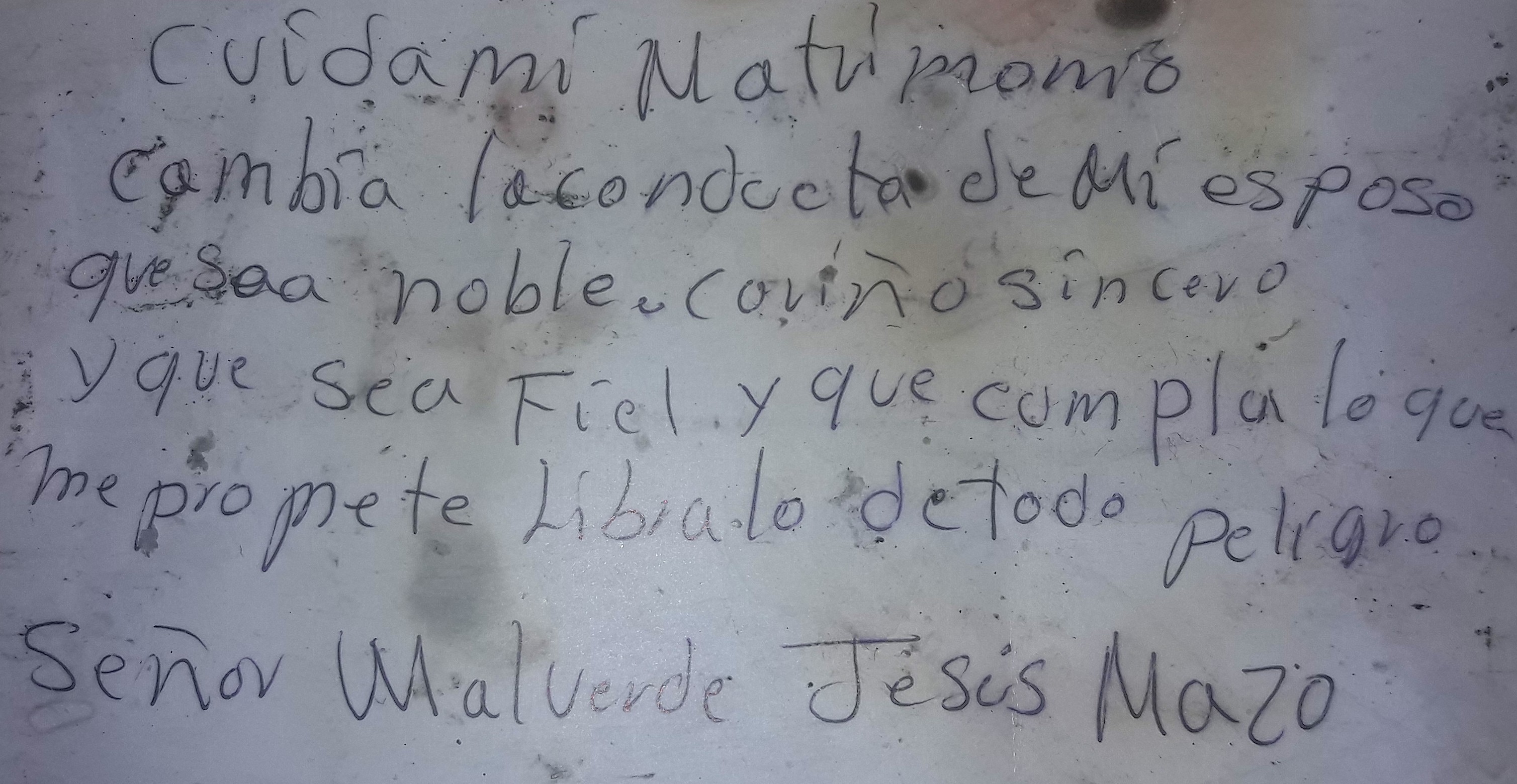
Another letter contains a plea, dated October 5, 2017, in which a woman expresses her despair to Malverde after visiting him for the third time and failing to receive his favor. Similarly, she reiterates that she cannot speak of it, which is why she needs his help, asking him to keep it “a secret between you and me” [sic]:
My Lord Mal Verde, this is the third time I’ve come to your chapel to ask you to change my luck. When I came to see you at your chapel, I saw so many people coming to ask you for favors or to leave you their photos and many other things that I was really struck by it… Because I trust that you’ll grant what I ask of you. I can’t tell you here because I want it to be a secret between you and me, but do me this favor—I’m begging you, I’m imploring you—please, with my heart in my hand, my Lord Malverde, lend me a hand, and you already know how I’ll thank you If you grant me that little miracle, please [sic].
At the same time, in her letter, the woman mentions the votive practices of other visitors who leave their photographs and other objects as proof of his miraculous nature. In her own account, she publicly demonstrates her relationship with Malverde by leaving a letter for all to see, while remaining silent about the reason for her request and how she would repay the favor she had asked for.
On the other hand, ex-votos are complex works that combine the rules of pictorial representation with the donors’ written messages and petitions. When viewing this painting (Image 3), we cannot overlook the presence of the conventions characteristic of pictorial ex-votos that shaped the tradition in Mexico beginning in the second half of the century xix and during the xx, consisting of the two-dimensional representation of three realms: the supernatural, the earthly, and the written narrative (caption) (Luque and Beltrán, 2003: 51). In this ex-voto, the supernatural realm appears at the top of the painting, where Malverde’s bust floats above a white cloud that, together with the blue of his shirt, symbolizes the celestial realm. The earthly realm is depicted at the bottom of the ex-voto, where the miracle-worker—or perhaps the donor—chose to frame the saint between a pair of yellow pistols pointing directly toward the central panel. Above each of the weapons are the black covers of two books, whose titles read “the Bible” (on the left) and “witchcraft” (on the right), an oxymoron that reflects the paradox of popular religiosity on the fringes of Catholicism and the supernatural world. The written text or inscription in the center contains the prayer addressed to Malverde.7
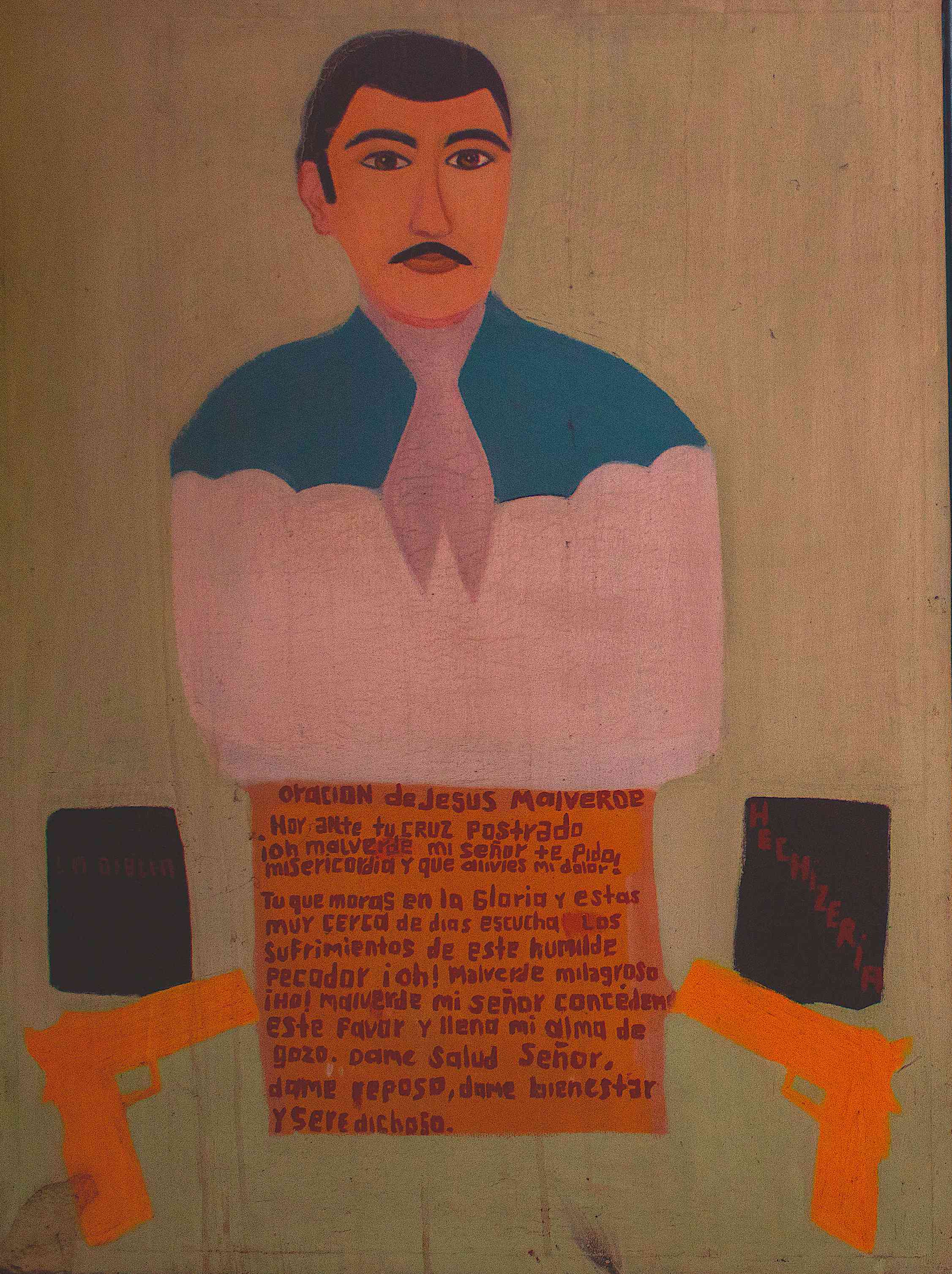
Upon examining this ex-voto, analyzing its function and the subject it depicts becomes complex and reveals the limitations of our analysis, since it does not clearly indicate whether it is making a request or expressing gratitude. For the purposes of this study, it was classified under 4% among the cases identified as prayers, since the plaque contains the four parts that make up the prayer to Jesús Malverde, the purpose of which is to ask for his divine intercession:
Today, prostrate before your cross, O Malverde, my Lord, I ask for your mercy and that you ease my pain!
You who dwell in Glory and are very close to God, hear the sufferings of this humble sinner
Oh! Miraculous Malverde! Oh! Malverde, my lord, grant me this favor and fill my soul with joy.
Grant me health, Lord; grant me peace; grant me well-being, and I will be happy [sic].8
At the same time, the pictorial ensemble evokes the time inherent in ex-votos and votive practices, in which prayer to Jesús Malverde plays a central role in bringing about the miracle. In this case, the weapons appear in the earthly realm, although they are not necessarily related to the miracle requested or granted, since their presence could simply reveal the popular conception of Malverde as the patron saint of drug traffickers—a notion that has gained traction since the 1980s.
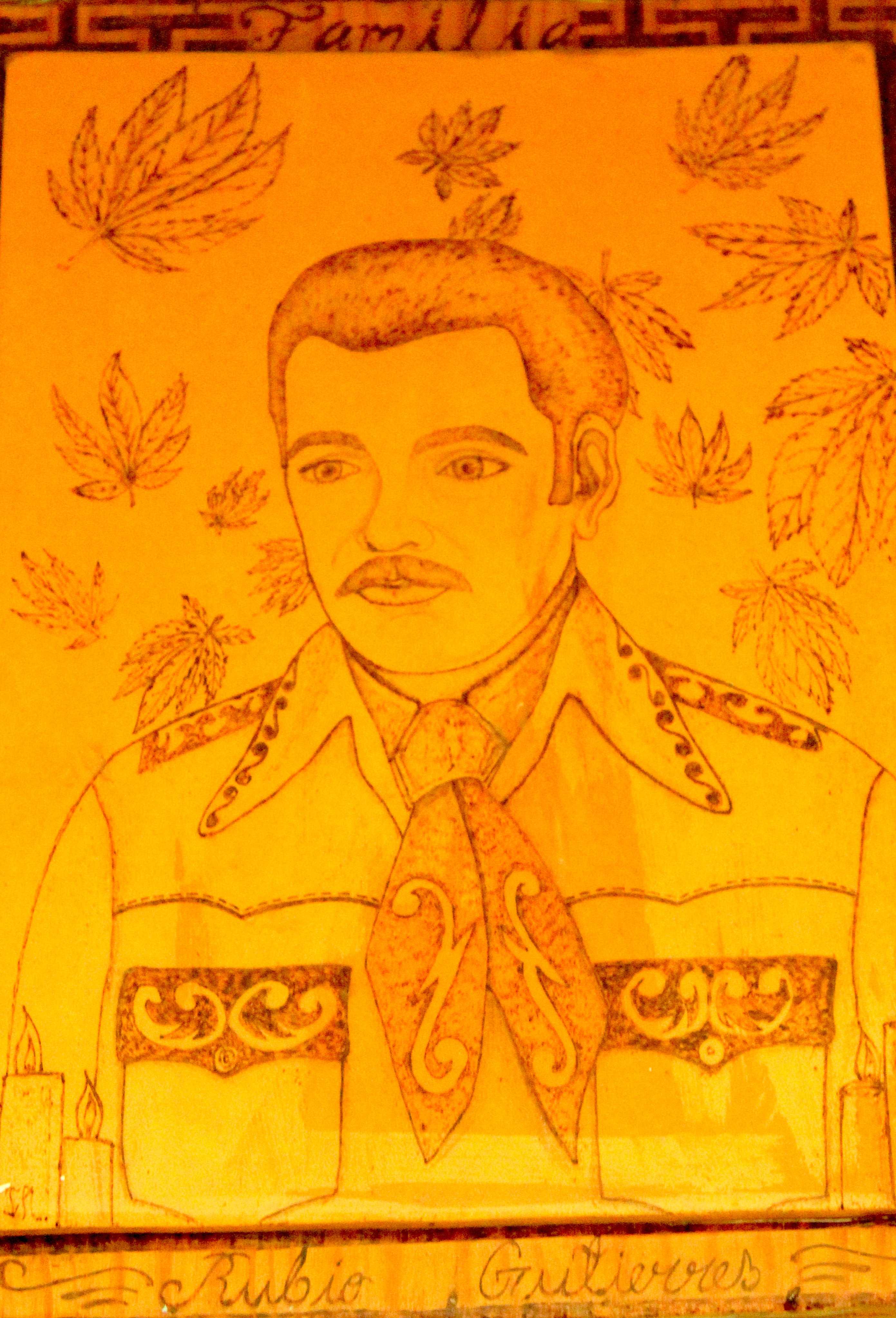
From a quantitative perspective, we found that in 11 of the 53 ex-votos classified under the category of petition, prayer, or those that do not specify the reason for their offering, weapons, money, and drugs appeared as recognizable iconographic elements in their composition. Although the presence of these elements does not always indicate the reason for the request or expression of gratitude, it does reflect the imagery surrounding Malverde, which is linked to the world of the marginalized, drugs, and transgressions: “It is an expression that emerged among those who have had no place in Mexico’s official history, among those who belong to the system of exclusion” (Jónsdóttir, 2014: 78).
This connection is evident in the following case (Figure 4), in which the purpose of the votive offering has not been specified (in this study, they are classified as n/a, when the donor did not specify the reason for offering the votive offering) and we only have the drawing of Malverde’s bust with three lit candles on the right side and another three on the left, indicating that at some point the donor lit them and offered a prayer to him.9 In addition to the candles, the symbolic space in the background is adorned with marijuana leaves floating in the air and appearing to fall from the sky, connecting the intercessor to the imagery of the “narco saint.” Surrounding the drawing is the last name of the family that donated it, which likely seeks to bring about or give thanks for a miracle—the nature of which, once again, remains a secret between the family and the celestial figure.
In other cases, the request to Malverde is expressed through a written message and accompanies the photographs that donors leave in the chapel. Since they do not involve the mediation of a miracle-worker or an artisan tasked with creating the votive offering, the messages and photographs have a direct and immediate quality, revealing the dialogue the donor establishes with the saint. This is the case with the following photograph of a small child (Image 5) which, as we can see, is attached with clear tape, encroaching on the space of a metal plaque donated by another believer. Next to the figure of the child is a message of petition, in the style of a sign, bearing the following text:
Sir, I'm asking you a favor
Tell him to calm down—he's yelling—and when he's feeling better, he can come see you. I'm asking you to do that…
Jesus green evil
with great faith…
I trust you
You're going to cure this one for me
...kid…
Cristian
Armando [sic].
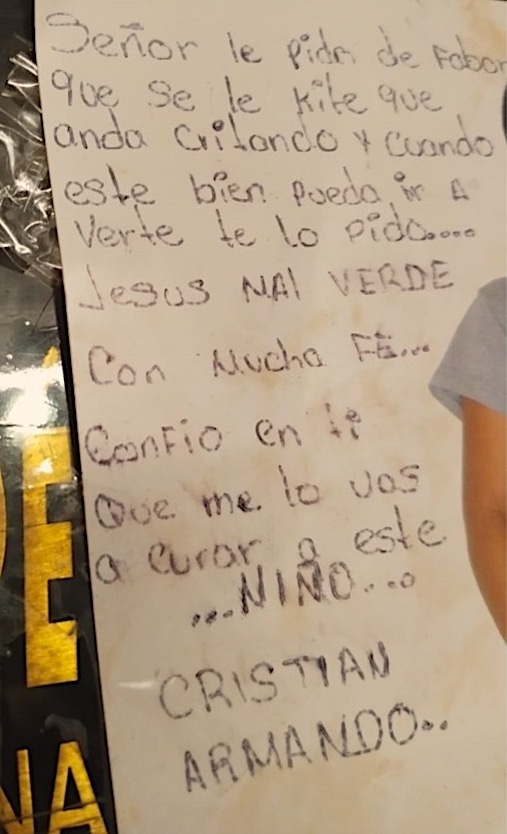
In the petition, the child’s mother or father desperately turns to Malverde for help. Although they do not specify the child’s illness, they describe the symptom that is troubling them: “he keeps screaming,” and they promise the saint that, as soon as he recovers, they will go visit him. For this reason, Malverde must intervene to help ensure that the person offering him this photograph can fulfill their promise to return to his chapel.
Similarly, there is a selfie that a young woman took with her cell phone and printed out so she could post it on the walls of the Malverde chapel (Image 6). Dated January 1, 2023, the photograph shows a young woman making a request: “Take this illness away from me—only you know,” keeping the cause of her suffering a secret. Through her smile and cheerfulness, the young woman breaks the stereotype of the suffering woman, the eternally sick woman of past centuries. It also highlights one of the most notable characteristics of votive offerings since the 2000s: “The use of the informal ”tú’ as a colloquial, conversational way of communicating with the image” (Arias, 2002: 143). The photograph allows us to observe the donor’s gestures and body language, which demonstrate the closeness and trust she has already established with the saint. The other approach involves interpreting the written language, in which the use of the informal “tú” and the direct relationship with the heavenly intercessor are evident.
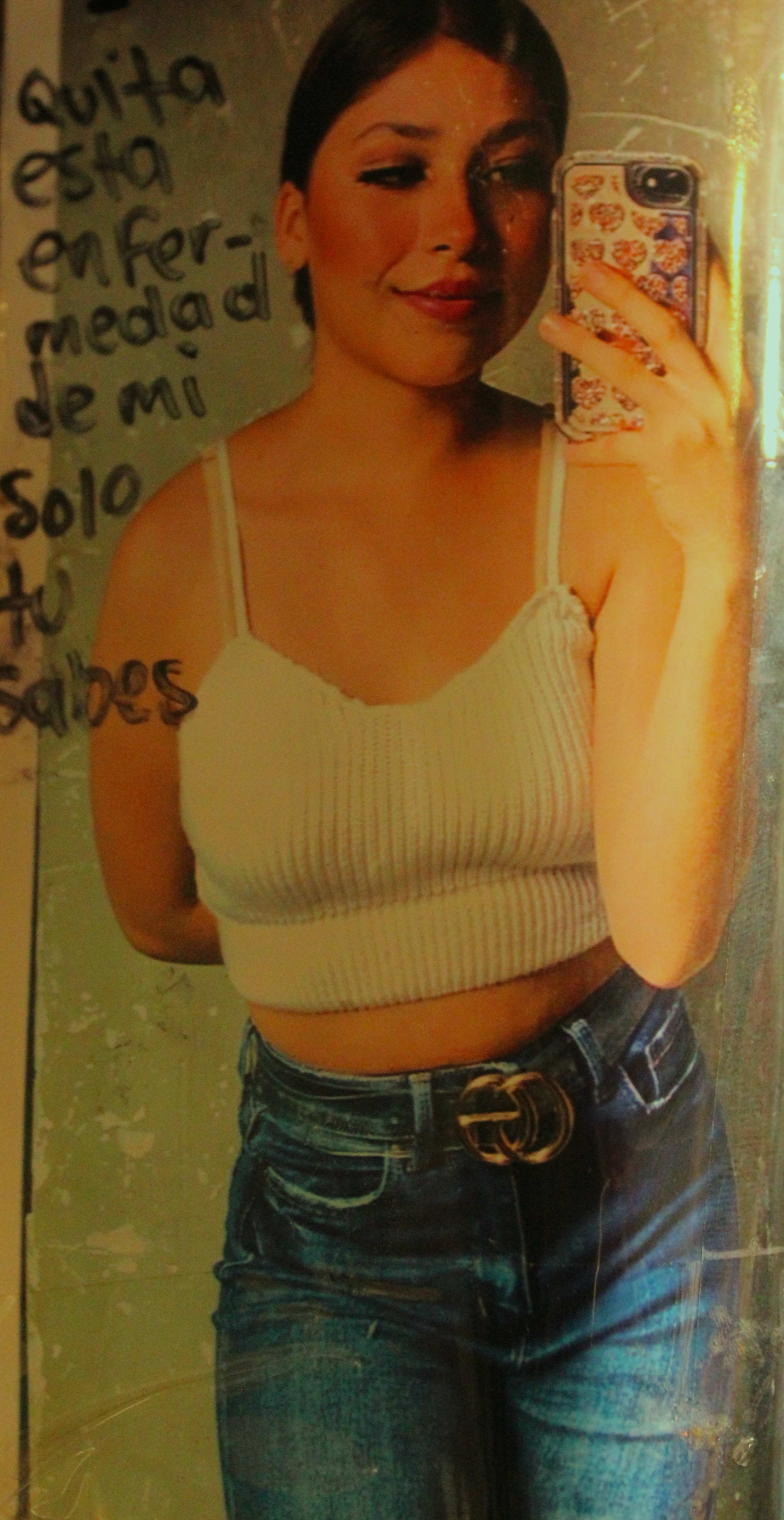
Upon reviewing the issues for which devotees seek Malverde’s intervention, we found that they cover a wide range: healing, migration, work, family, and marriage. Although in most cases the years in which Malverde’s favor is requested are not specified, some of the offerings are dated 2014, 2015, 2017, 2020, and 2023. These requests were made individually by both men and women, but some also sought Malverde’s intervention as couples or as family groups. The donors came from Sinaloa, Guanajuato, Michoacán, Zacatecas, the State of Mexico, Mexico City, Nuevo León, and California.
Expressing Gratitude and Fulfilling Pledges
Although votive offerings can be made at the time of the request, in their most common sense they are usually defined as a way of giving thanks for miracles that have been granted. Similarly, in the language of the Malverdian community, people commonly refer to “mandas” or various practices through which believers “fulfill” their promises or “give thanks for favors received.” These ex-votos belong to a distinct category—those of gratitude—which are classified as such due to the explicit presence of a message of gratitude to Malverde, allowing us to easily discern their function. Although they may serve a dual purpose by containing new requests to the intercessor or, as in the case of the following ex-voto (Image 7), expressing the desire for Malverde’s protection to continue over time, it is reasonable to speak of a votive offering that is both one of thanksgiving and one with propitiatory intentions, reinforcing a lasting and close relationship between the donor and the saint.
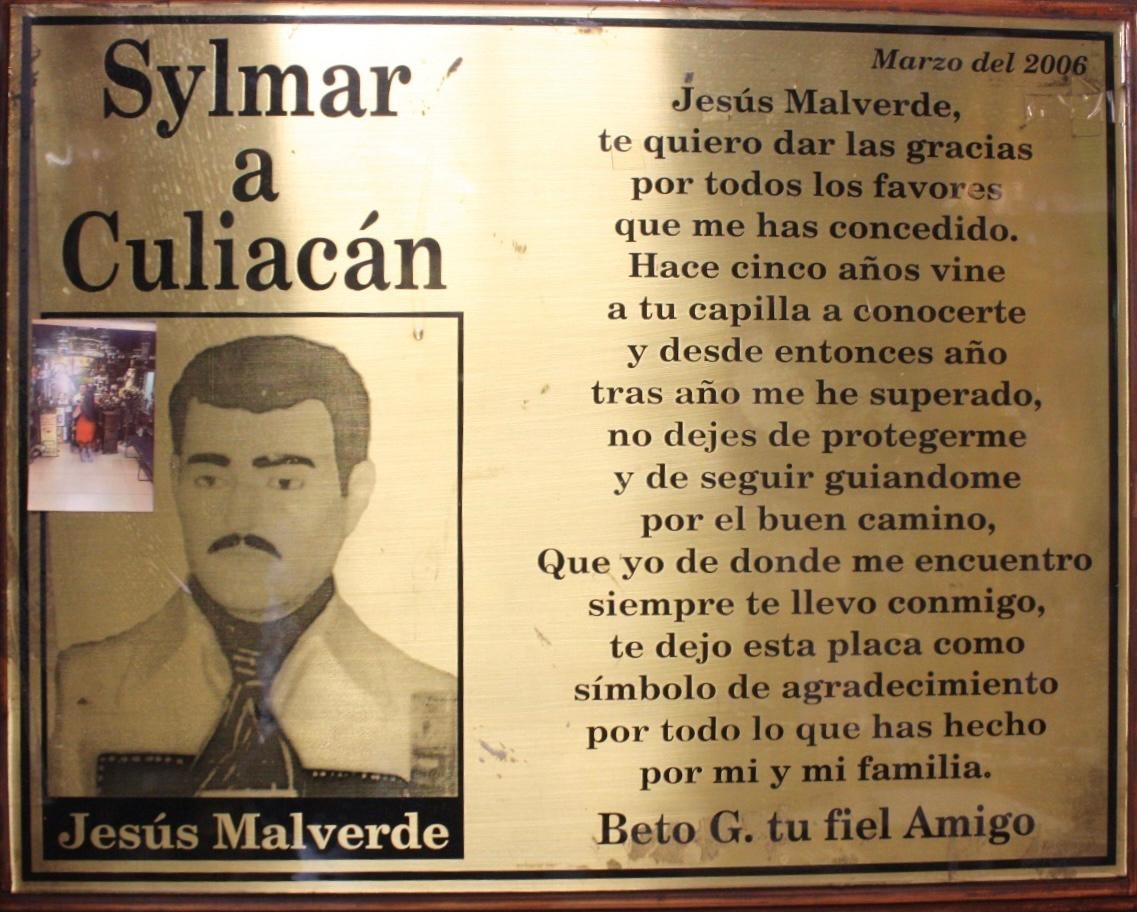
This metal plaque mounted on wood, dated March 2006, represents the countless tokens of gratitude found on the Malverde grounds; it is engraved on a gold-colored sheet, which, according to Kristín Jónsdóttir (2014: 70–71), began to be placed in the chapel starting in 2001. This sheet bears the testimony of a believer named Beto G., who visited the chapel and encountered Malverde in 2001; in 2006, while living in Sylmar, California, he recounted the details of his enduring relationship:
Sylmar to Culiacán. March 2006. Jesús Malverde, I want to thank you for all the favors you have granted me. Five years ago, I came to your chapel to meet you, and since then, year after year, I’ve surpassed myself. Please continue to protect me and guide me along the right path. Wherever I am, I always carry you with me. I leave you this plaque as a token of gratitude for everything you’ve done for me and my family. Beto G., your faithful friend [sic].
Through this message, he makes it clear that Malverde has helped him, allowing him to improve himself every day; as a result, he now considers Malverde so close to him that he refers to him as a friend. This relationship has grown stronger over time and has led him to compose a short story or a “micro-story” (Jónsdóttir, 2014: 70–71), in which they highlight the friendship and the help received from the saint, which has even extended to their family.
Another votive offering of thanksgiving that was made in a cross-border context comes from the devotee Genaro Bañuelos Valle (Image 8), who prays for his extended family, asking that the saint’s protection cover a wide area stretching from Culiacán to Phoenix, Arizona, and to Pueblos Unidos, in the municipality of Sinaloa, where his family networks may be located. The expression of gratitude also involves a series of heavenly intercessors within the framework of an open religiosity that moves between figures of popular Catholicism—such as God, the Virgin of Guadalupe, and Saint Jude Thaddeus (the official saint dedicated to difficult cases)— and the popular deities of Jesús Malverde and La Santísima Muerte, whom he thanks collectively “for the favors granted and so that they may continue to watch over me, my children, and my entire family” [sic].
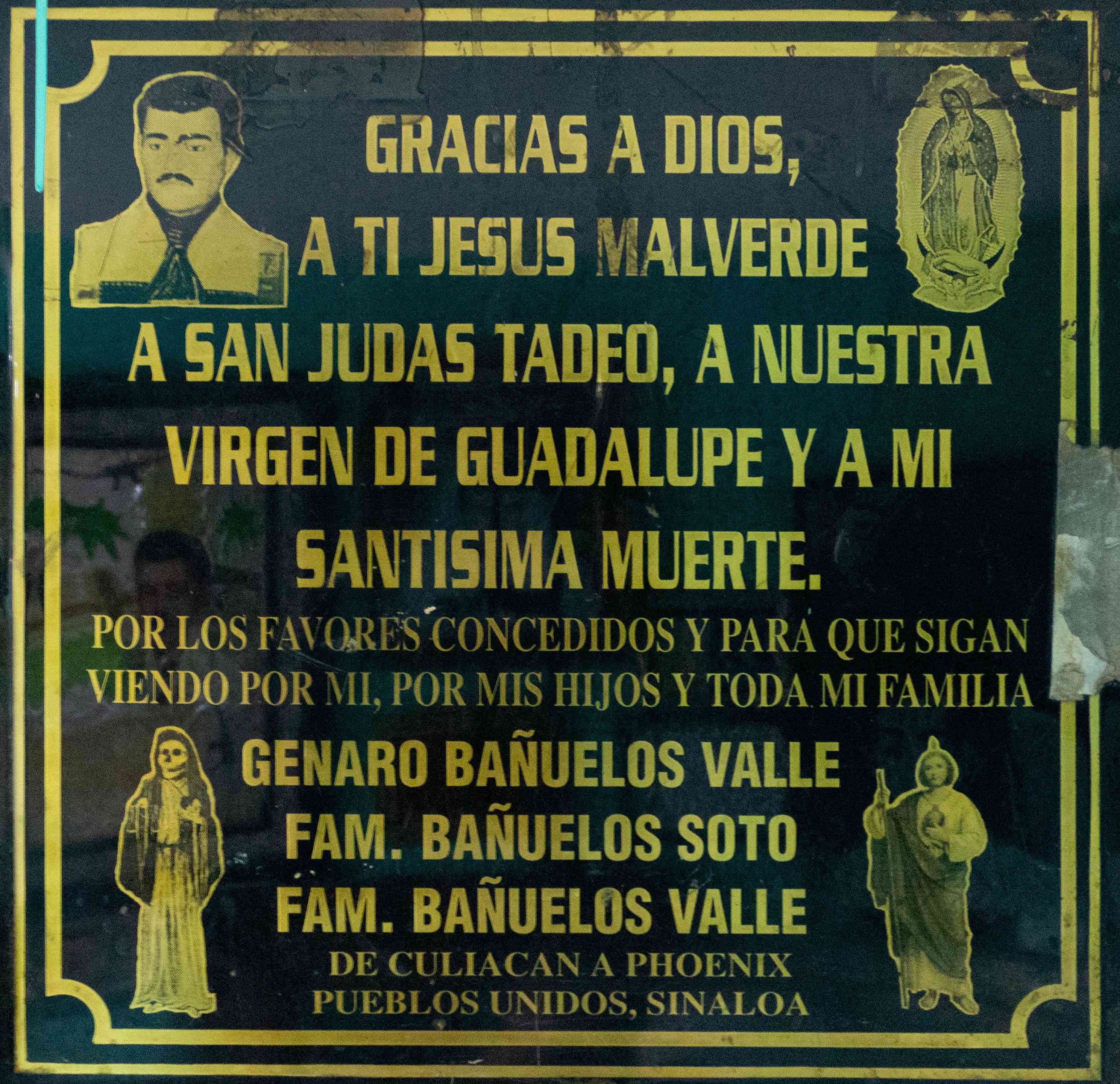
On the votive plaque, the donor uses the informal “you” when referring to Malverde: “to you,” Malverde; and possessive adjectives to distinguish between the collective figure of “our” Virgin of Guadalupe and “my” Holy Death. The image is accompanied by four religious icons: the bust of Malverde, the Virgin of Guadalupe surrounded by her halo, the skeleton of Santa Muerte depicted with her cloak (Perrée, 2017: 214), and Saint Jude Thaddeus.
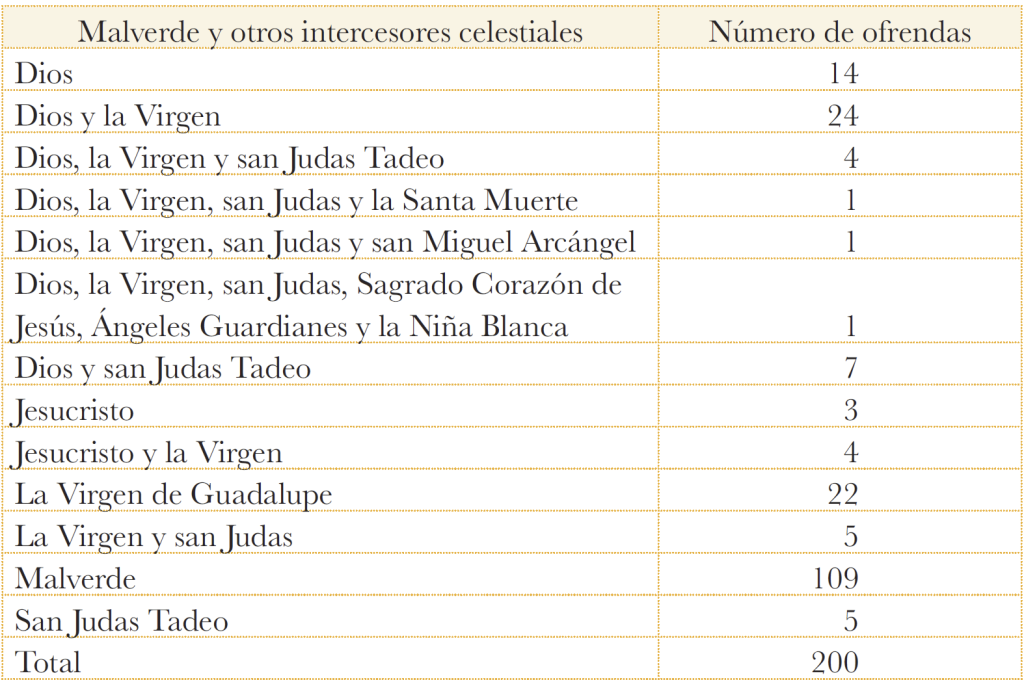
The votive offerings made to such diverse intercessors reflect the practice of a popular form of religiosity that functions as a symbolic crossroads—which Renée de la Torre (2013: 8) characterizes as the “place where different matrices of meaning, different religious systems and traditions, different ”menus’ of belief, different power structures, and different ideologies intersect.” Through this case study, we can explore this diverse spectrum that spans popular Catholicism, tradition, and the emergence of new forms. Similarly, through the votive offerings, it is possible to observe the various combinations and personal preferences in which the figure of Malverde is invoked alongside other heavenly intercessors (Table 1).
Source: Prepared by Diana María Perea Romo.
Thanks to this exhibition, it was found that, to resolve their difficulties, people turned to various heavenly intercessors, who appeared in the content of the votive offerings. A pattern was identified in which different religious traditions related to Catholicism often intersect: God appears in 14 offerings, the Virgin of Guadalupe in 22, and Saint Jude Thaddeus in five.
In addition, other combinations emerged involving various religious figures who held minor but significant roles, such as Santa Muerte, a religious devotion that has gained great importance in the early decades of the century xxi. However, there is no doubt that Malverde took first place with 109 offerings.
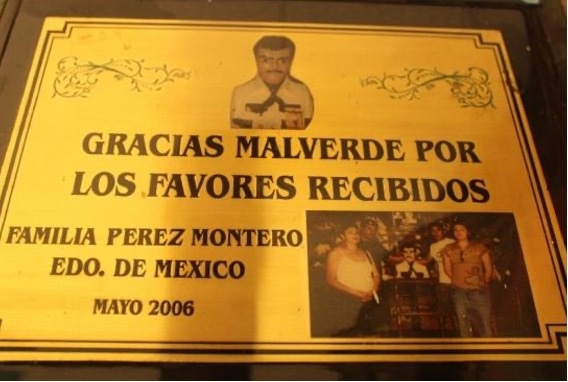
In line with the central concerns of Malverde’s devotees, we find the primacy of the family, which is expressed through testimonies aimed at representing its values and central role in people’s lives. To illustrate this, let’s consider the ex-voto offered by the Pérez Montero family from the State of Mexico, who presented a plaque with a brief message of thanks for favors received (Image 9). In this instance, by incorporating the family photograph into the plaque’s design—which already features the bust of Malverde at the top and the group’s message of thanks in the middle—the value of the joint petition, intended to benefit the family members, is reinforced. The photograph showing the father and son touching Malverde’s bust and the mother and daughter posing in the foreground serves as a memento of the visit and proof that the offering was fulfilled (Jónsdóttir, 2014: 70).
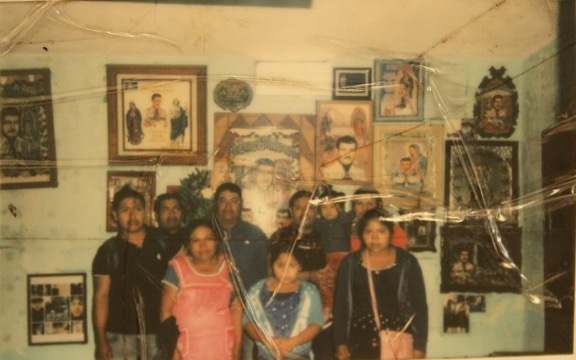
In another case, a family photograph serves as a memento of the visit or perhaps as proof of a promise fulfilled (Image 10). Family ex-votos are the most common theme, since among the 200 donors counted in this study, 119 sought or expressed gratitude for Malverde’s support regarding a family matter, while 81 of them requested his intercession regarding a personal concern. Through the votive offerings, we find that the family is the cornerstone of Malverde’s followers and that it is in the family’s name that the primary spiritual and religious needs are expressed.
With regard to individual expressions of gratitude, the men share their experiences of the favors they have received in relation to their work, their health, and the values associated with their masculinity. This is evident in the painting (Image 11) presented on May 20, 2015, by a young firefighter living in Bakersfield, California, and who thanks Malverde for miraculously saving him from a vision problem through a narrative in which he recounts the fulfilled promise, as well as the difficulties he overcame along the way. These three photographs serve as a testament to his story, showing him fulfilling the social role that the miraculous Malverde enabled him to play.
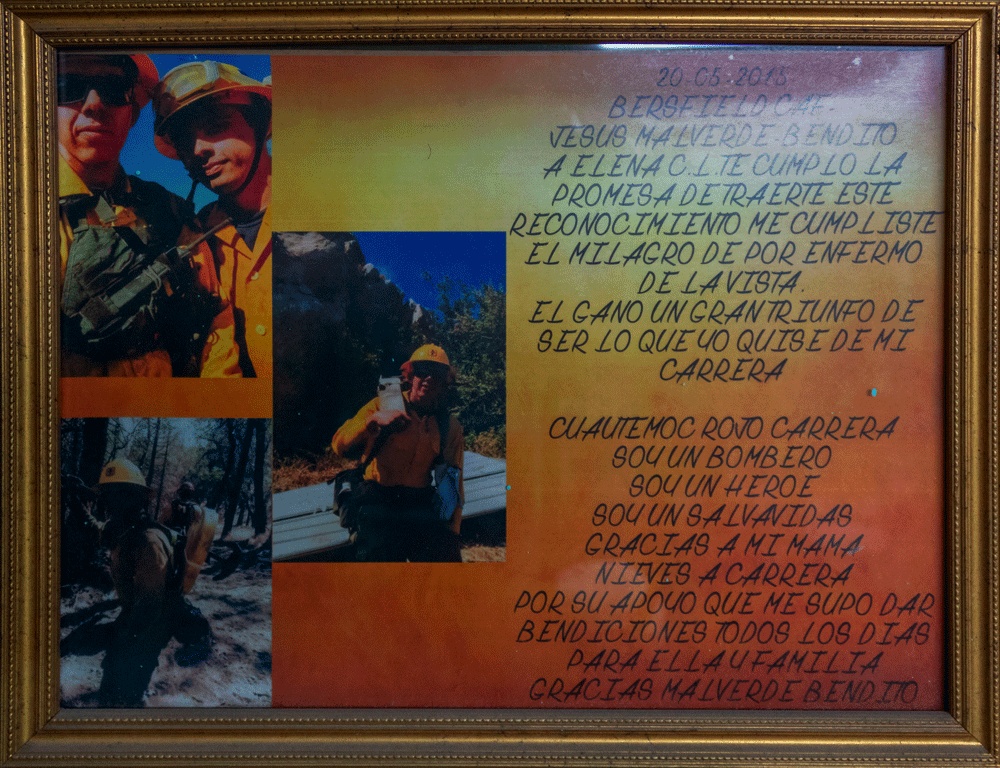
In the story, on the right-hand side, he records the miracle granted by Malverde: “You granted me the miracle of healing my eyesight.” As can be read in the story, the donor, Cuauhtémoc Rojo Carrera, bestows what he calls “this recognition” on Malverde as part of a promise he made to a woman: Elena C. L. He also thanks his mother and family. Thanks to everyone collectively—but above all to Malverde—he is able to pursue a career of which he is very proud, and he seeks to demonstrate this through the photographs: “I am a firefighter, I am a hero, I am a lifesaver” [sic].
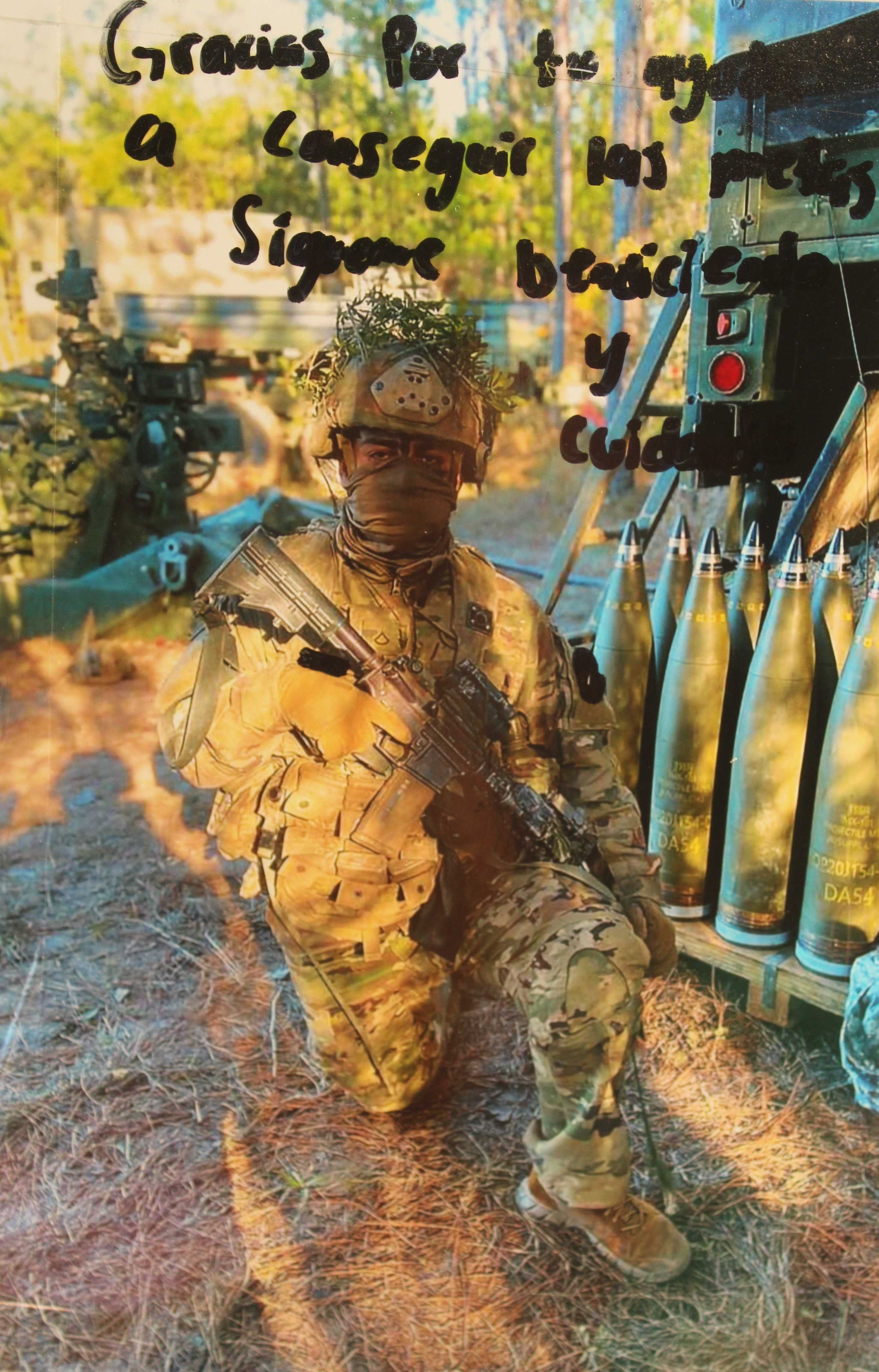
Undoubtedly, in their expressions of gratitude to Malverde, individuals articulate their own needs, but they also affirm family ties and demonstrate their networks of solidarity, in which the saint plays a fundamental role. We also find that the expressions of gratitude to the saint reveal the values associated with the masculinities of those who offer them: bravery, heroism, the things that make them feel proud, their professions, material progress, and situations in which they have narrowly escaped death. This is illustrated by the photograph of a soldier in camouflage, pictured with his weapon and surrounded by ammunition, who posts his image in the chapel to thank Malverde for helping him achieve his goals, while asking him to continue blessing and protecting him (Image 12).
Likewise, a young man who appears to be no older than 20 is pictured wearing a mask, which allows us to place the image in the context of the COVID-19 pandemic between 2020 and 2021. In the photo, he is posing from a low-angle shot that flatters his silhouette, leaning against the door of a striking red car. Above the photo, he leaves a message thanking Malverde “for always lighting my path” and for helping him achieve all his goals (Image 13).
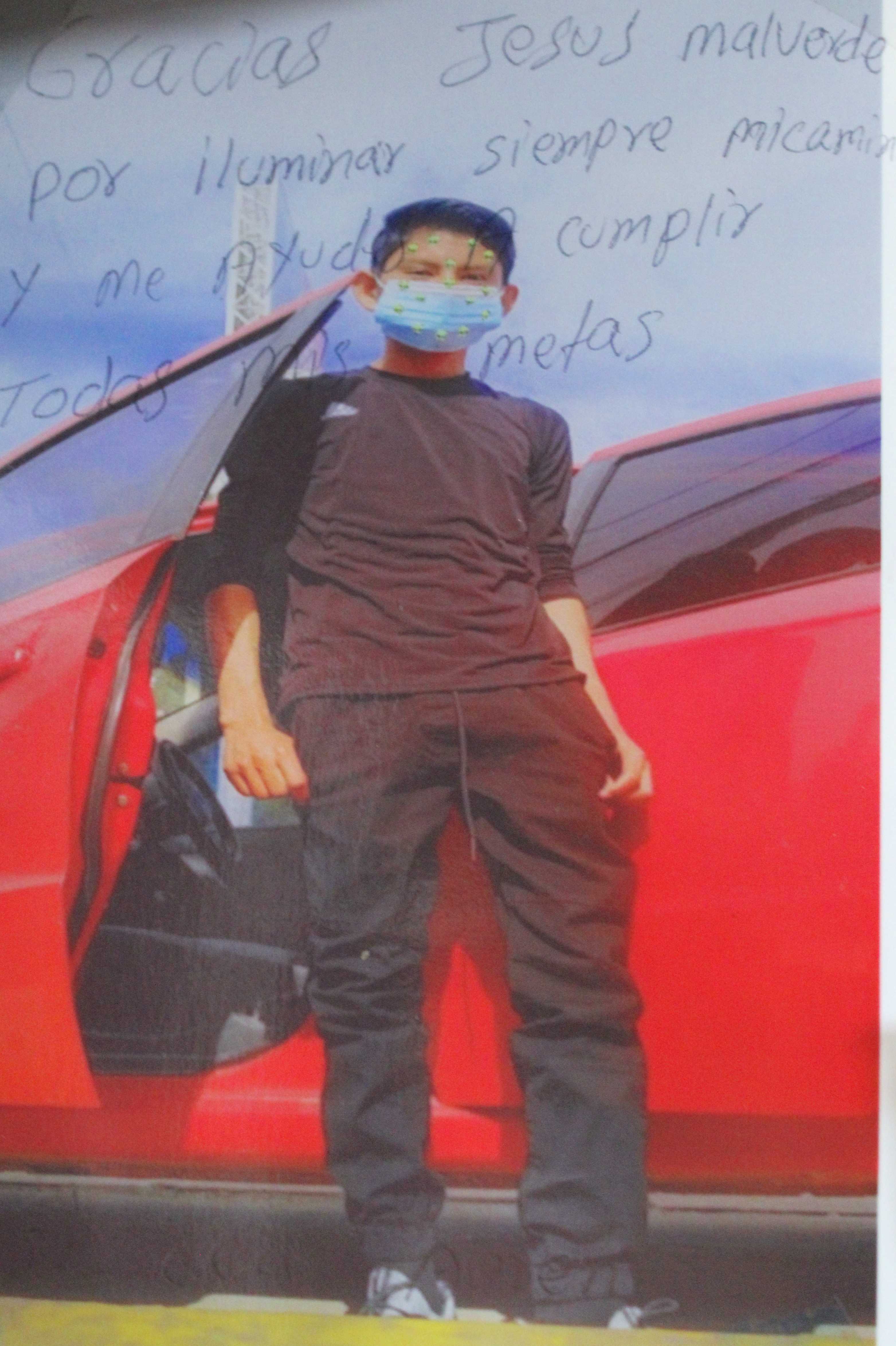
In this regard, the reference to enlightenment and the path—or the protection sought—brings to mind what Jónsdóttir (2014: 73) said regarding the possible meaning of the phrase that is repeated in this and other votive offerings: “It is difficult to pinpoint exactly what the devotee means by ‘light’ and ‘path,’ since it could refer to either the path ‘interior’ as well as ‘outdoor’, to the path of life in general, or to the crusade into the neighboring country to the north, with intentions that fall outside the legal framework.” Thus, both photographs would illustrate the contrasts and similarities between the values of the male believers who pray to Malverde, coming from two opposing yet historically intertwined worlds—such as the military and civilian life—within a potentially transgressive context (Atondo, 2024).
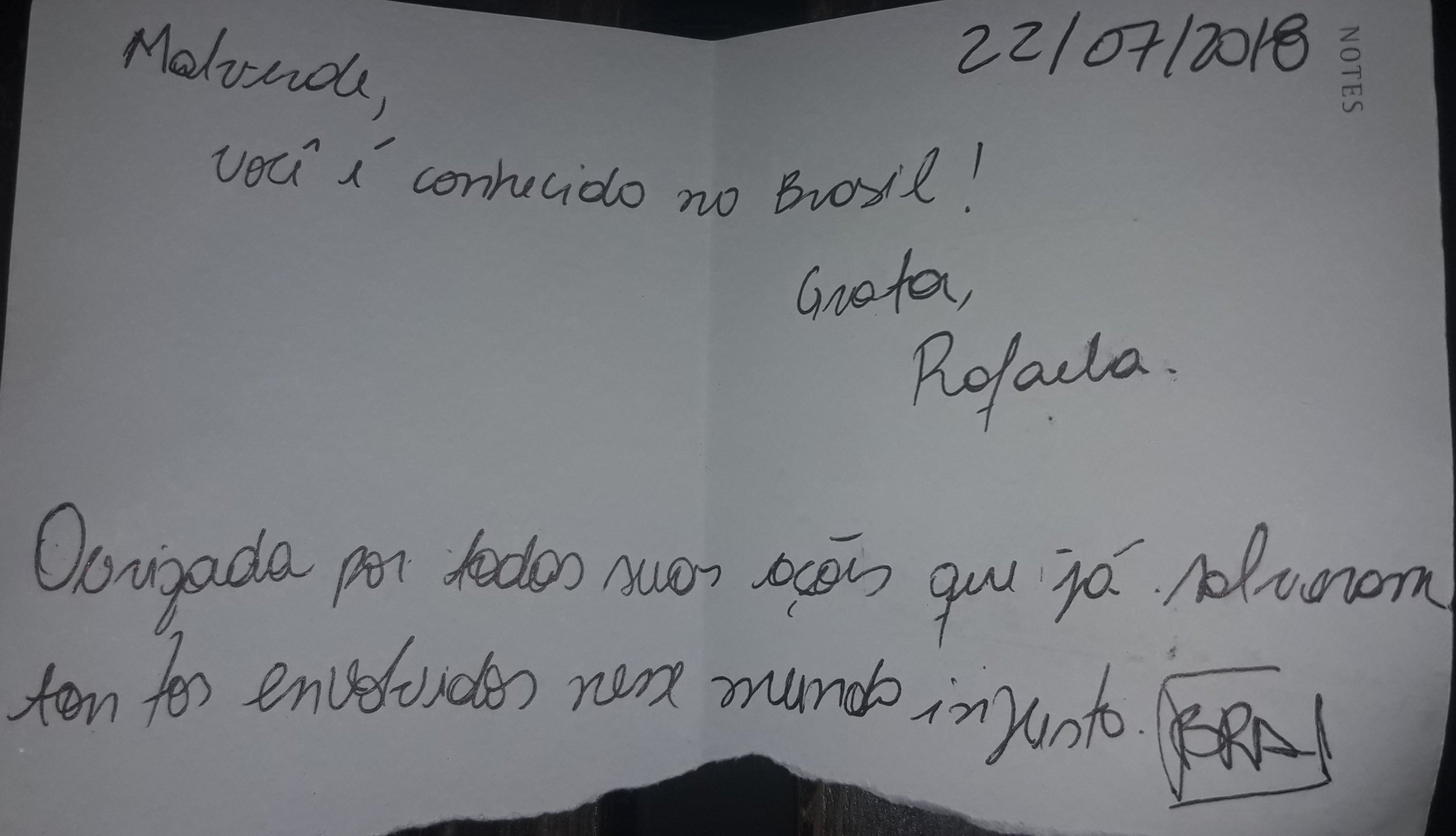
Although we found that women communicate with Malverde to a lesser extent, they are the authors of meaningful messages. Such is the case of a devotee, apparently Brazilian, who visited the chapel in 2018 and left a message of thanks written in Portuguese: “Malverde, you’re well-known in Brazil! Grateful Rafaela. Thank you for all your deeds, which have already saved so many people caught up in this unjust world” (Image 14).
An Overview of the Functions and Social Content of Votive Offerings
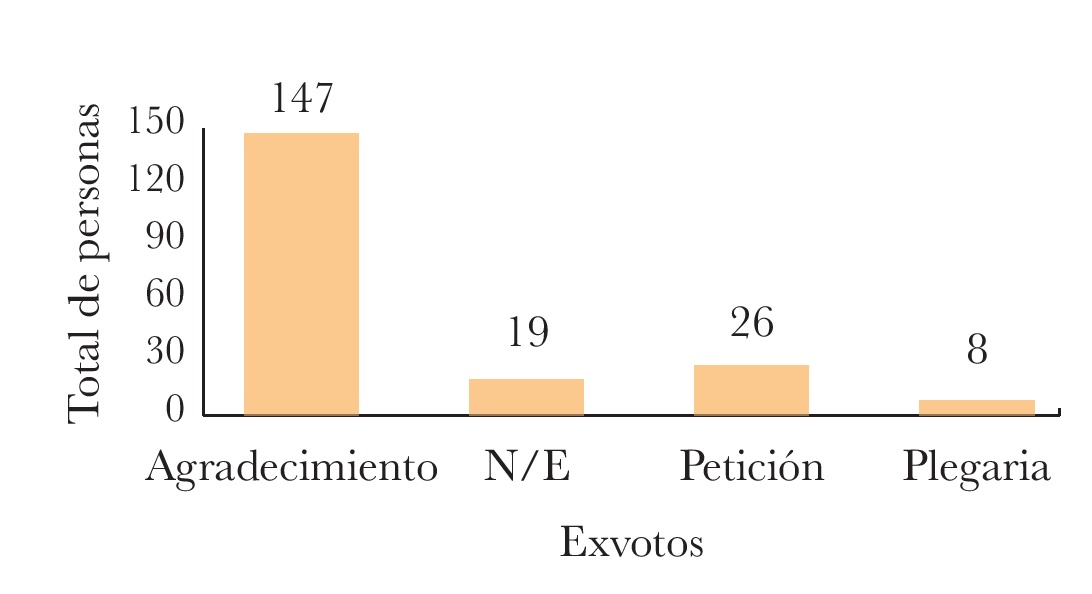
When classifying the votive offerings to Malverde according to their function, it was found that most serve the purpose of expressing gratitude, a finding derived from the textual messages appearing on the different types of offerings (Table 2). In 147 of the 200 cases studied (73.5%), the votive offerings thank the saint for miracles received. In contrast, in only 26 cases (13%) do the votive offerings serve the purpose of asking for or bringing about a miracle; eight (4%) were identified as prayers because they contained a prayer, although it is unclear whether the donors are asking for or giving thanks for a miracle granted. In 19 cases (9.5%), the reason for the offering was not specified, so it was not possible to determine the function it served.
With regard to the analysis of those votive offerings that served the purpose of expressing gratitude for Malverde’s miraculous intercession, it is worth noting the presence of a recurring message found in 97 of the 147 votive offerings studied, as the donors inscribed the phrase “Thank you for the favors received,” which appears as a standardized and cryptic expression that does not reveal the specific reason for the gratitude but is unequivocal regarding its purpose. At the same time, it reveals the popular conception of the saint as a being capable of granting a “favor” that “helps” or changes the fate of his followers on earth (Table 3).
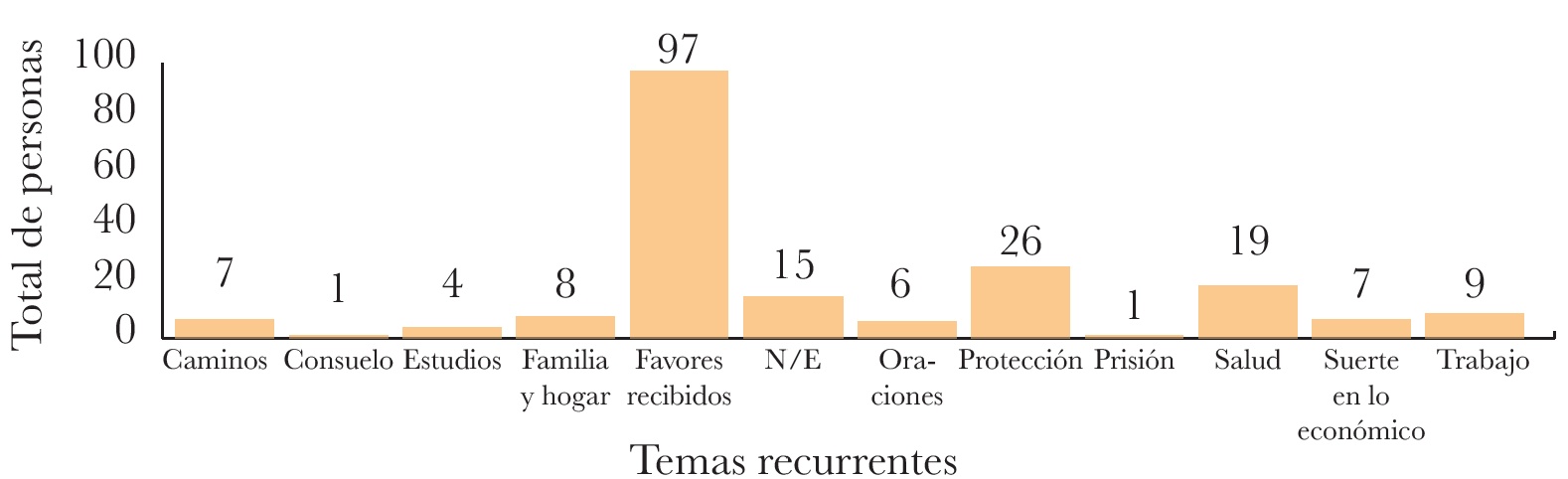
When donating their ex-votos, believers wrote handwritten messages or commissioned plaques with texts engraved, painted, or printed on various surfaces, in which they express their gratitude to Malverde; these messages reveal themes that shed light on the social context of the ex-votos. Thus, we find a wide variety of cases mentioning protection (26), health (19), work (9), family and home (8), financial luck (7), travel (7), studies (4), comfort (1), and prison (1). The presence of cases where the reason for the offering was not specified (19) is related to the trust established with Malverde, as well as secrecy or discretion regarding what is being thanked for.
Malverde is recognized for “favors received,” for health, for work, and for family; but also for more controversial matters such as prison or protection on the road. Likewise, these offerings include symbols related to the world of drugs: marijuana leaves, guns, and money (dollars), which are sometimes unrelated to the favor granted but reflect the historical imagery surrounding Malverde.
Although they are in the minority, these petitions provide insight into the hopes and hardships of those who profess their faith in this saint. Reading between the lines, one can discern gender conflicts and marital tensions, which even today remain a secret and are only brought to light before the miraculous figure of Malverde. Similarly, he is called upon to intervene in a wide range of personal and family matters. When reflecting on the disparity between the percentage of requests and that of expressions of gratitude, it is evident that devotees prefer to bring offerings to Malverde once he has fulfilled their requests, thereby sealing the moral pact established with the saint.
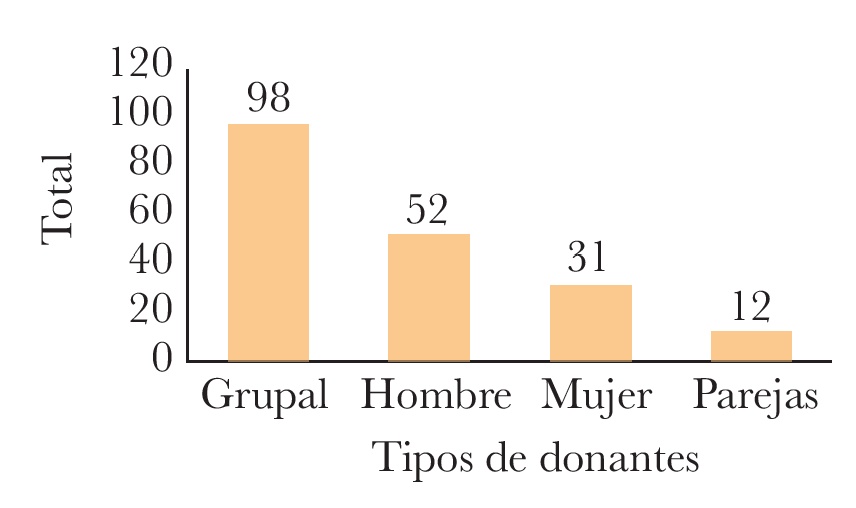
As for the donors of the votive offerings, the sample (200) revealed that 98 of them were donated by more than two people, indicating a tendency to offer mostly family or collective votive offerings; 84 were donated individually: male votive offerings were more common, with 52 men making an offering to the saint, compared to 31 women. Meanwhile, in 12 cases, the offerings were made by couples (Table 4).
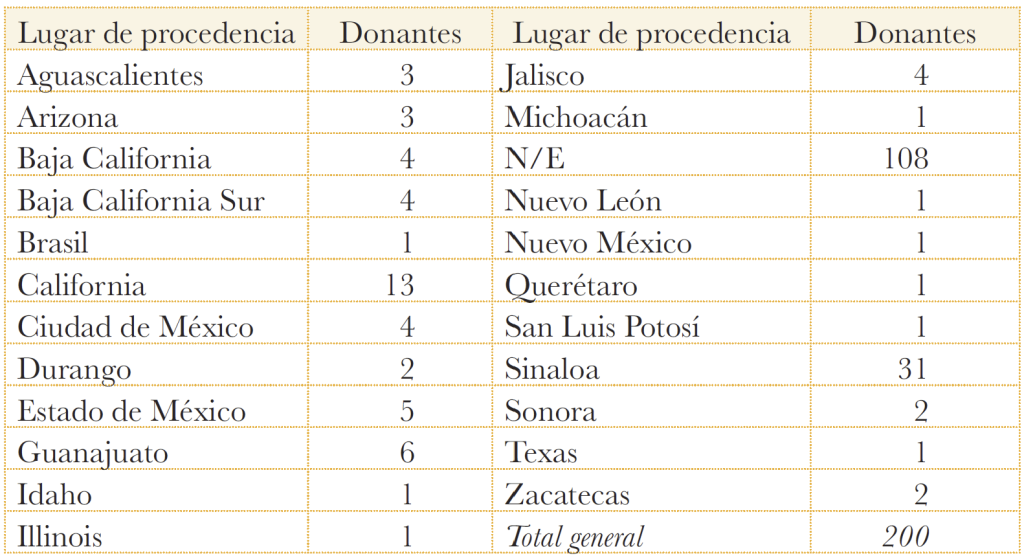
With regard to the donors’ places of origin, the Malverde Chapel reflects a faith that has spread to various parts of the world (Table 5). Although it is located on the outskirts of town and represents a hybrid form of religious practice, the site has become a place of pilgrimage that welcomes visitors from various communities in Mexico and other countries, such as the United States and Brazil.
Although in many cases these individuals did not specify their place of origin (108), Table 5 shows that the largest group comes from the state of Sinaloa (31), which confirms the deep local roots of the belief in Malverde. It also indicates the frequent presence of votive offerings from California (13), the region where people from Sinaloa have historically gone to seek work and settle. Other migration destinations are represented to a much lesser extent: Arizona (3), Illinois (1), Idaho (1), Texas (1), and the saint’s connection to other Mexican states—places from which residents embark on pilgrimages and leave offerings that sustain the votive tradition of Central Mexico and the Bajío region. This helps us understand their ever-changing world and their increasingly vibrant connection to religious devotion.
Conclusions
The votive practices surrounding Saint Jesús Malverde are an expression of popular religiosity with undeniable historical roots. Through these offerings, their donors keep alive a tradition whose origins were already documented in the press at the beginning of the century xx, updating it in accordance with changes in its immediate environment. During the first two decades of the century xxi, the Malverde Chapel remains a vibrant place and a repository for countless votive offerings, a selection of which—featuring images and texts—was examined, revealing “microhistories” that chronicle the lives of its devotees.
Upon examining the inscriptions and visual content of these gifts, two functions were identified that were as specific as that of to ask and to thank for the miracles granted. Although it was shown that requests make up only a minority of the items in the shrine, these votive offerings are extremely significant, as they help us understand the complexity of a belief and the temporal process that leads to a miracle. As a first act of faith, devotees of Malverde seek his divine intercession and, in doing so, present him with the first objects—the first offerings that will win his favor. Although most believers prefer to fulfill this obligation only at the very end, the act of giving thanks marks the conclusion of a process of deep complicity and trust between them and the popular saint, as the object symbolizes the fulfillment of a moral pact.
As has been demonstrated, the votive offerings containing requests and expressions of gratitude to Malverde reveal the characteristics of a complex social group, in which family and collective requests predominate over individual or couple requests. Quantitative analysis showed that men’s relationship with the saint is more common, though not necessarily more significant than women’s, since both men and women present their needs to him and offer gifts that signify a request or express gratitude.
The presence of devotees from various professions—men and women with differing values and ways of thinking—is significant; they are united by the requests, prayers, and expressions of gratitude that are hung in the same chapel. In this chapel, the images and texts serve as evidence of the miracle. The content of the votive offerings—their themes and donors—is on full display, yet at the same time, they coexist with certain identities that remain undisclosed, with topics kept secret and requests for obscure, unspeakable favors that reveal the extreme bond between the believers and Malverde, as well as between him and other icons of a religiosity parallel to Catholicism.
Bibliography
Arias, Patricia (2000). “Palabras, imágenes y silencios: el exvoto femenino”, Exvotos. Artes de México, núm. 53, pp. 64-73.
— (2002). La enferma eterna. Mujer y exvoto en México, siglos xix and xx. Guadalajara: Universidad de Guadalajara.
— (2007). “Copiar y recrear. La transformación social del exvoto pintado”, Versión. Estudios de Comunicación y Política, núm. 20, pp. 187-225.
— y Jorge Durand (2000). “Revolucionados”, Exvotos. Artes de México, núm. 53, pp. 56-63.
Atondo Morales, Arnoldo (2024). “Construcción de la masculinidad sobre Jesús Malverde en la lírica de sus corridos”. Tesis de licenciatura. Culiacán: Universidad Autónoma de Sinaloa, Facultad de Psicología.
Calvo, Thomas (2001). México en un espejo. Los ex-votos de San Juan de los Lagos (1870-1945) (cd-rom), en Caroline Perré. L’ex-voto dans tous ses états [en línea]. México: unam/cemca. https://etudesexvoto.hypotheses.org/category/site-de-reference
“Culto a los criminales. Superstición e ignorancia”, La Patria, México, 1 de agosto de 1903, pp. 1 y 2. Hemeroteca Nacional Digital de México (hndm). https://hndm.iib.unam.mx/index.php/es/
De la Torre, Renée (2013). “La religiosidad popular”, Ponto Urbe [en línea], núm. 12, pp. 1-24. http://journals.openedition.org/pontourbe/581
— (2018). “Biografía del exvoto guadalupano”, Encartes, vol. 1, núm. 1, pp. 188-192.
Fabre, Pierre Antoine, Caroline Perrée y Renée de la Torre (2021). “Desde la confección hasta la exhibición: cuando el exvoto se establece como sistema”, en Caroline Perrée (coord.). El exvoto o la metamorfosis del don. Ciudad de México: cemca, pp. 7-54.
Fraser Giffords, Gloria (2000). “El arte de la devoción”, Exvotos. Artes de México, núm. 53, pp. 8-23.
García, Luis Antonio (2017). La leyenda de Malverde. El bandido milagroso. Mocorito: Seminario de Cultura Mexicana, corresponsalía Mocorito, serie Textos.
Jónsdóttir, Kristín G. (2014). Bandoleros santificados: las devociones a Jesús Malverde y Pancho Villa. San Luis Potosí: El Colegio de San Luis.
“La gente sigue acudiendo a la tumba de Malverde”. Noroeste, Culiacán, 3 de noviembre de 1979, pp. 1 y 5A.
“La tumba de Malverde”. El Debate, Culiacán, 4 de noviembre de 1981, p. 1. Archivo Histórico General del Estado de Sinaloa (ahges), expediente Jesús Malverde, 1981-2014, carpeta 2.
Lazcano y Ochoa, Manuel y Nery Córdova (1992). Una vida en la vida sinaloense. Memorias de Manuel Lazcano y Ochoa. Los Mochis: Universidad de Occidente.
Luque Agraz, Elin y Mary Michele Beltrán (2003). El arte de dar gracias. Selección de exvotos pictóricos del Museo de la Basílica de Guadalupe. México: Universidad Iberoamericana/Casa Lamm.
Perrée, Caroline (2017). “La iconografía de la Santa Muerte: antropología de una imagen abierta”, en Alberto Hernández Hernández (coord.). La Santa Muerte. Espacios, cultos y devociones. Tijuana: El Colegio de la Frontera Norte/El Colegio de San Luis, pp. 207-228.
Perea Romo, Diana María (2020a). “El espacio votivo y los exvotos en la capilla de Jesús Malverde”, en Eduardo Frías Sarmiento y Jordi Canal (coords.). Los espacios de la historia en Sinaloa. Culiacán: Universidad Autónoma de Sinaloa, pp. 313-336.
— (2020b). “Jesús Malverde: el imaginario colectivo del bandido social y los exvotos en su capilla, 1909-2019”, Escripta. Revista de Historia, vol. 2, núm. 4, julio-diciembre, pp. 43-68.
Rodríguez Becerra, Salvador (2008). “Los exvotos como expresión de las relaciones humanas con lo sobrenatural: nuevas perspectivas desde Andalucía”, en México y España. Un océano de exvotos: gracias concebidas, gracias recibidas. Zamora: Museo Etnográfico de Castilla y León, pp. 97-119.
Valenzuela Arce, José Manuel y Pável Valenzuela Arámburo (2023). Todo lo santo es profano. Mística popular transfronteriza: Jesús Malverde, Santa Muerte, Niño Fidencio y Juan Soldado. Ciudad de México: Universidad Autónoma de Sinaloa/El Colegio de la Frontera Norte/El Colegio de San Luis.
Vidaca Osuna, Alejandro (2015). “Religiosidad y devoción popular en Culiacán: un acercamiento al catolicismo y la adoración a Jesús Malverde entre 1960 y 1970”. Tesis de licenciatura. Culiacán: Universidad Autónoma de Sinaloa, Facultad de Historia.
Zires, Margarita (2014). Las transformaciones de los exvotos pictográficos guadalupanos (1848-1999). Madrid: Iberoamericana Vervuert.
Diana María Perea Romo She is a professor and researcher in the Department of History at the Autonomous University of Sinaloa. She is a member of the Academic Staff of Sociocultural History (ca-uas-119). Member of the snii level i. dianperea@uas.edu.mx
Institutions



 EN
EN  ES
ES  FR
FR  PT
PT