
Reflections from the border: humanizing deportation through digital narratives in Tijuana.
- Loraine Morales Pino
- - see biodata
Reflections from the border: humanizing deportation through digital narratives in Tijuana.
Receipt: April 25, 2024
Acceptance: October 17, 2024
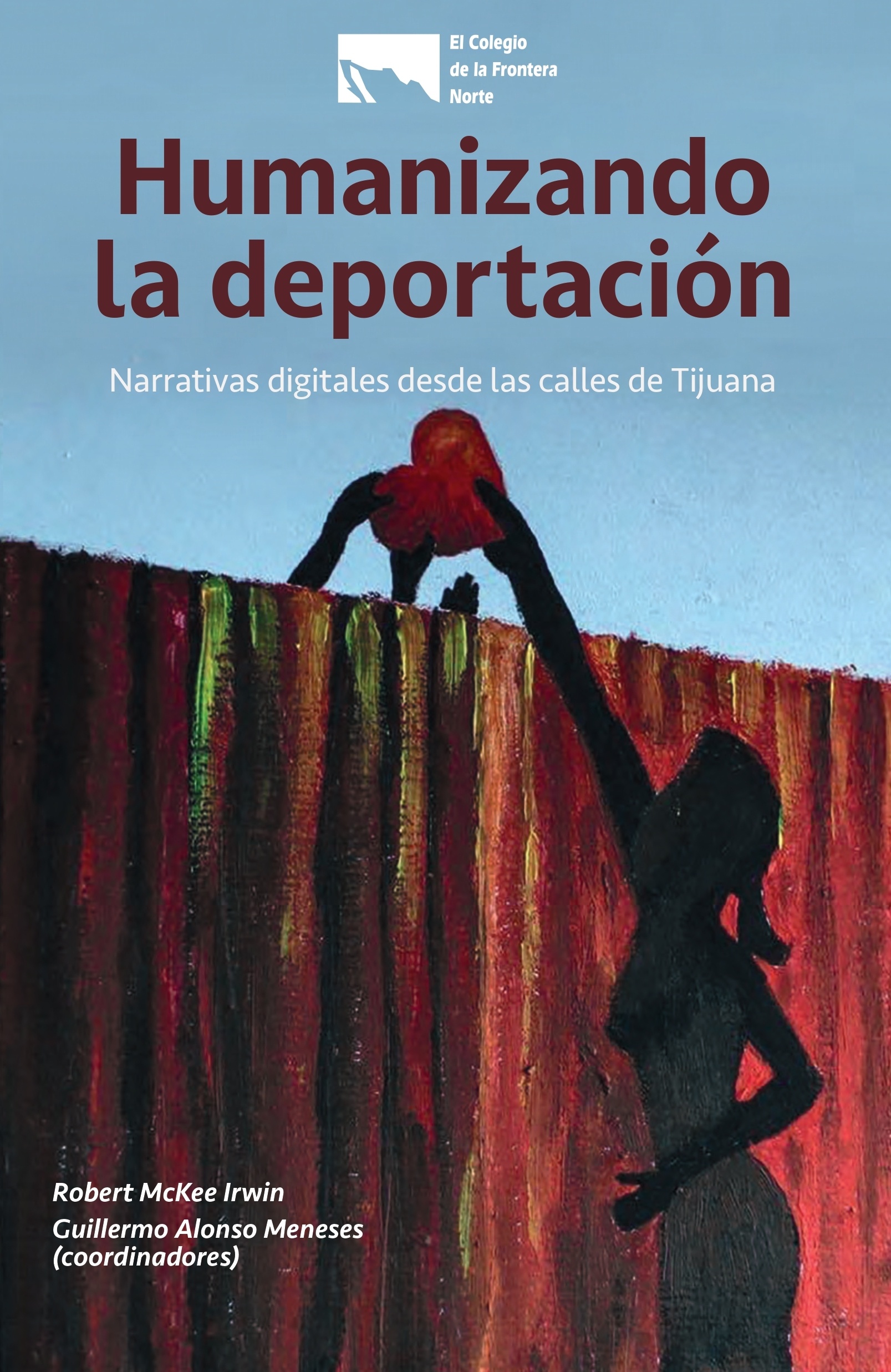
Humanizing Deportation: Digital Narratives from the Streets of Tijuana
Robert McKee Irwin and Guillermo Alonso Meneses (coords.), 2023 El Colegio de la Frontera Norte, Tijuana, 263 pp.
Humanizing Deportation: Digital Narratives from the Streets of Tijuana is a collective work that explores the human consequences of deportation through the innovative use of digital narratives. Coordinated by Robert McKee Irwin and Guillermo Alonso Meneses since its inception in 2016, the eponymous project collects and disseminates testimonies of deported migrants who want to narrate their experiences to make visible the profound personal and social aftermath that deportation leaves in their lives. Through the technique of digital storytelling, In this book, deportees not only recount their experiences, but also reconstruct their identity, using their voices to challenge the dehumanizing narratives that traditionally marginalize them.
Although this project was born out of the need and interest of a group of researchers to compile, archive and amplify the voice and experiences of people who have faced deportation or have been affected by its repercussions, today the archives integrate testimonies of numerous profiles of migrants that vary according to the different contexts and migratory trends that come together in the busiest border in the world.
The book, structured in nine sections, addresses from the history of the deportation phenomenon in the United States to the emotional, family and community impacts experienced by migrants. Each chapter invites the reader to reflect on the complex intersection between migration policies and human rights, while presenting a methodological approach that empowers the subjects of study. Each analysis presented is the result of the exercise in situ, of thought, expertise and sensitivity of academics and students who were able to interpret these passages of life to systematize, to give color, face and landscapes to what the numbers and the stilted theory blur.
Methodological proposals and memory reconstruction
To begin with, it is important to highlight the historical systematization of deportation as a process/phenomenon in the United States. As Guillermo Alonso Meneses explained in his chapter entitled “Confronting Discourses on Deportation, Deportees and Deportability in the United States”, migration is perceived as a problematic social issue, in which the migrant is constantly seen as an object of violations and vulnerabilities.
Deportation, for its part, is considered both a punitive instrument and a state policy that has been implemented by both Democratic and Republican governments, either to combat irregular migration or to reduce the presence of foreigners without legal documents. It is also seen as a regulatory mechanism for the labor reserve army of undocumented immigrants and as a palliative measure in the face of exacerbated fears, acting as an escape valve for overcrowded prisons that imply onerous expenses. The testimonies present in the archive of audiovisual narratives offer a vision of different historical periods and diverse modalities of undocumented crossings to the United States, some of them expressed in English as a sign of cultural rootedness.
One of the most innovative contributions of the “Humanizing deportation” project is the use of the digital storytelling as a central methodology. This approach -based on participatory audiovisual production- offers deported migrants the opportunity to tell their stories through short testimonial films. The project moves away from the traditional structured interview and gives voice to the subjects in the first person, which minimizes the intermediation of the researcher and prioritizes authenticity and narrative control by the deportees. Hence, the chapter “Methodological Reconfiguration for Digital Narratives from Latin American Studies and Humanizing Deportation”, written by Yairamaren Román Maldonado, talks about the sense of humanizing deportation, telling stories beyond statistics, focusing on amplifying the voice of deportees and providing them with platforms to tell their own stories.
The digital narrative methodology not only seeks to document the facts, but also to amplify the voices of those who have lived through the trauma of deportation. By allowing migrants to be the authors of their own narratives, the project decentralizes academic discourse and places deportees as fundamental actors in the construction of their history. The videos, which are structured in short narratives of between three and five minutes, capture the essence of the migrants' experiences, revealing their fears, hopes and survival strategies. This technique also serves as a tool for social and political resistance, challenging the stigmatizing representations that governments and media have built around migrants.
However, while the creation of digital content can be simple, not everyone has the resources or expertise to carry it out on their own. These narratives help minimize the intermediation in the representation of the marginalized, exploring the multiple facets and repercussions of deportation in the lives of migrants.
Between stigmatization and survival
It is likely that those who have not experienced deportation firsthand or through a close testimony will think that losing everything and returning to the homeland is all they have suffered. But the testimonies of Humanizing the deportation demonstrate that sometimes the homeland can be a stranger. The difficulty of adapting to Mexico for those migrants who arrived in the United States (U.S.) as children demonstrates that returning to the country that only saw you born results in the need to adapt to a cultural and social environment that can be foreign and unfamiliar. This is how the deportee embodies the double stigmatization of a land that loves but disowns and expels him (the U.S.), and a nation that recognizes but segregates him (Mexico), as revealed in the chapters written by Ana Luisa Calvillo Vázquez and José Israel Ibarra González in “La vida en el bordo” (Life on board).
An example of this is the inhabitants of the canalization who are left - I quote Dr. Ibarra - “without the social recognition of either of the two cultures; that is, they are doubly stigmatized, restricted, confined and institutionally pigeonholed”. In addition, those who manage to leave, fit in, return, belong... become prestigious award-winning figures and representatives of the power to be, no matter how many wounds they carry in their body and soul. Those who do not succeed are branded as incapable, brutes, unwilling and failures.
The stories systematized by Calvillo and Ibarra show how there are people who involuntarily had to replace their bed for a sewer, their dog for a rat, their house for a gumbo, their car for worn-out shoes or their family for loneliness. Simply to see the dream vanish and meet the nightmare. Guadalupe, Ramiro, Davis, Mendívil and Luis attest to this reality.
Throughout the play, it is demonstrated how deportees are treated as migrants in their own country, facing significant challenges in attempting to reintegrate, especially given the barriers that make it difficult for their past life to have relevance in the present. This involves starting from scratch, experiencing a kind of rebirth into adulthood. The deportee himself is a figure who, at times, represents a citizen of nobody when it comes to state and power structures.
In this regard, the reintegration process of deportees in Mexico is one of the most important issues highlighted in the book. Migrants face significant barriers in trying to settle in a country that, although it is their homeland, has become a foreign place. Many of the deportees arrived in the United States as children and have no memory of their life in Mexico, making the return process extremely traumatic.
The book highlights how lack of resources and lack of institutional support exacerbate the difficulties of reintegrating into Mexican society. Lacking family or community networks, many migrants are relegated to the margins of society, living in extremely precarious conditions, as in the case of El Bordo in Tijuana, where deportees face stigma and exclusion. Through digital narratives, deportees document how their daily lives are marked by uncertainty, discrimination and lack of access to basic services.
However, there are also examples of resilience and resistance. Deportees, in many cases, find in community networks a way to rebuild their identity and sense of belonging. The “Humanizing Deportation” project not only documents these stories of struggle, but also offers them a platform to be heard, allowing them to redefine their experience of deportation and create new forms of cultural and social resistance.
Emotional impact of deportation
The impact of severe trauma-leading to depression, addictions, and homelessness among those who have experienced deportation or its aftermath-is aptly addressed by the authors. These mental health and social welfare issues are a direct manifestation of the difficulties and challenges faced by those affected by deportation.
And the most painful thing is to confirm again and again that, as citizens, we are recognized as long as we are useful and contribute materially, but for this we must climb socially in the face of inequalities, inequalities, stigmatization and as many structural barriers as the context requires. Sometimes more, sometimes less. Those who judge may be unaware of how much it costs to (re)insert oneself in societies that constantly use and discard you at will.
In this regard, the book addresses the particular situation of deported military veterans, a vulnerable group who find themselves in a very difficult position after having served in the U.S. armed forces. The paradox of those who have defended the country being expelled raises complex ethical and moral issues, examined and discussed in this issue.
One of the recurring themes is family separation, a painful and complex phenomenon that deeply affects those who are deported and their emotional networks. The discourse on deportation, deportees and deportability in the u.s. -often polarized and stigmatized- is a painful and complex phenomenon that deeply affects those who are deported and their emotional networks. -This in turn has an impact on the lives of the people affected, because it is sometimes easy to take a superficial view of a structural problem that has as many layers as there are circumstances. It is not the subject alien to the context, it is not the being for the sake of existing, but the socio-structural-cultural conditioning that defines us.
To understand the complexity of the phenomenon is to realize that these people living in precarious conditions are subjects subalternized by a system that makes them invisible and destines them to social ostracism. However, Marlené Mercado demonstrates in her chapter entitled “Feminine technologies as tools of subversion and resistance within the digital narratives of Mexican (in)migrant women” how the strategies used by Sofía and Blanca, two Mexican immigrant women, allow them to challenge and disrupt the dominant narratives on immigration. These include: the use of language, organizing with other women, engaging in rascuache culture, literacy, and creating narratives through the “Humanizing Deportation” project. Highlighting the voices of these marginalized women highlights the importance of the knowledge they generate and possess, often overlooked in society.
Resignifying and building empathy
Stories have the capacity to make us understand and feel in our own flesh the experience of others. Hence, both the book and the project seek to delve into the link between deportation and mental health, exploring how the lack of support networks and harsh living conditions, such as unemployment and destitution, aggravate the emotional and psychological problems of migrants. This situation, as mentioned in several of the chapters, has led many to fall into addictions and behaviors that show how some migrants manage to overcome these adversities thanks to community support and the reconstruction of their identity through the project.
Sarah Ashford Hart in her chapter entitled “Affecting Humanity, Challenging Exclusion, move-with The narrative of Esther's deportation” proposes to go beyond the passive listening of the Oaxacan woman's story and tells us how the narrative transcended into a corporal exercise that could question the listeners.
This practice-research called Get around with “is found in interactions, feeling-thinking ways to activate our capacity to affect and be affected as involved witnesses beyond words. Moving-with can evoke a sense of respons(h)ability through affective attunement-which is not about feeling-something, but feeling-with.” Activate all the senses for empathic listening, let the body flow: fall, rise, flow. To feel in the body the emotions of others in order to connect with the other.
Feeling the emotion of others in our bodies gives us a sense of the ordeal experienced by those faces that are unknown to us. As Robert McKee Irwin systematizes, “one of the most notable common themes, which runs throughout the ‘Humanizing Deportation’ archive, is the lack of resolution of trauma.”.
Faced with all the vicissitudes faced by those who are forced to return, there are only a few ways out: alienation (alcoholism, drugs) or hope (overcoming, solidarity, reconfiguration of the self and the environment, refuge). The personal story of Gerardo Sanchez, narrated in the section entitled “Cruel Deportations and emotional ties: the sentimental abyss in the shadow of the wall” authored by Irwin, highlights the importance of affection and emotional ties in determining his precarious situation. Her experience serves as an example of how affective factors can play a determining role in the lives and fates of those facing deportation.
A very personal assessment is that as a society we lack social and political empathy. Otherness is reincarnated in the different characters that make us uncomfortable, not because they challenge us in our daily lives, but because their mere existence carries the weight of our frustrations as a society and it is easier to look for culprits than solutions, and often the culprits are the most vulnerable.
The testimonies collected in this archive reveal the profound psychological consequences suffered by those who are expelled from the United States, often after having lived there for decades. Family separation, uprooting and culture shock are key factors in the development of disorders such as depression, anxiety and addiction. This feeling of alienation and exclusion translates into a profound identity crisis, as many of the migrants have lost a sense of belonging in both cultures. The trauma is reflected not only in the deportees' stories, but also in their daily struggle to find a place in a country that is alien to them.
That is why understanding deportation is also understanding Tijuana. To understand Tijuana is to stop conceiving of ourselves as a territory of passage and, instead, to understand ourselves as a whirlpool of circumstances, in which the antagonistic intertwine, in which reality exceeds the possible and, at times, even the improbable. That is the charm and the recklessness of the city.
This work and the project of the same name highlight the importance of rehumanization as opposed to dehumanization, emphasizing the individual. It also highlights the vindication of migrant knowledge, recognizing the subject as the owner of his own history and bearer of unique knowledge. In this process - as Yairamaren Román explains from the Freirian perspective - the humanization of the subaltern leads to a certain degree of personal freedom, inasmuch as it allows the oppressed to understand their capacity to catalyze transforming changes instead of believing that they cannot influence their situation.
Humanizing Deportation: Digital Narratives from the Streets of Tijuana is more than a scholarly work: it is a historical and political documentation project that transforms the migration experience into an archive of resistance. Through the innovative use of digital narratives, this book reveals the human complexities that accompany the phenomenon of deportation, challenging the dehumanizing representations that often surround it. The value of the project lies in its ability to give voice to those who have been marginalized by migration policies, providing a platform for deportees to tell their own stories, confront stigmas and reconstruct their identity.
The archive generated by this project is not only a living testimony of the collective memory of migrants, but also becomes a space where personal stories challenge official narratives that perpetuate invisibility and rejection. This book offers a valuable approach to understanding how the structural violence of deportation has a lasting impact on the lives of migrants and, at the same time, shows how these same people find ways to resist and rebuild themselves in a context of vulnerability.
From an academic perspective, the book makes a significant contribution to migration studies by documenting the realities of deportees through a methodology that empowers the subjects of study. By focusing the analysis on direct testimonies and lived experiences, the authors of this book challenge traditional forms of knowledge production and propose a new way of thinking about deportation: not so much as a political act, but as a human process that leaves deep marks on people's subjectivity.
Definitely, Humanizing deportation is a fundamental contribution to the study of migration on the U.S.-Mexico border, as well as a political and social tool that seeks to re-humanize the debate on deportation and transform the way we conceive the rights of migrants. The testimonies collected in this book are not only stories of pain, but acts of resistance that invite us to rethink migration policies from a more ethical and humane perspective.
Loraine Morales Pino is a Cuban academic and journalist with expertise in migration, population and communication studies. She holds a PhD in Migration Studies from El Colegio de la Frontera Norte (2019-2022) and a Master's degree in Population Studies from the University of Havana (2015-2019), complemented with international diplomas in related topics. He is responsible for research and graduate studies at the Universidad Iberoamericana Tijuana. Her recent publications address issues such as hate speech and discrimination in social networks, migration processes in disputed territories in the region, as well as the redistributive effect of internal and external migration in Cuba.
Institutions



 EN
EN  ES
ES  FR
FR  PT
PT