
Illness and War: A Brief Analysis of an Ethnographic “Pharmakon” Based on Its Side Effects
- Juan Felipe Guevara Aristizábal
- - see biodata
Illness and War: A Brief Analysis of an Ethnographic “Pharmakon” Based on Its Side Effects
Received: October 11, 2025
Accepted: January 6, 2026
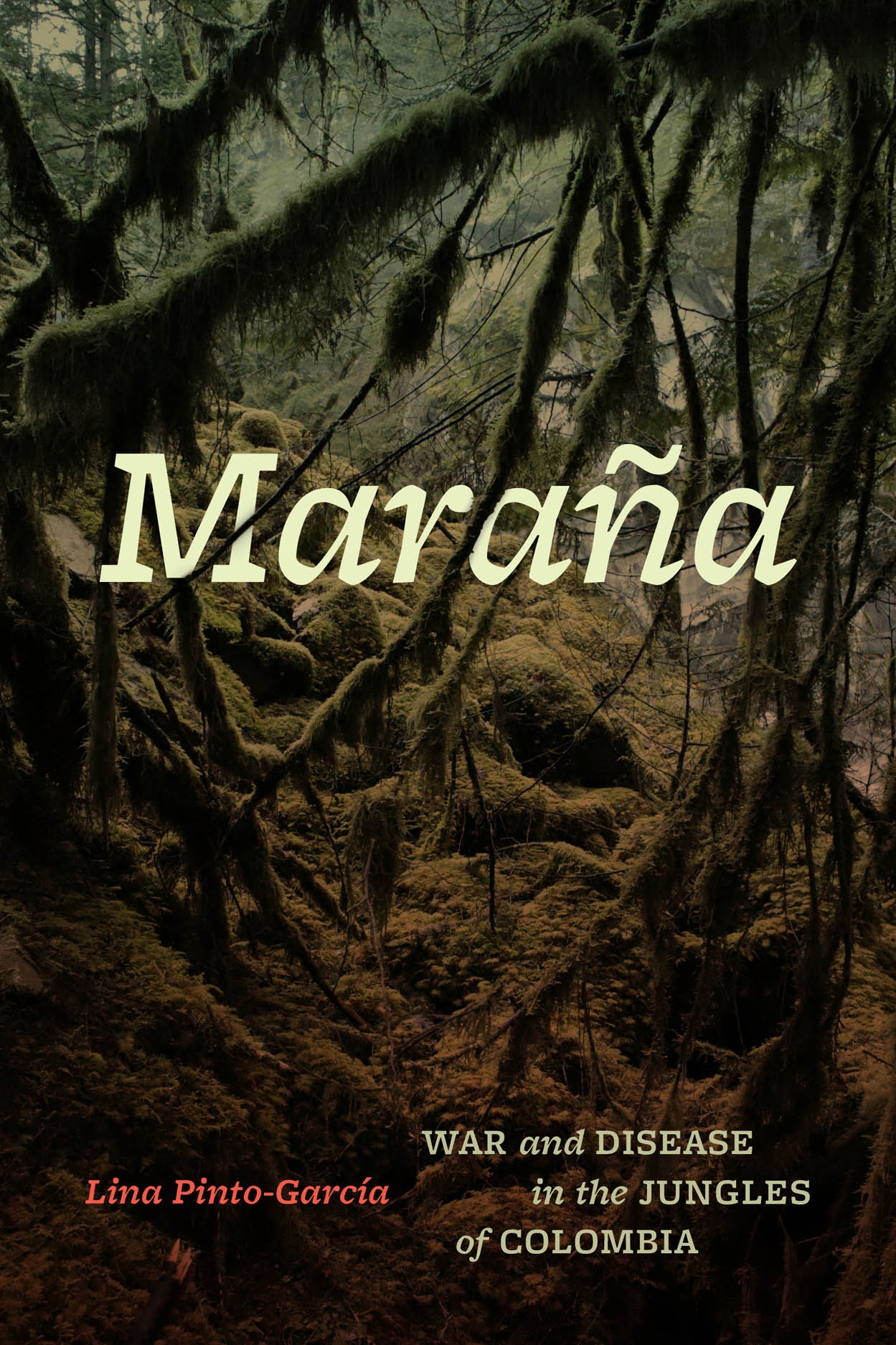
Maraña: War and Disease in the Jungles of Colombia
Lina Pinto García, 2025 University of Chicago Press, Chicago, 240 pp.
After more than six decades of internal conflict, in which various guerrilla groups—with left-wing political affiliations—clashed with the Colombian state, represented by its military forces and several paramilitary groups—with right-wing political affiliations— a peace agreement was signed in late 2016 between the guerrilla group Revolutionary Armed Forces of Colombia–People’s Army (farc-ep) and the Colombian government led by then-President Juan Manuel Santos. The negotiation and subsequent signing of these agreements paved the way for a transition period on several levels.
On the one hand, the guerrilla fighters who decided to abide by the agreement would demobilize and be able to reintegrate into civilian society, which led to the creation of the so-called Transitional Rural Normalization Zones (zvtn) as gathering places for all those interested in taking that step. On the other hand, a transitional justice process was launched that led to the creation of a Comprehensive System for Truth, Justice, Reparation, and Non-Repetition, which includes three bodies: 1) the Special Jurisdiction for Peace, 2) the Search Unit for Persons Reported Missing in the Context of and as a Result of the Armed Conflict, and 3) the Commission for the Clarification of the Truth, Coexistence, and Non-Repetition.
It is within this context of openness—on the part of both the guerrilla group and state institutions, including the armed forces—and of recognition of the victims of the armed conflict that Lina Pinto García’s ethnographic work takes place. With a degree in biology (University of the Andes, Colombia) and a solid doctoral background in Science and Technology Studies (York University, Canada), Lina offers us in Maraña: War and Disease in the Jungles of Colombia the findings of an ethnographic study that began in 2017 and spanned the turbulent years of the COVID-19 pandemic, in which the author traces, documents, and analyzes the complex social reality of leishmaniasis in the context of the Colombian armed conflict.1
Her ethnographic work took her from rural areas in the Colombian jungles, where one of the zvtn which he visited and where he was able to interview several people who had actively participated in the guerrilla groups of the farc-ep, to other communities affected by the parasite in the Colombian Pacific region, including tropical disease research laboratories and the Leishmaniasis Rehabilitation Center, where soldiers from the Colombian armed forces—infected with the parasite—received medical treatment and care for leishmaniasis. Far from encountering an ethnography that reveals forms of estrangement or surprise from a safe distance, Maraña It turns out to be a much more personal and intimate matter, so its effects are felt on the skin and in the gut. Although these sites where its effects manifest correspond to those of leishmaniasis, I am also referring to what it evokes in Colombians—whether in the country or abroad, as in my case—who delve into its pages and its fabric. Perhaps the greatest virtue of Maraña namely, its ability to evoke a subtle yet profound sense of estrangement—one that is painful yet, at the same time, sensitive—regarding the nature of the Colombian armed conflict and life in the wake of the peace agreements. In that sense, in addition to being primarily an ethnography of a disease and its treatment, this book can be read as an account of the sufferings and ailments of the armed conflict, both for those affected by leishmaniasis in the jungles and for those of us who, from the comfort of our homes, perceived the reality of the conflict with extreme bias, as well as for those who decided to take sides with one faction or another without much fuss. Like any good narrative, it offers relief from unease; however, the phármakon The ethnographic perspective it offers is not without side effects.
Double Vision
At the beginning of the book, the story recounts Andrea González’s (a pseudonym) journey into the jungle to conduct clinical trials of glucantime (pp. 1–2). There is an image in this account that perfectly illustrates the author’s ethnographic approach: from the helicopter, the dense canopy resembled a green, velvety carpet stretching across the horizon, only to become something different once on the ground, into that tangled web where trees and their branches intertwine and crisscross in a tapestry of vines and foliage.
Added to this is an anecdote that recounts the beginnings of this research in 2012, when, during a conversation about Glucantime, Lina learned of the Colombian government’s control over the medication as a measure to harm the guerrillas (p. 34). She was surprised by the way scientists viewed this restriction as something wrong, yet at the same time as a conceivable and imaginable measure, particularly in the context of the normalization of violence that Colombia has experienced for several decades.
The image of the helicopter descending shows how the approach from the sky toward the ground reveals that the perceived homogeneity is nothing more than an illusion caused by scale; as the scale decreases, we encounter a dense tangle. In the anecdote, the opposite effect can be observed: the attention paid to a casual conversation culminated in an impressive ethnographic effort in which various factors, agents, and modes of circulation were linked together to construct a dense fabric—a tangle. It is there, where the two movements signaled by the image (from the macro to the micro) and the anecdote (from the micro to the macro) intersect, that the detail lies.
Care, hospitality, and attention to detail are, in my opinion, the central themes of this ethnography. Far from being merely a series of meticulous descriptions strung together, attention to detail takes on a distinctly methodological character. Contrary to what common sense might suggest, the ethnography presented here Maraña It effectively demonstrates that detail is not the smallest part, the tiniest end of a scale, but rather what enables movement between different magnitudes and scales.
Weakened immune system
The first time I read Lina's work was thanks to the book Belicopedia (Ruiz-Serna and Ojeda, 2023), a collection of diverse perspectives from the field of science and technology studies in Colombia, which recounts the ways in which war has been able to create, destroy, and alter relationships—and even prevent them from forming. This text is one of many cultural works that emerged in the wake of the signing of the 2016 peace agreements and the impressive work carried out by the Truth Commission in the 11 volumes that were ultimately published. These volumes contain the testimonies of victims of the conflict, including members of the civilian population (with a special emphasis on the differences that arise when discussing women, communities lgbtiq+, indigenous and Afro-Colombian communities, among others), the guerrillas, the armed forces, the paramilitaries, or even the territory itself. There are other types of cultural productions, such as the novel This wound full of fish, by Lorena Salazar Masso, or the movie I saw three black lights, by director Santiago Lozano, to name a few, which are part of this same legacy that he is now joining Maraña.
What these cultural productions have in common—an ethnography is also a cultural production—is that they bring to light a series of different narratives about the war and its effects; they open up a conversation about issues, questions, and dilemmas that had been obscured by the media’s constant coverage of the conflict and the dominant narratives surrounding it. The commitments made with the signing of the Havana agreements are still far from becoming a reality; in fact, the current situation in Colombia seems to be reverting to previous—and escalating, albeit different—levels of violence. However, the signing of the agreements served, from my perspective, to take a breath of fresh air amid the foul atmosphere that prevailed, to make room for other ways of thinking about what happens in war—beyond sides, friends, and enemies; beyond “us” and “them”—and to reclaim a much richer form of political action.
I emphasize this last point because Maraña reveals a great deal about this. Leishmaniasis affected all parties to the armed conflict, as long as they ventured into the jungle’s thicket; not only that, but the distribution of treatment and the measures taken by the Colombian government to gain absolute and exclusive control over glucantime highlighted that affecting everyone did not mean doing so in the same way. This situation is illustrated by what the author describes as the pharmaceutical extension of the war [the medicalization of war] (Chapter 2). In that sense, leishmaniasis is not—as was once said, not without a certain naivety, about COVID-19—a “democratic” disease. However, it did have a peculiar effect in blurring the clear boundaries between victims and perpetrators, between the good and the bad, between the state and “the others,” when the focus shifts not to institutions and high-level decision-makers, but to the much more granular level of the individuals who embody the war and its conflicts.
It is clear from the stigma of “guerrilla disease” associated with leishmaniasis that there was a predominantly negative impact on this population, particularly because access to pharmaceutical treatment meant coming under the scrutiny of the State and its views regarding the alleged “internal enemy” and national security (Chapter 1). When the author enters the Leishmaniasis Rehabilitation Center, located at the Silva Plazas battalion in Duitama, other questions arise, particularly those regarding the status of the soldiers in the conflict.
Although they are protected by the state, and their medical treatment is paid for by the Ministry of Health rather than the Ministry of Defense (a fact that underscores their status as citizens rather than as members of the armed forces), these measures of care and protection are carried out within a military framework: the primary concern is not health, but rather the possibility of getting the soldiers back on the battlefield as soon as possible (Chapter 3). Without going into detail about the socioeconomic background of those who enlist in the military, it is no exaggeration to say that measures of care and protection within this logic of war only reinforce the view of soldiers as cannon fodder for armed conflict.
In this context, the interplay of scales is also affected by immune system weakness, such that the scale of cells and cytokines—which dominates the biomedical discourse on the disease and its treatment— gives way to the scale of the bodies that suffer, grow weak, and endure the disease—as well as the harshness of the glucantime injections that soldiers must receive for three weeks, sometimes twice a day. The pain in the buttocks renders those receiving the injections unable to sit or perform daily activities, to the point that some consider leaving the treatment incomplete; but it also serves as a catalyst for those administering the injections to implement strategies that cause the least possible impact (Chapter 4).
Thanks to the narrative of Maraña, the very act of administering an injection into the buttock becomes a full display of expertise, skill, and compassion. The aggressiveness of the treatment, combined with the care that healthcare personnel take to minimize this characteristic of the medication, highlights the sociomaterial nature of illness and the body. Rather than maintaining the unity inherent in immunological logic, Pinto García demonstrates how conflict also becomes a vector of bodily multiplicity, in line with the well-known work of Annemarie Mol (2021) or the more recent contribution by Santiago Martínez Medina (2021).
This weakening of the immune system is also evident in the refusal to fall into the cliché of the “war on disease” or to portray leishmaniasis as the “second enemy of the state” after the guerrillas (p. 155)—a common portrayal in the media and in the way some scientists characterized the disease.
Memory Disorders
I studied biology at the University of Antioquia, which is home to two renowned biomedical research groups. The first, which has nothing to do with the research in this book—though it is related to Lina’s current work—is the Antioquia Neuroscience Group, which is dedicated to studying a hereditary form of Alzheimer’s that occurs in a family in Yarumal. The second is the PC (Program for the Study and Control of Tropical Diseases), where conditions such as Chagas disease and leishmaniasis are studied. I didn’t have much information about this last group, since it wasn’t part of my academic interests, but I did know that leishmaniasis took up a significant portion of their attention and research time, which is why I thought it was a very persistent and difficult condition that affected many people, at least in the jungle. The connection between this disease and the conflict was completely obscured, and this is something I’ve confirmed by asking my classmates. It seems, then, that the problem of memory was not merely individual but extended to the collective level.
Reading Maraña It forced me to reconsider these memories and ask myself why I had never heard anything about the link between leishmaniasis and the armed conflict, not even to mention that research and clinical trials were conducted in partnership with the military, in addition to receiving funding from projects linked to the Ministry of Defense, let alone the state’s control over medications (Chapter 5). Not to mention that the most common treatment is based on antimony, a metal that was once used to induce vomiting or was part of alchemical processes due to its properties for purifying gold—a substance that, even as a medication, is highly toxic.
There is a whole spectrum of scientific research that remains behind the scenes once you step through the doors of laboratories and research centers, as is the case with the University Research Center (siu) at the University of Antioquia. This not only poses a problem for following scientific practices and reconstructing the social, economic, and political networks that underpin them—as studies of science and technology have been doing—but, according to the author’s proposal, in this particular case, it also becomes an obstacle to remembrance, to the construction of truth, and to accountability—all of which are so necessary in a transitional justice process such as the one Colombia has been undergoing for nearly a decade.
Lucid Dreams
Unlike thousands of articles that have repeated the concept of entanglement From Karen Barad (2003), Lina reminds us of its origins in quantum mechanics and, consequently, its limitations. Although the word “maraña” is one possible translation of entanglement, what stands out in his proposal is not so much the tangle or entanglement, but rather the reverse process: untangling (“Introduction”). I would like to suggest that untangling is, in fact, the most fruitful and relevant conceptual contribution of this ethnography.
The concept of entanglement, like other similar concepts, helps us understand that it is relationships that constitute entities, and not the other way around; thus, any change in them leads to the creation of new relationships. However, what “unraveling” points out is that, before making way for new relationships, we would have to undo those harmful relationships in which we already find ourselves (“Conclusion”). Put this way, it may not seem particularly novel, but I believe this work is one of the few that firmly charts this course. Its proposal resonates with and gives meaning to Elizabeth Povinelli’s call to prevent relational ontologies from becoming aseptic forms of reality-building: first come the relationships and the entities that are formed through those relationships, and only then do we layer onto that foundation the specific historical and social context of the situation in which the relationships occur.
With this framework in place, it is then possible to shed light on the forms of violence that permeate much of contemporary life; we should turn that approach on its head and start from the concrete conditions of violence and asymmetry to understand how relational structures have been constituted and forged (Povinelli, 2021). Furthermore, the conceptual clarity offered by this unraveling is useful for developing practices that challenge the hegemony of technological solutionism embodied by the pharmaceutical industry and the role of Glucantime in the conflict.
“Untangling,” then, constitutes a path of political action that involves understanding the tangle and the process of entanglement. This ties in with the importance of detail that I mentioned at the beginning, as well as with the need to unravel the tangle—not with the aim of returning to a previous state, but to untie threads that can be joined with others through the mediation of values such as justice or social equity. In other words, unentangling moves us away from the imaginaries of the Garden of Eden or the apocalypse—as two extremes of an ouroboros—to open up other paths of exploration.
Nonspecific language disorders
There is a trend in science and technology studies that, due to its close disciplinary ties, also involves anthropology and ethnography, as confirmed by Maraña: the conceptual supremacy of English. I am not referring here to the fact that English is the most commonly used language for communicating ideas and perspectives among academic communities that speak different languages. I am referring specifically to concepts. Upon examining the references, it becomes clear that most of those discussing the armed conflict in Colombia are in Spanish. Similarly, all interviews are conducted in this language. English, for its part, dominates the scientific literature on leishmaniasis, as well as virtually all the references used as a conceptual framework, so that almost all the concepts are in English. Nevertheless, despite all this, the central concept of Maraña It's in Spanish.
The tension I am trying to highlight is not unique to this book, of course, but I believe that this one, in particular, allows me to articulate certain questions that I consider relevant to the disciplinary work in these fields in our language. Far from engaging in some sort of staunch defense of Spanish, I believe it is worth highlighting a certain academic concern related to translation that deserves our attention. As Spanish speakers, we have experienced the influence of English on numerous and very diverse occasions: the demand to confine ourselves to “academic” ways of writing and expressing ourselves; the proliferation of calques and neologisms; or the spread of terms that seem to have no equivalent in Spanish. Contrary to this trend, it is increasingly common to find in English a myriad of words from other languages, depending on the authors’ location, thereby indicating that English’s capacity for communication is limited by the specific nature of realities outside its direct sphere of influence.
Maraña It opens with a note about the terms and challenges of translation: "selva" is not exactly equivalent to jungle or forest; there is no English equivalent for “departamento” as a geopolitical and administrative division; in addition, there are numerous colloquial expressions that, in the interview transcripts, remain in Spanish with a tentative translation provided alongside them. It is not my intention to judge these decisions made by the author or by those who believe this is the proper course of action in such cases. Rather, I am interested in asking questions: Why does academic writing—unlike, for example, literature or poetry—have the privilege of leaving certain words untranslated and requiring its readers to perform the necessary linguistic work? Do these growing repositories of terms and expressions in other languages constitute an enrichment of culture and theory? Are we not losing some of our imaginative and conceptual potential by imposing highly restrictive linguistic policies on the practice of translation?
Clear answers elude me as I grapple with these questions, but I would like to explore the topic—even if only briefly and in closing—from other perspectives that might give rise to a critical and engaged conversation. First, let us remember that the untranslatable constitutes “not what cannot be translated, but what never ceases to—not—be translated” and, therefore, forms part of what distinguishes and connects different languages (Cassin, 2019: 21). Second, let us recall that translation is always a way of “making words one’s own” of others, to acquire words with ”others" (Castro Ramírez, 2018: 59). Undoubtedly, the recent publication of the Spanish translation of Maraña (Pinto García, 2026), sponsored by the Colombian Institute of Anthropology and History (icanh) and the University of the Andes will help further this discussion.
Bibliography
Barad, Karen (2003). “Posthumanist Performativity: Toward an Understanding of How Matter Comes to Matter”, Signs: Journal of Women in Culture and Society, vol. 28, núm. 3, pp. 801-831.
Cassin, Barbara (2019). Elogio de la traducción. Complicar el universal. Trad. por Irene Agoff. Buenos Aires: El Cuenco de Plata.
Castro Ramírez, Nayelli (2018). Hacerse de palabras: traducción y filosofía en México (1940-1970). México: Bonilla Artigas.
Martínez Medina, Santiago (2021). Anatomización. Una disección etnográfica de los cuerpos. Bogotá: Universidad de los Andes.
Mol, Annemarie (2021). El cuerpo múltiple. Ontología en la práctica médica. Trad. por Cristóbal Gnecco. Bogotá: Universidad de los Andes/Universidad del Cauca.
Pinto García, Lina (2026). Maraña. Guerra y enfermedad en las selvas de Colombia. Trad. por Alfonso Conde. Bogotá: Universidad de los Andes, icanh.
Povinelli, Elizabeth A. (2021). Between Gaia and Ground: Four Axioms of Existence and the Ancestral Catastrophe of Late Liberalism. Durham: Duke University Press.
Ruiz-Serna, Daniel y Diana Ojeda (2023). Belicopedia. Bogotá: Universidad de los Andes.
Juan Felipe Guevara Aristizábal He is a researcher and professor at the Autonomous Metropolitan University, Cuajimalpa Campus. He holds a bachelor’s degree in biology (University of Antioquia) and a master’s and doctoral degree in the philosophy of science (unam). I am interested in approaching philosophy from its margins—whether through its relationship with scientific practices, the sociomaterial conditions that make it possible, or the political effects of its discourses and ways of constructing reality. I am currently pursuing two lines of research: one concerns the emergence of the concept of race in Kant’s critical philosophy, its relationship to ideas drawn from natural history and art history, and the role of skin color in his approach; and another that seeks to trace a political genealogy of the philosophy of science, with special emphasis on the separation between the natural sciences and the humanities and social sciences. jguevara@cua.uam.mx
Institutions



 EN
EN  ES
ES  FR
FR  PT
PT